
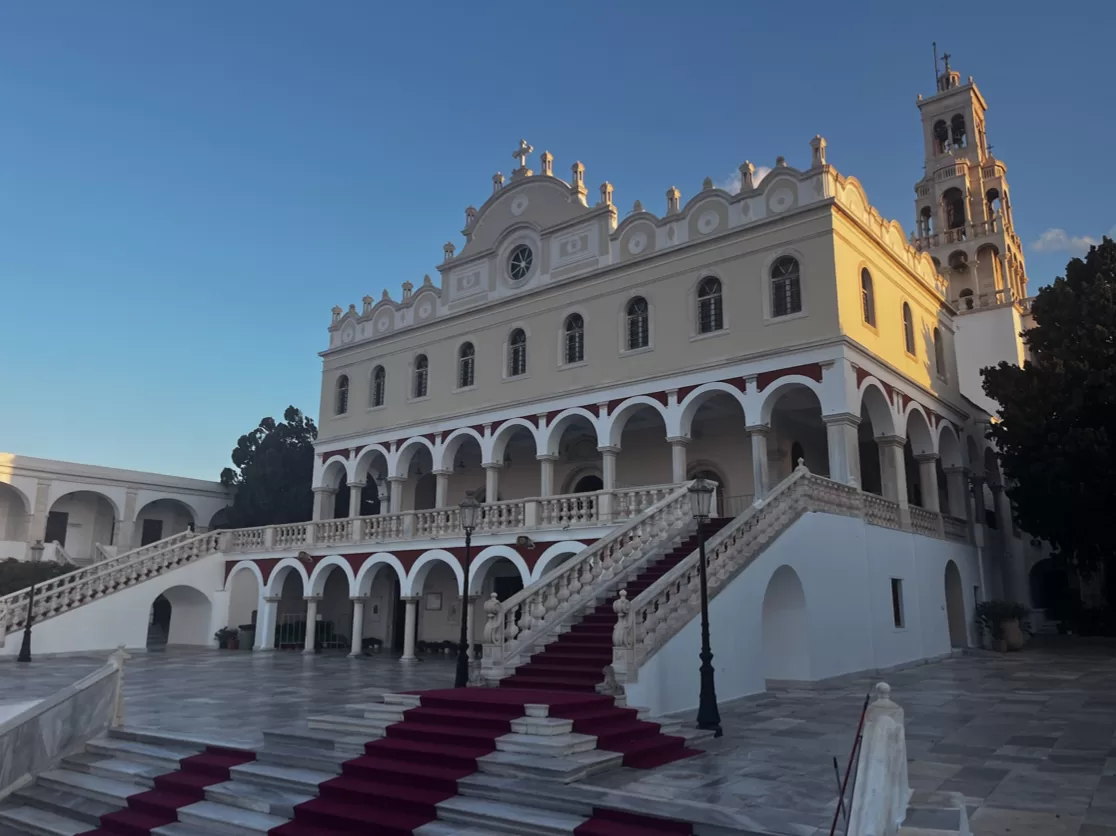
I created my Panagia Evangelistria Guide to give you a glimpse into Tinos’ spiritual heart and its revered church. Truly, there is no place in Greece quite like it – Old Soul Explorer.
The Panagia Evangelistria Church is the most visited religious site in all of Greece. Every year, nearly two million Greeks and foreigners alike make the journey to the island of Tinos to seek the prayers and intercession of the Virgin Mary. As the ferry approached Tinos and the first glimpses of the Panagia Church came into sight, I couldn’t help but feel the unique energy the island exudes. The church is built around a miraculous icon of the Virgin Mary, rediscovered during the turbulence of the Greek Revolution. For more than two centuries, this sacred image has served as a spiritual symbol and patron of the Greek people. This is the Lourdes of Greece, a place where miracles and wonders of faith unfold every day.
During my four days exploring the island of Tinos, I visited the Panagia Evangelistria Church every morning. In my guide, I’ve included everything you need to know about the church: its history, traditions, and what to expect when visiting this unforgettable place.
A Brief History of Panagia Evangelistria Church
The story of the Panagia Church and the Tinos icon begins with a nun named Pelagia, who lived at the nearby Kechrovouni Monastery. The Virgin Mary appeared to her in a series of visions revealing the location of the icon buried beneath the earth. Digging began at the site of an ancient Byzantine church and the icon was rediscovered in 1823, around a year after the start of the Greek Revolution. Many believe it to be one of three icons painted by St. Luke the Evangelist. The name Panagia Evangelistria translates from Greek as the “All Holy Bringer of Good News”.
Construction of the new church began soon after and was completed in 1830. Because the rediscovery of the icon coincided with Greece’s independence struggle, many viewed it as a sign of divine blessing for the establishment of a new nation. Today, the Tinos Icon is regarded as the patroness of all of Greece. Pilgrimage to Tinos quickly became popular for those seeking the prayers and help of Panagia, or the Virgin Mary. Countless personal miracles have been attributed to the Virgin Mary on Tinos.
My Experience at the Panagia Church
The Panagia Church on Tinos is unlike anywhere else I’ve visited in Greece.
As a half Greek American traveler who was introduced to the Greek Orthodox faith by my yiayia (grandmother), visiting Tinos was a profoundly personal experience. The entire church exudes a mystical energy. There is a calm amidst the crowds and sometimes chaos of the Panagia Church. It’s a spiritual force, one rooted in the sincere faith of those who come to honor the Mother of God, offering peace in contrast to the confusion and tension of the modern world.
It was an experience I’ll always cherish, a rare opportunity to so deeply connect with my religion and culture.
Hours and Best Time to Visit
The official hours of the Panagia Church are from 7:30 am to 8:00 pm daily. However, the church really opens its doors to visitors as early as 7:00 am. This is the time I went every morning while staying on Tinos.
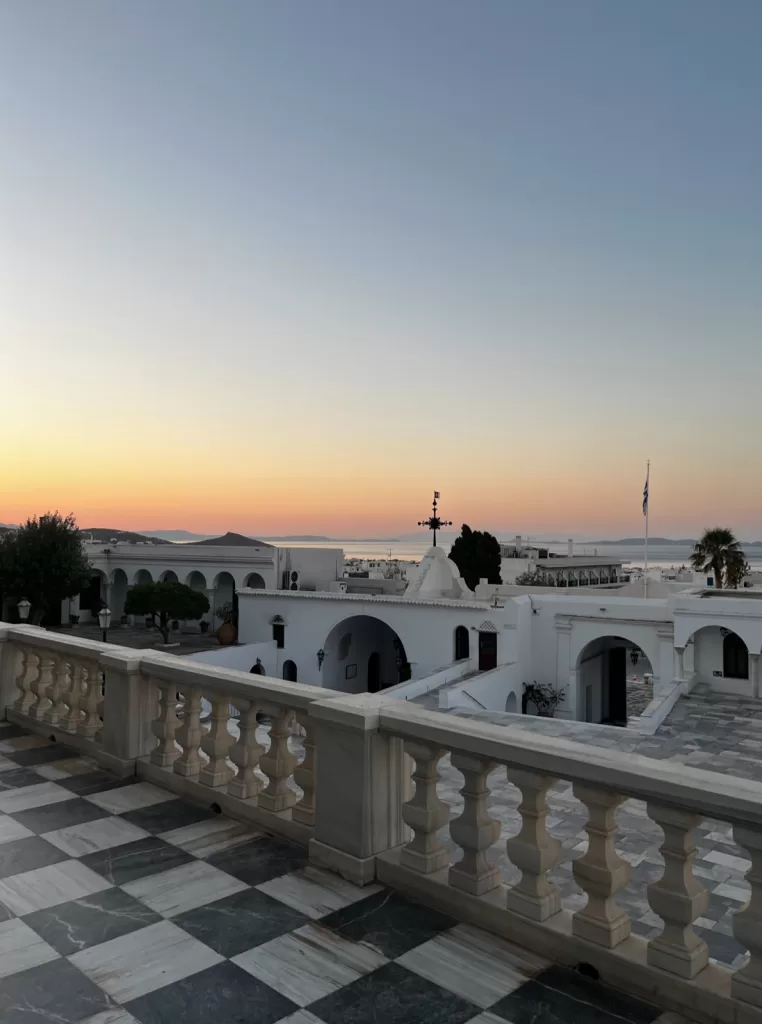
I recommend arriving as soon as the church opens. In the early morning you can experience the basilica in peace before the crowds arrive and even watch the sunrise from the church’s portico, a truly memorable experience. As the day continues on, the church swells with visitors from all over Greece.
Locals told me that pilgrims often walk from the port to the Panagia Church after being dropped off by the ferries and leave shortly afterward. In the later hours of the morning after the boats arrive, the line to enter the church becomes quite long as pilgrims wait to venerate the miraculous Tinos icon. If you visit early you will avoid the worst of the crowds.
Services at the Panagia Church
There is a divine liturgy or mass every day of the year at the Panagia Church. Services start as soon as the church opens and last well over 3 hours.
Most afternoons, a Paraklisis or religious service asking for the Virgin Mary’s prayers is conducted in the church. It starts around 2:00pm.
Marian Holidays at the Panagia Church
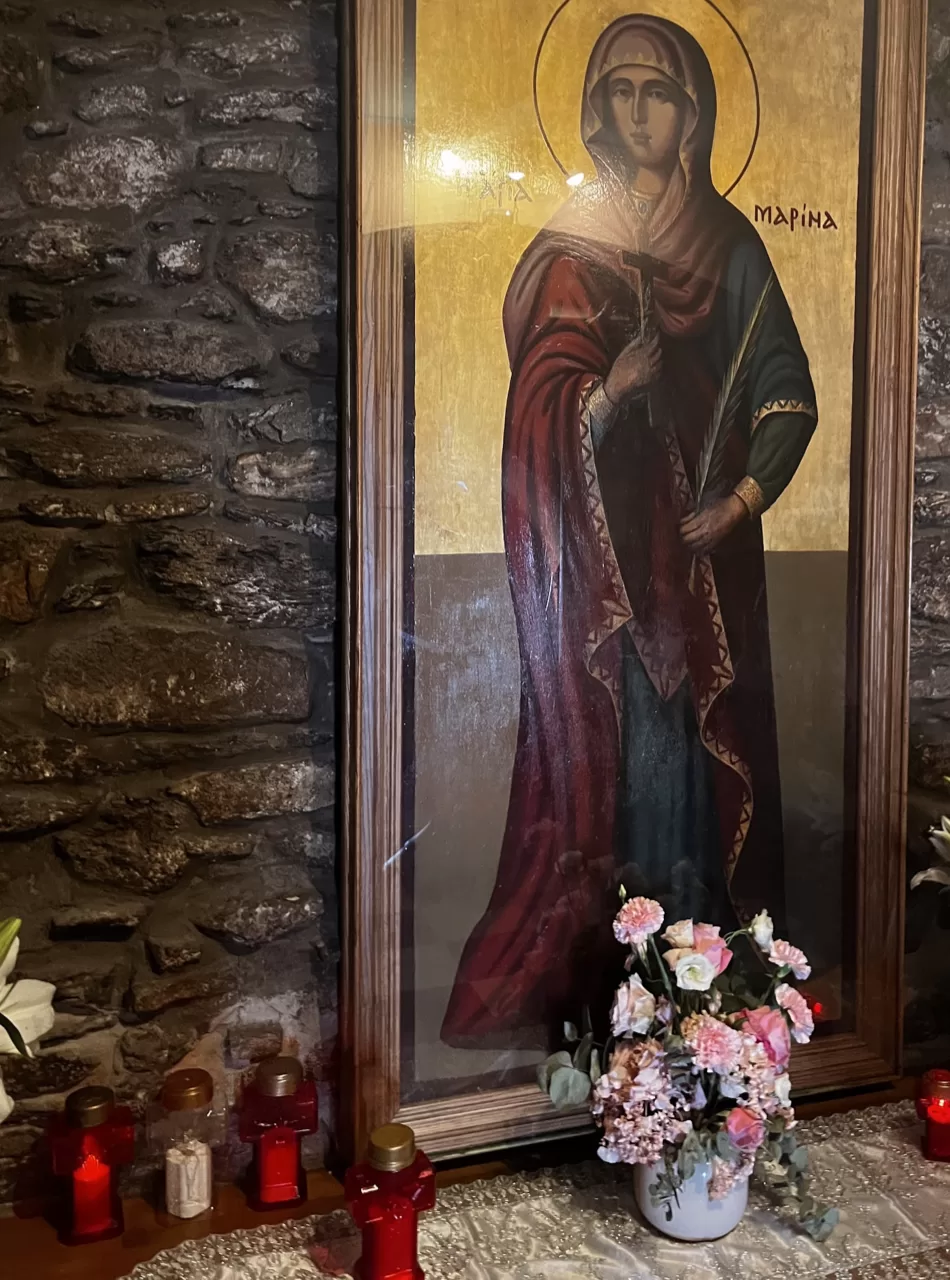
Tinos celebrates four feast days in honor of the Virgin Mary, drawing thousands of pilgrims and making it the busiest time to visit both the island and the Church of Panagia Evangelistria.
Below are the four largest Marian holidays on Tinos when the island is at its busiest.
- Discovery of the Miraculous Icon of Tinos (January 30)
- Annunciation of the Virgin Mary (March 25)
- Vision of Saint Pelagia & location of the icon revealed (July 23)
- Assumption of the Virgin Mary (August 15)
Of these, the Assumption of the Virgin Mary on August 15 is by far the most important. After the Divine Liturgy, priests and sailors carry the miraculous Tinos Icon in a grand naval procession from the Panagia Church down to the port. This moving event is one of the most significant religious celebrations in all of Greece.
visiting Panagia Evangelistria Church
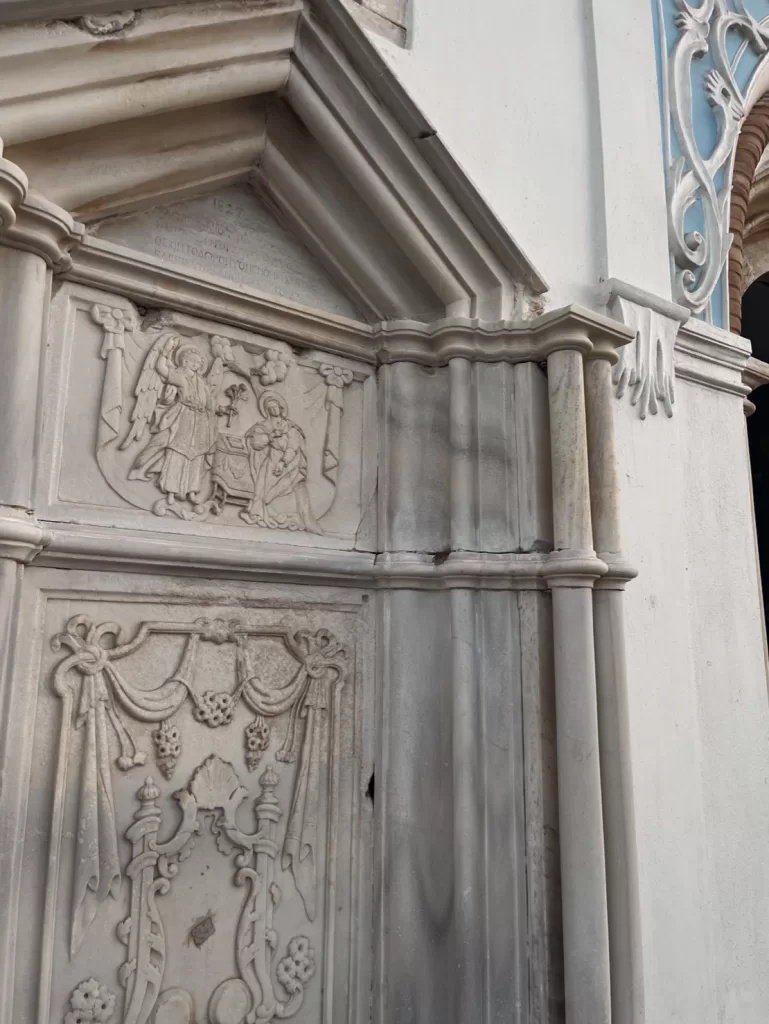
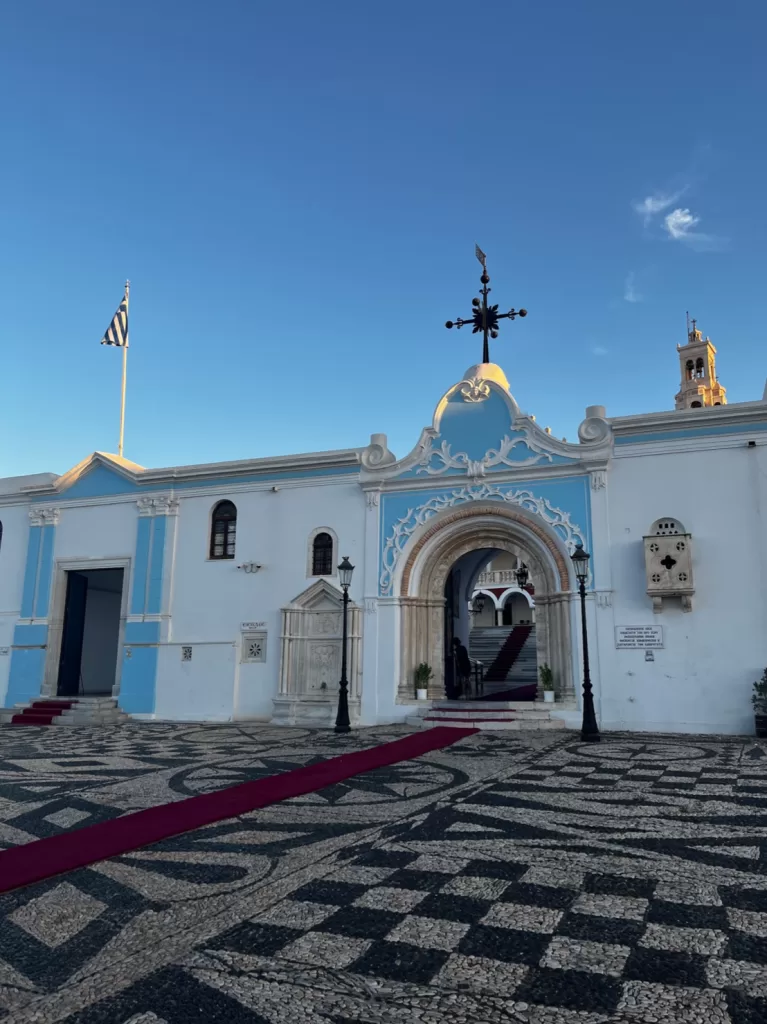
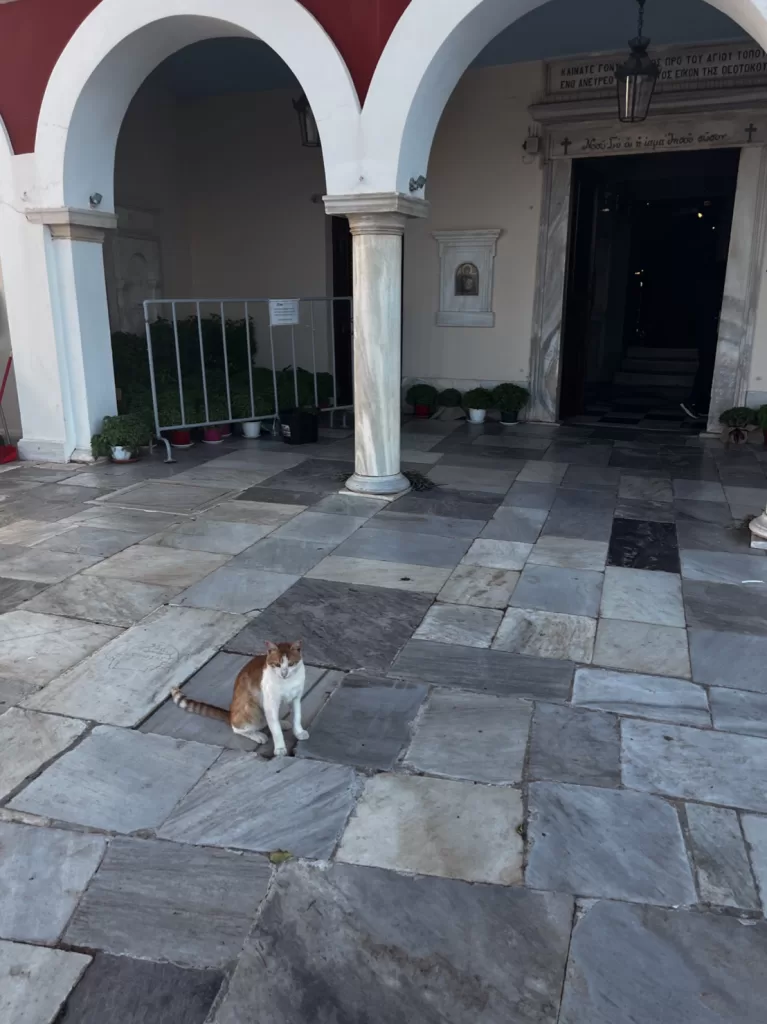
The entrance to the Panagia Evangelistria Church is striking. Flanked by two large doors depicting the Annunciation of the Virgin Mary, both entrances have long red carpets running from the road into the church grounds. Built in the neoclassical style, the exterior is decorated with marble from the nearby villages of Tinos. The ground in front of the church is designed with black and white rock mosaics, common artistic styles found at important churches and monasteries in the Greek islands.
The Pilgrims Path | Crawling to the Panagia Church
As an act of devotion to the Virgin Mary, many pilgrims crawl on their hands and knees all the way from the port to the Panagia Church. The journey is exhausting and those who have done it have described it as both physically draining yet spiritually moving. By crawling in humility to the Panagia Church, devout pilgrims seek repentance and the favor of the Virgin Mary before God to answer prayers.
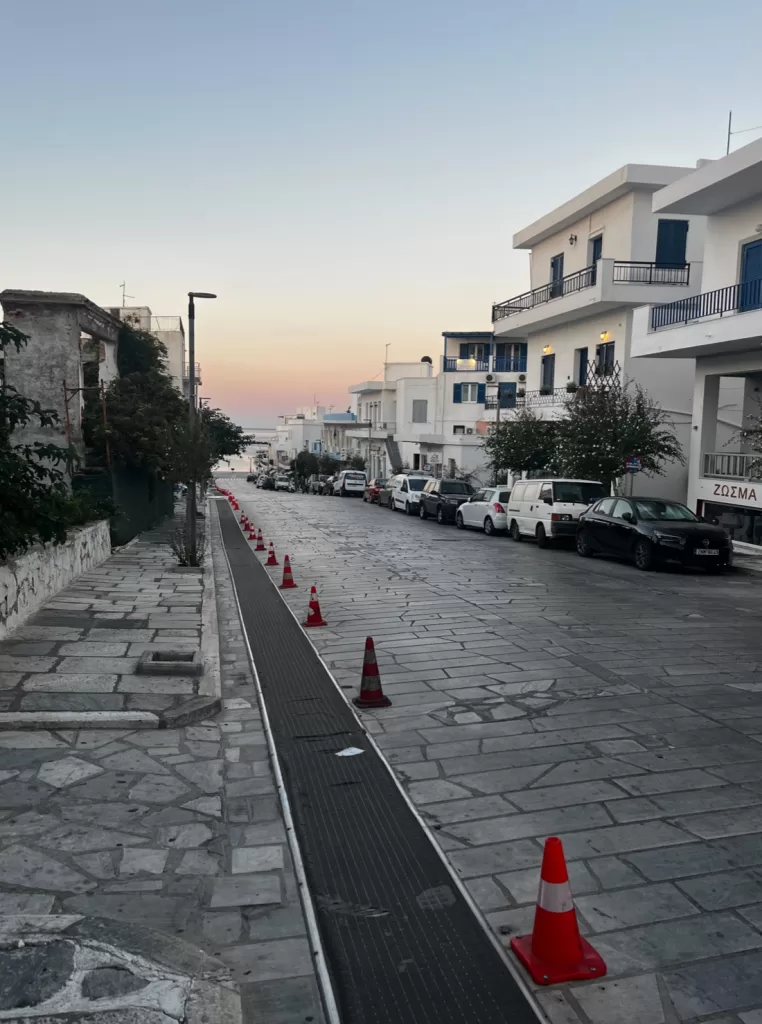
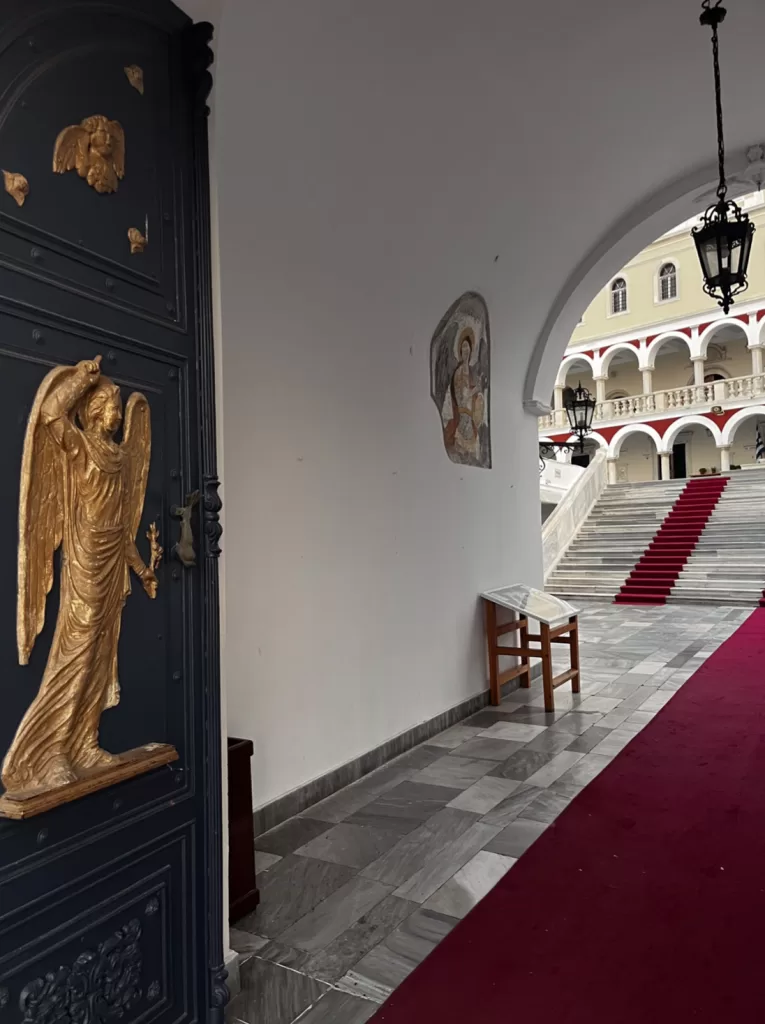
Once the pilgrims reach the Panagia Church, they climb up the red carpets and can skip the line of people by holes built into the fence. Inside, many do not rise until they have a chance to venerate the Tinos icon.
Part of the main road up leading to the church is marked off by orange traffic cones to protect the pilgrims from cars as they slowly make their way up the hill on their hands and knees.
Candle Room
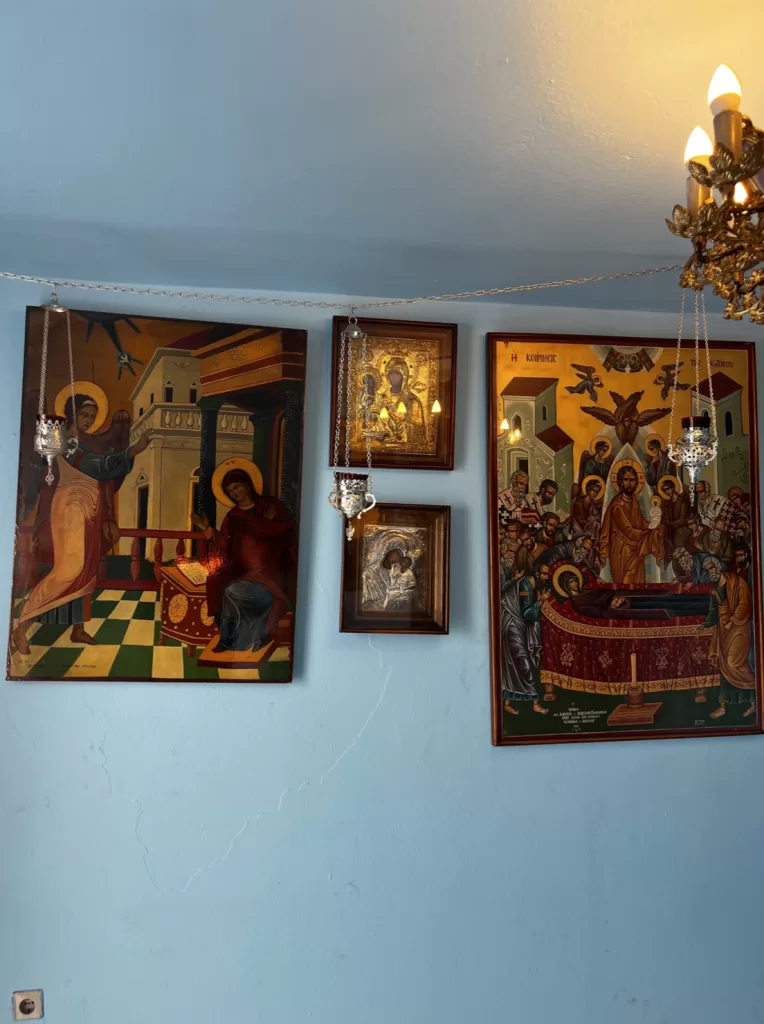
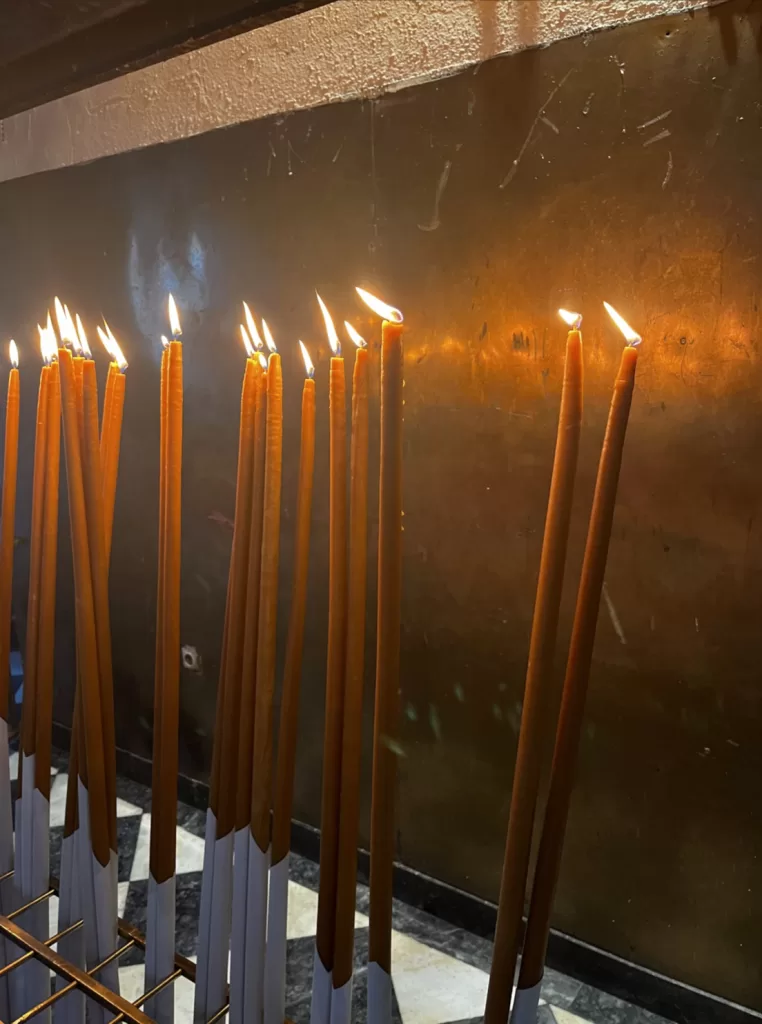
After entering through the front doors of the Panagia Church, you’ll notice a small door just to the right of the main entrance. This leads into the candle room where people light candles in prayer for relatives, friends, and loved ones who have passed away. What’s incredible about the beeswax candles at the Panagia Church is how large they are. The votive candles often stand about 6 feet (2 meters) tall. It was amazing lighting candles that were almost my height. Once lit, the candles sit in a large metal box to keep them in place. The candles do not have a price but leaving a donation is customary.
Inside the candle room are images of the life of the Virgin Mary along with copies of some of the most revered icons of the Panagia found across Greece.
Basilica of Panagia Evangelistria
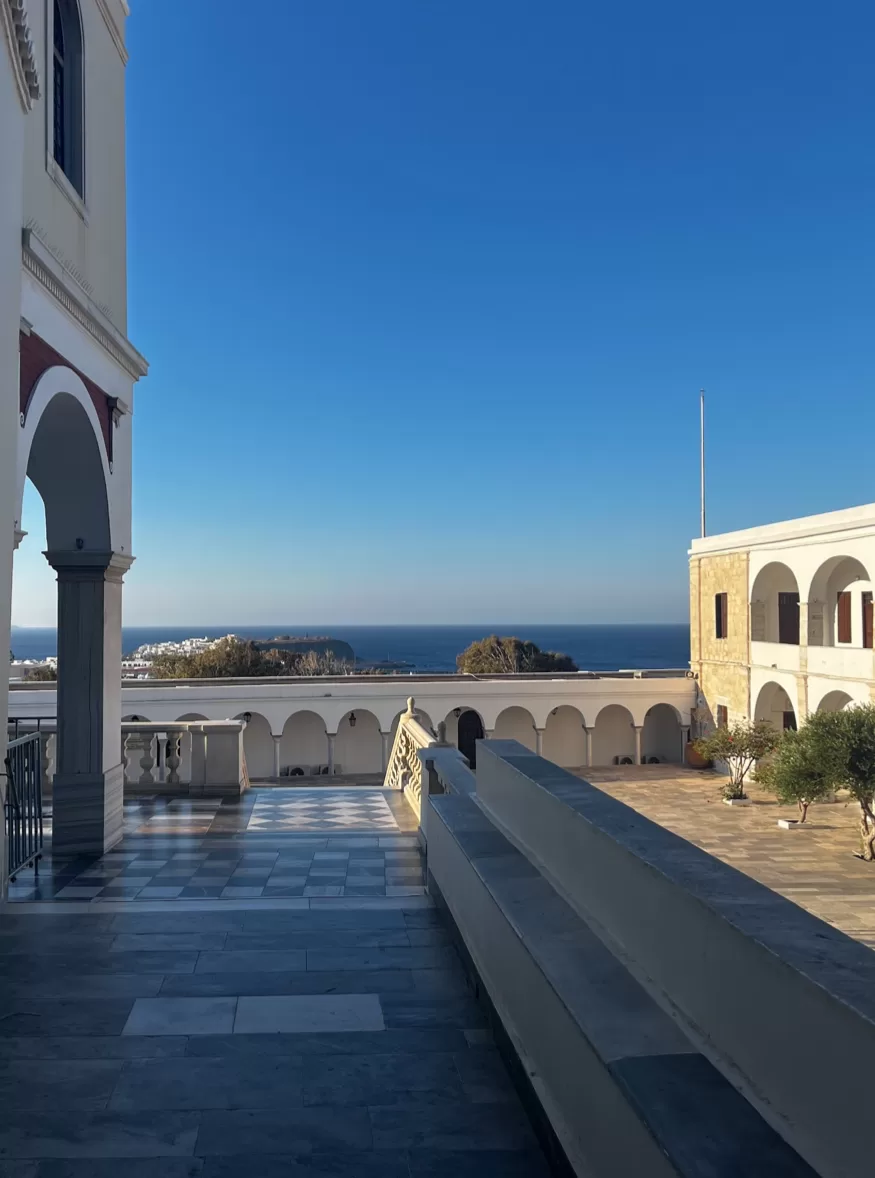
After exiting the side door of the candle room, you’ll walk up the marble steps to the basilica. If you arrive early enough, you may be able to enter right away. However, as the most visited church in Greece, there is almost always a line to enter the church, which can quickly become long. To get inside the church, it can take anywhere from 30 minutes to several hours. A metal fence keeps some order in the line while small openings allow crawling pilgrims to bypass it and continue their act of devotion. As you wait, the church keeps its windows open to let the sound of the liturgy spill out. Additionally, the portico of the basilica has a stunning view of the glistening Mediterranean Sea, making it a pleasant wait.
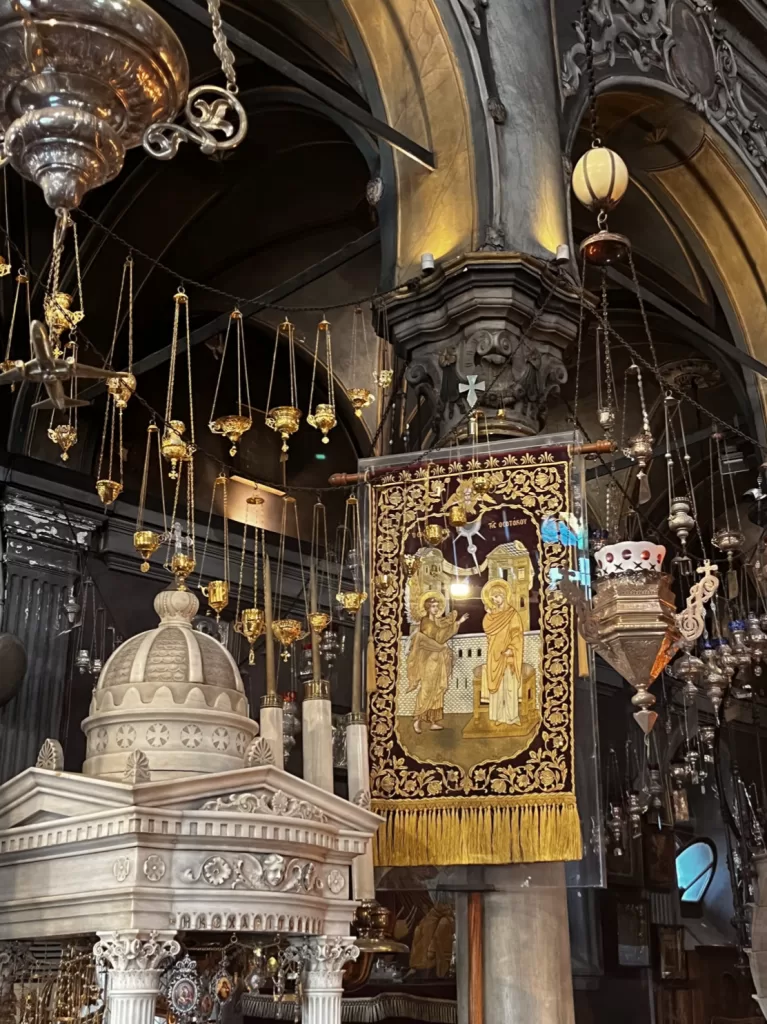
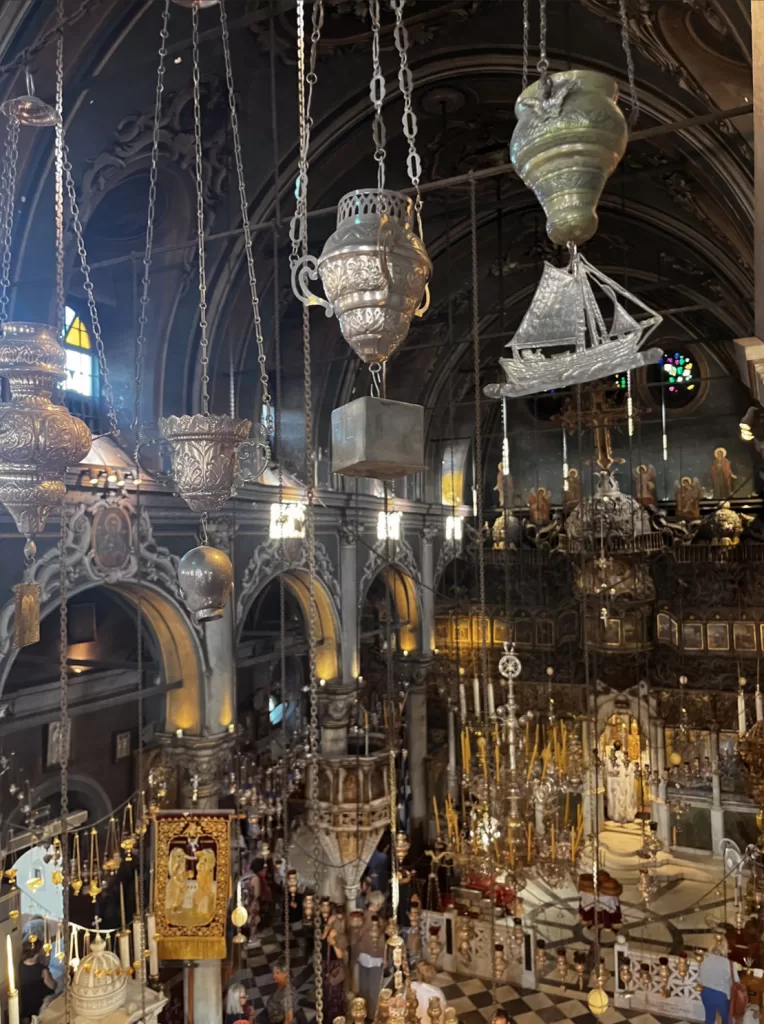
Numerous oil lamps cover the interior of the church and the walls are adorned with gold and silver gilded icons of the Virgin Mary and saints. Many of the oil lamps have unique votive objects hanging from the bottom of them. Some of them include boats and planes. Parts of the church appear dark, which is due to the limited amount of windows and a thin layer of soot from over 200 years of burning candles and incense.
Tinos Icon
The central focus of the Panagia Evangelistria Church is the Tinos icon framed in a gold case and placed in a marble throne. The image depicts the Annunciation of the Virgin Mary, with the angel Gabriel holding a lily and the Holy Spirit represented as a dove. Over the years, countless pilgrims have left necklaces, rings, and other precious objects and placed them over the icon. Today, it’s no longer possible to see the image beneath these gifts of devotion.
If you bring religious items like crosses and icons, you can bless them on the Tinos icon. To do this, make the sign of the cross three times with the object directly touching the icon.
Myron (Myrrh) From the Tinos Icon
Once you enter, you’ll find two stands distributing small beeswax candles to light inside the Panagia Church. At the right hand wooden desk, you can ask the church staff for myron, or myrrh. The Tinos Icon is traditionally believed to stream myrrh or weep oil during certain times. The fragrant holy oil is believed to have healing and protective powers.
When you request the myron, the church attendant will provide you cotton swabs with the myrrh in a protective white bag. You can use the Myron to anoint yourself or your icons. Afterward, it’s advised to keep the cotton swabs in a ziplock bag and use them during times of need or to give them to a priest rather than throwing them away.
The balcony of the Church
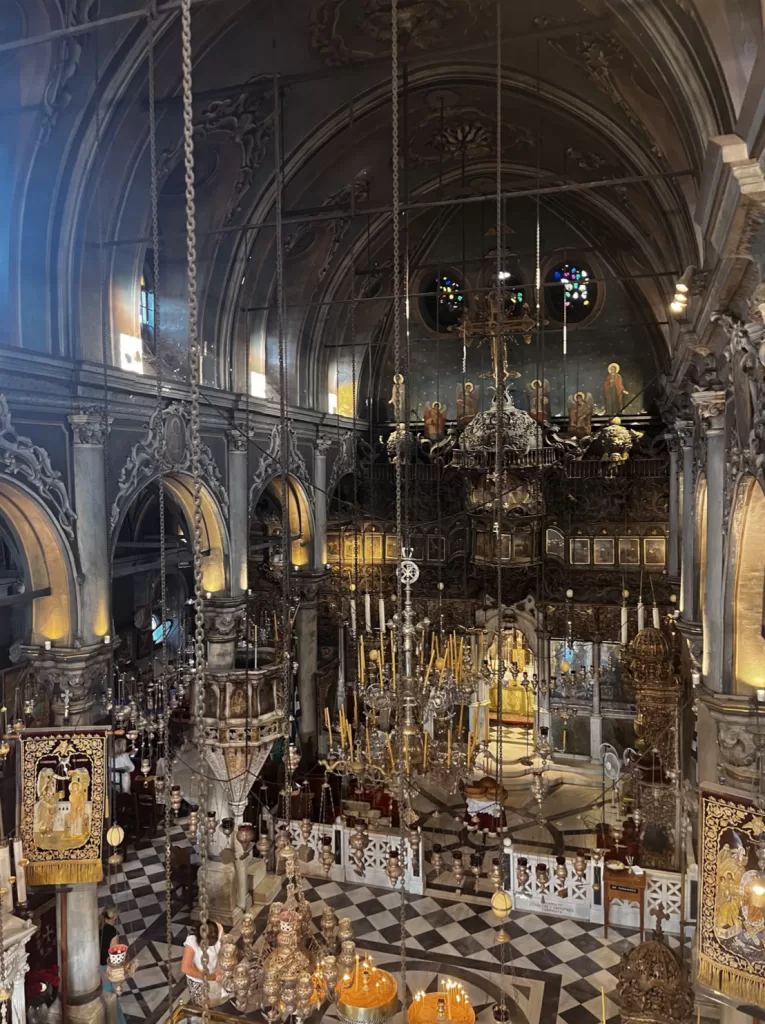
From the altar, exit through the left door of the basilica. Just a few steps away, another open doorway leads to a steep staircase. From here, you can get an aerial view of the church’s interior from up high. I would come here every morning for 20 minutes to listen to part of the liturgy and collect my thoughts. It’s a great place to admire Greece’s most visited and sacred church from above.
Back Door of the Panagia Church
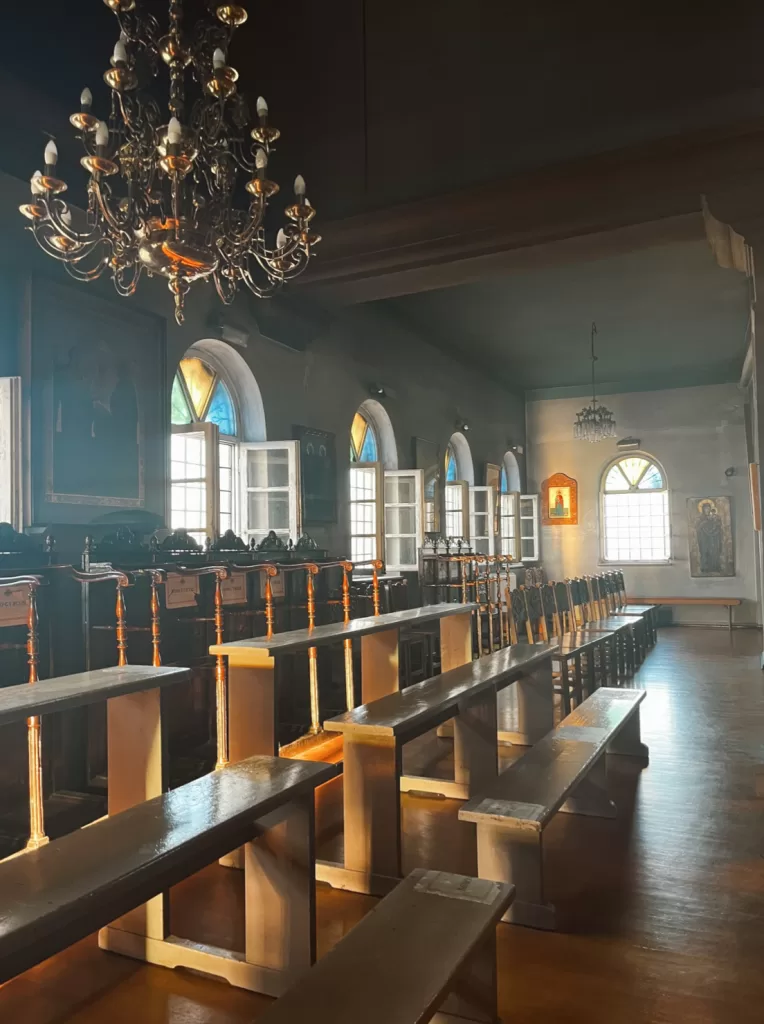
At the very back of the church, there’s a small door that’s always left open. This entrance is convenient if you want to slip into the basilica or enjoy the serene church grounds without waiting in the long line at the front gates. However, if you want to venerate and see the Tinos icon, you will have to wait in line as cutting is both disrespectful and prohibited.
Additionally, along the outer left wall of the church grounds, you’ll also find parking. From there, it’s only a short uphill walk to the back entrance.
Chapel of Zoodochos Pigi | A Church Beneath a Church
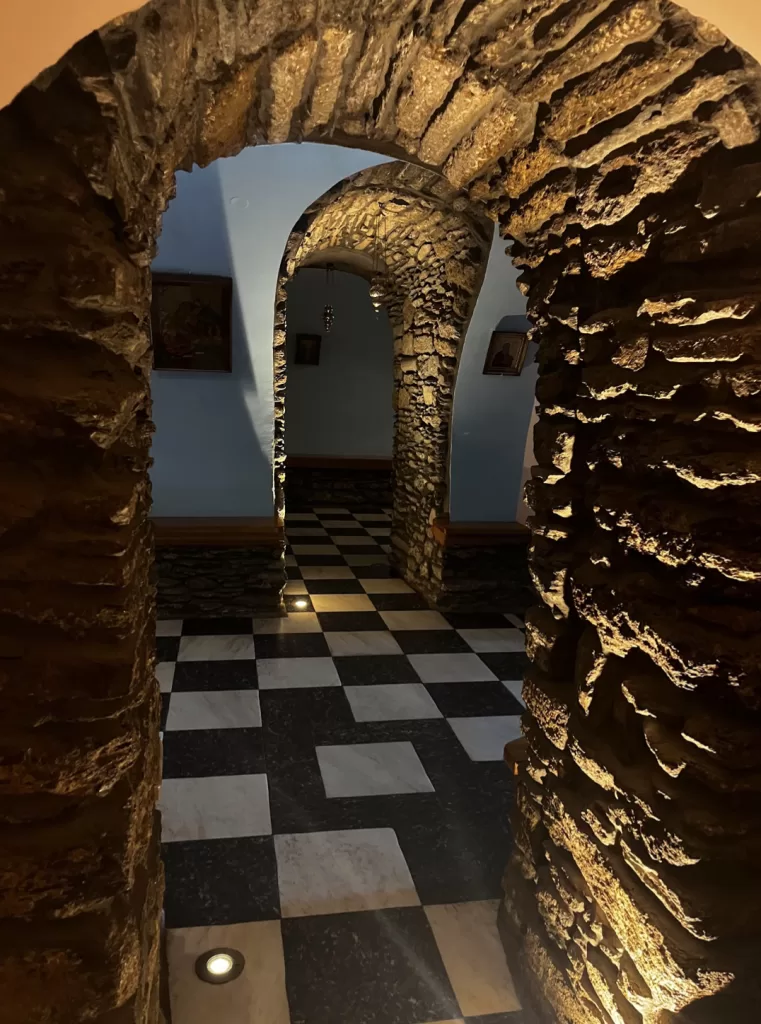
The new neoclassical basilica of Panagia Evangelistria was built right over the older Byzantine church. Originally dedicated to St. John the Baptist, the Zoodochos Pigi chapel is now named in honor of the Virgin Mary of the Life Giving Spring. According to tradition, this is the exact spot where the Tinos icon was rediscovered in 1823.
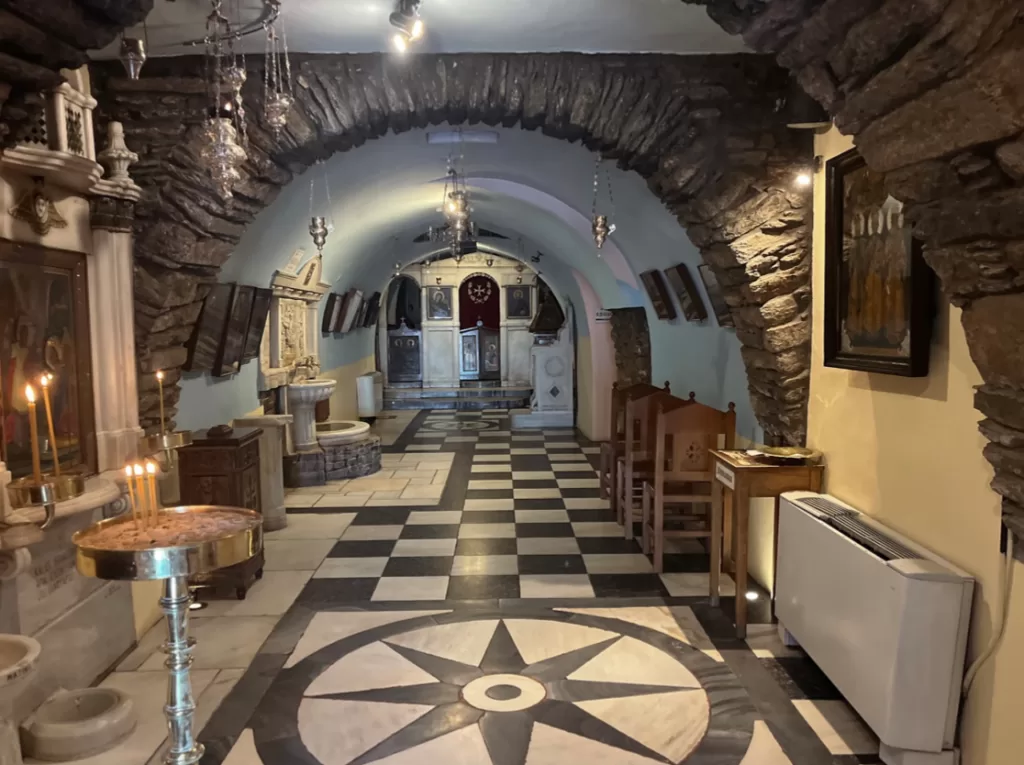
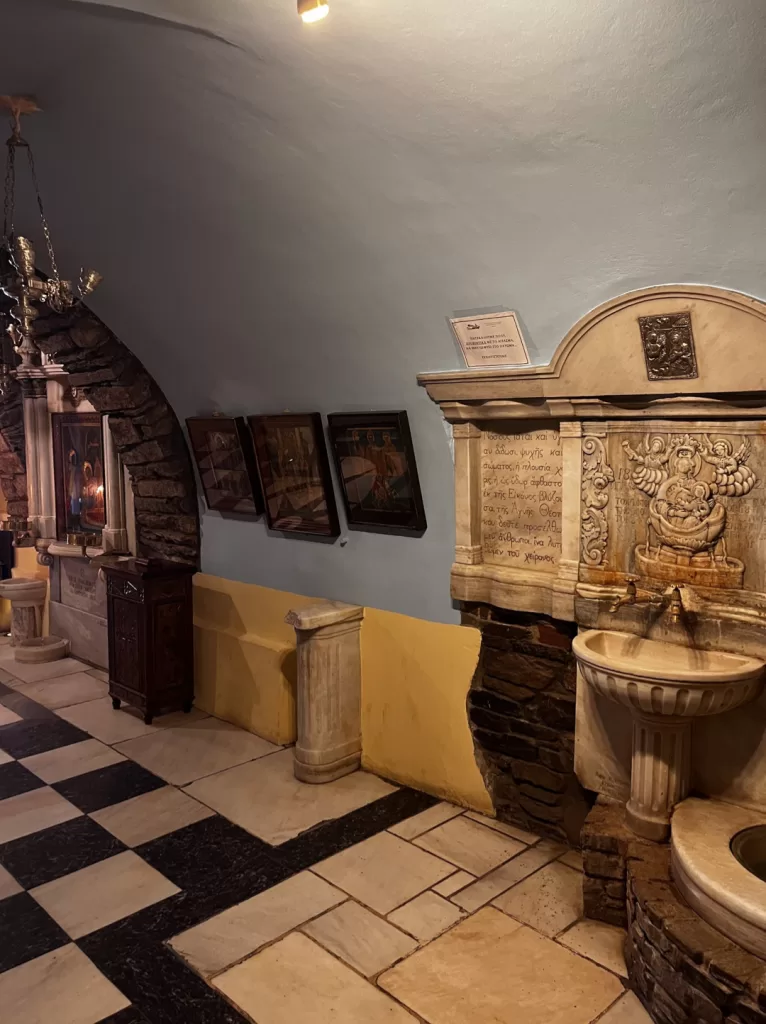
The three isled chapel contains the original ancient stone walls and a black and white checkered floor. Arches and vaulted ceilings connect each of the rooms. One room holds an altar for liturgies or masses, while the other two contain fonts for baptisms.
There are places to light candles, and during the major feasts of Orthodoxy, large metal bowls are put out with cut pieces of tsoureki (Greek sweet bread) for pilgrims to take.
Holy Water of Zoodochos Pigi
During my first visit to the Panagia Church, I noticed many Greeks bringing empty plastic water bottles. Inside the Zoodochos Pigi chapel, I quickly realized that the empty containers were for taking holy water home. I returned to my car, got an empty water bottle, and filled it up from the marble font.
If you’re traveling long distances like I was back home, make sure your bottle is tightly sealed. Fill it all the way to minimize air pressure changes on the plane. Remember to keep the holy water in your checked bag or airport security may make you throw it away.
Memorial to Elli
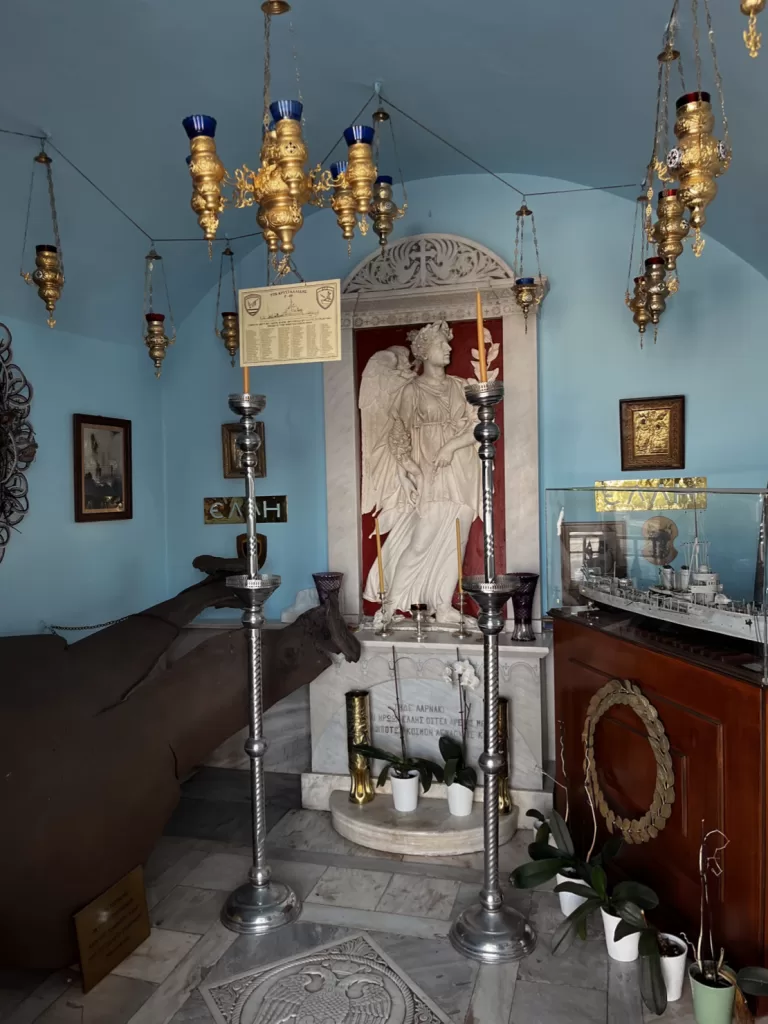
Right outside the chapel of Zoodochos Pigi stands the Memorial to Elli. The marble monument honors the Greek cruiser Elli, which an Italian submarine attacked and sank on August 15, 1940. The attack in Tinos port occurred while the crew was celebrating the feast of the Assumption of the Virgin Mary inside the church.
In total, 9 Greek sailors died and 24 people suffered injuries. Each year, participants hold a wreath laying ceremony alongside the religious services.
Treasury
Next to the basilica stands the treasury of the church. Inside, countless gold and silver votives to the Virgin Mary, jeweled icons, and royal gifts are some of the many objects that make the treasury not just a museum but a living record of the Greek people’s devotion to the Panagia.
Icon shops and Religious Stores Around Panagia Church
There are many icon shops and stalls along the streets next to the Panagia Church. You can find religious objects such as icons, crosses, votive lamps, and kombiskini (prayer ropes). I was able to purchase an exact replica of the Tinos icon to always remember my visit.
Kechrovouni Monastery
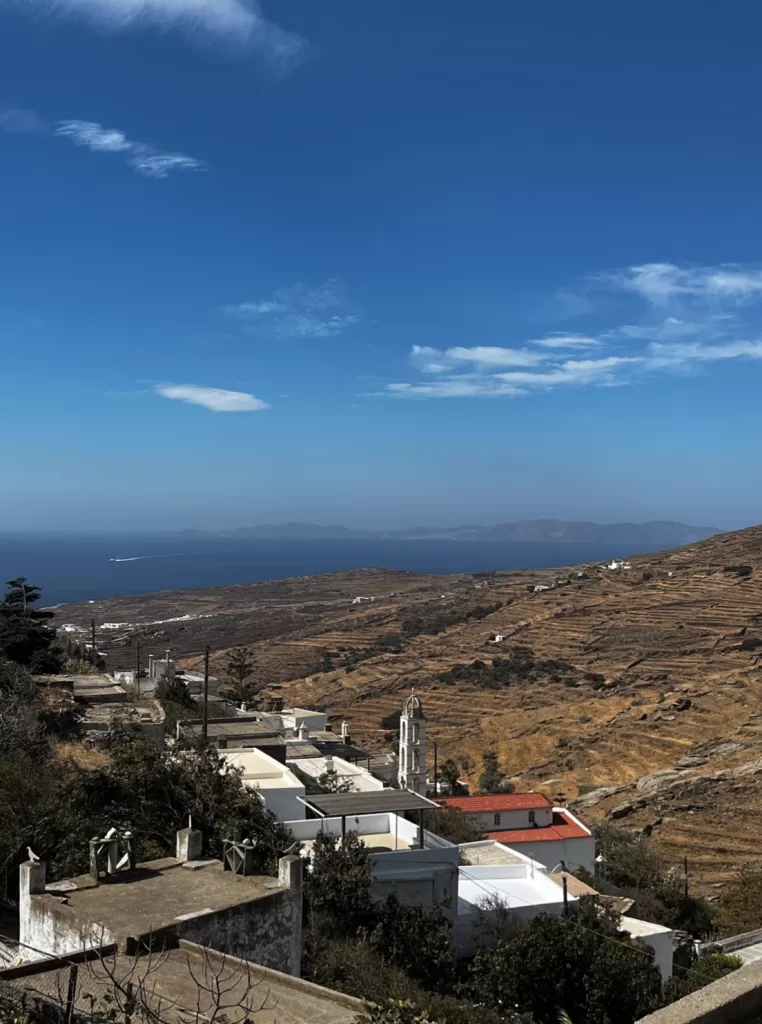
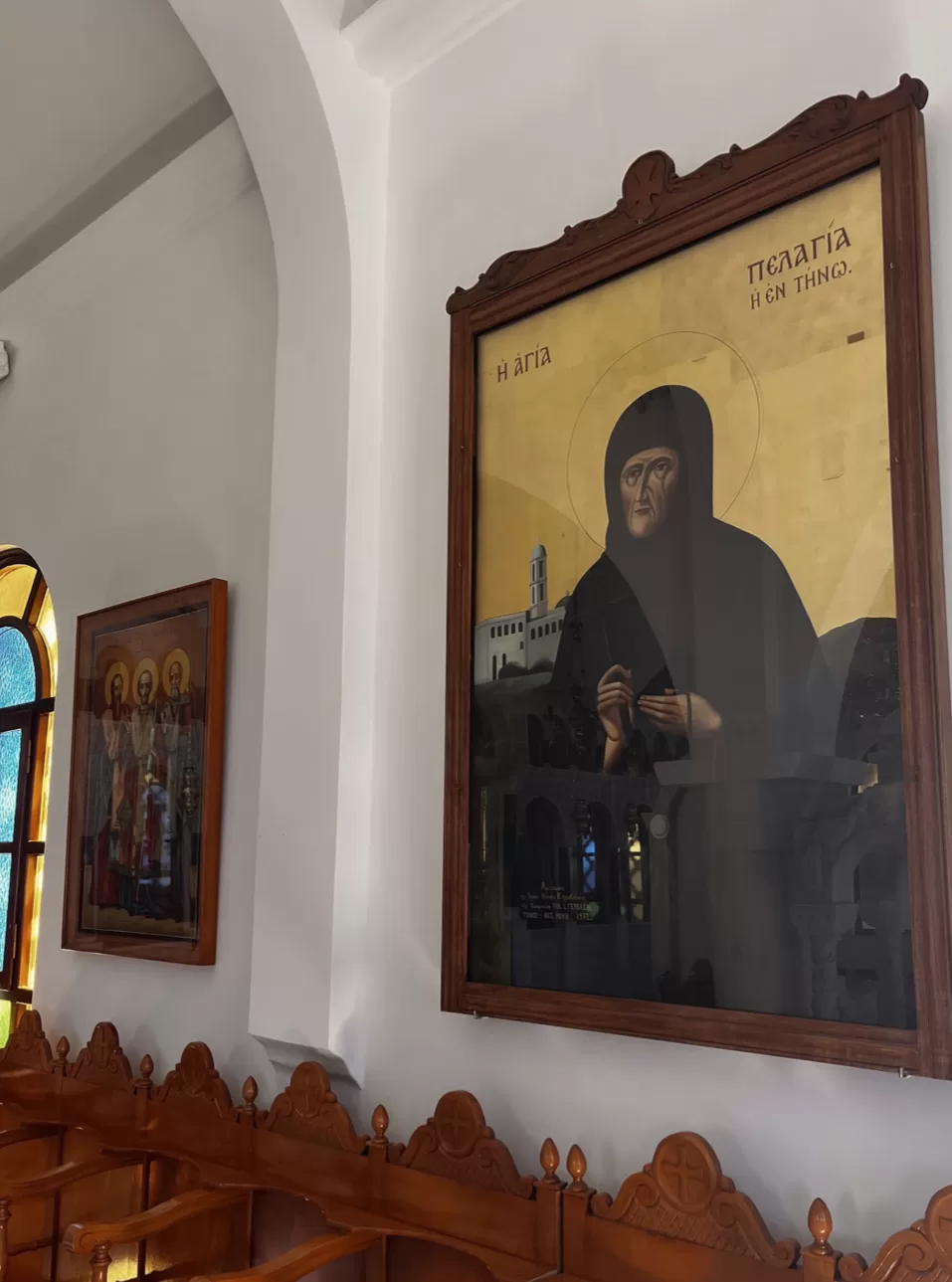
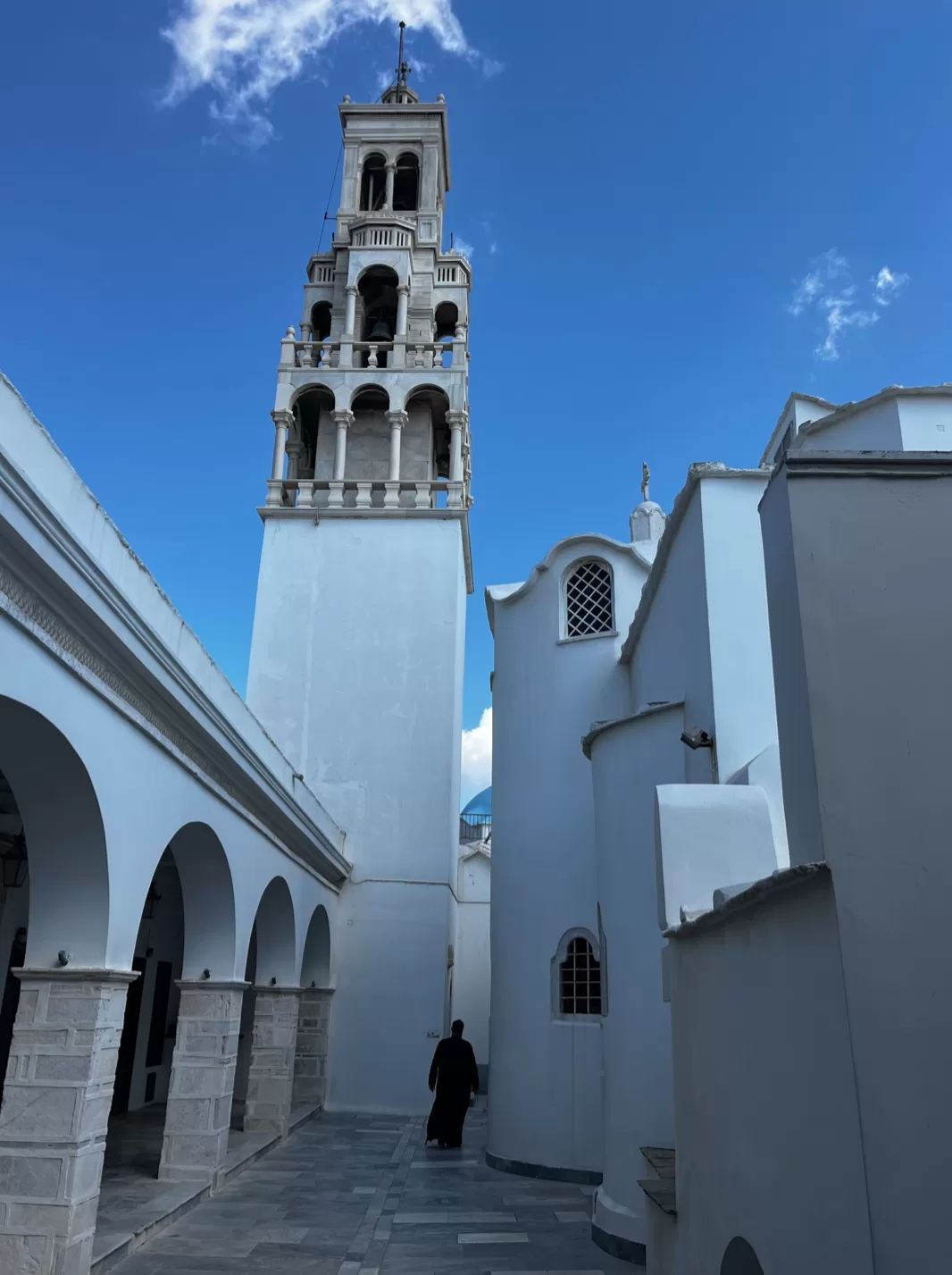
Perched high above Tinos port and the Panagia Evangelistria Church is the Kechrovouni Monastery. This is the spot where St. Pelagia lived as a nun and received visions from the Virgin Mary instructing her where to rediscover the lost icon of Tinos. Built in the 10th or 11th century, the monastery is home to around 40 nuns, making it one of the largest nunneries in Greece.
The walled monastery is quite expansive and resembles a Greek island village with tiny streets, bright alleys, and small chapels. The cell where St. Pelagia experienced her revelations from the Virgin Mary has been turned into a shrine where visitors can light candles. There are two large churches where the Divine Liturgy is celebrated, one of which is crafted from precious Tinian marble.
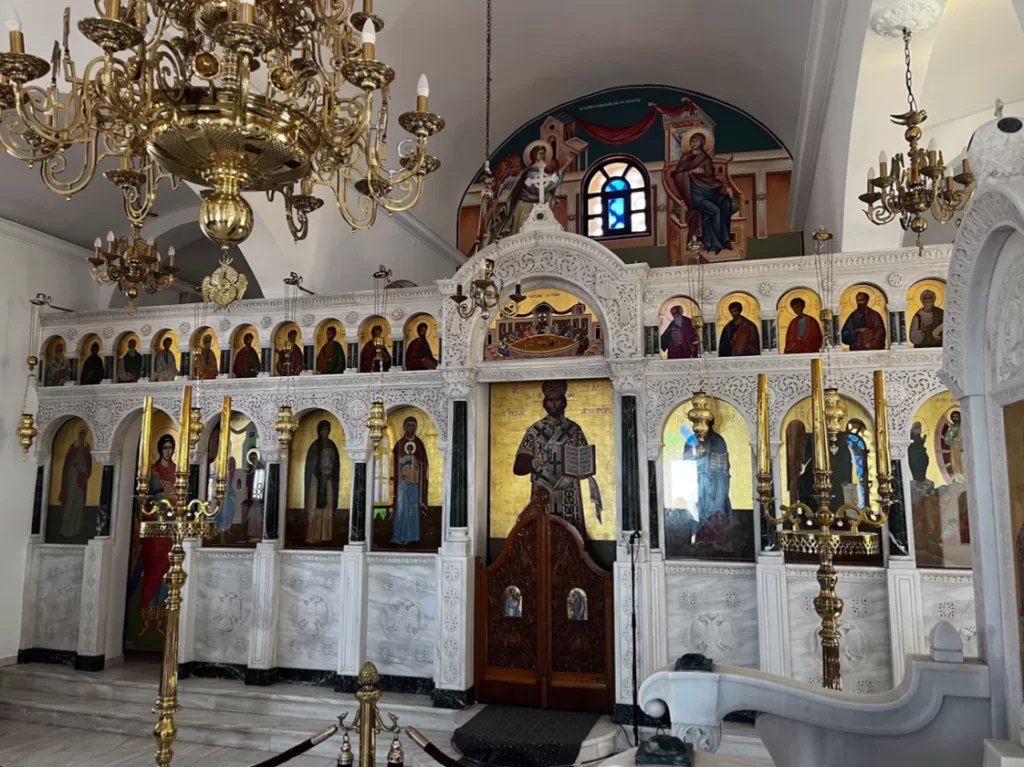
Unlike the Panagia Church where more casual attire is allowed, full length pants and tops covering your shoulders is required for both men and women.
A dirt lot in front of the monastery provides parking. Kechrovouni Monastery is open daily from 7:00a.m. to 1:30p.m. and opens again from 2:15p.m. to 7:15p.m.
Other Greece Blogs and Guides
I hope you enjoyed my guide to visiting the Church of Panagia Evangelistria. For more insight and inspiration on exploring Greece, check out my other blogs and travel guides.
- Tinos Island Guide
- Karpathos Island Guide
- Mount Athos Guide
- Chania Town Crete Guide
- Exploring Crete’s Akrotiri Peninsula
- Mani Travel Guide (COMING SOON)
- Celebrating Easter on Crete (COMING SOON)
- Milos Island Guide (COMING SOON)

0 Comments