
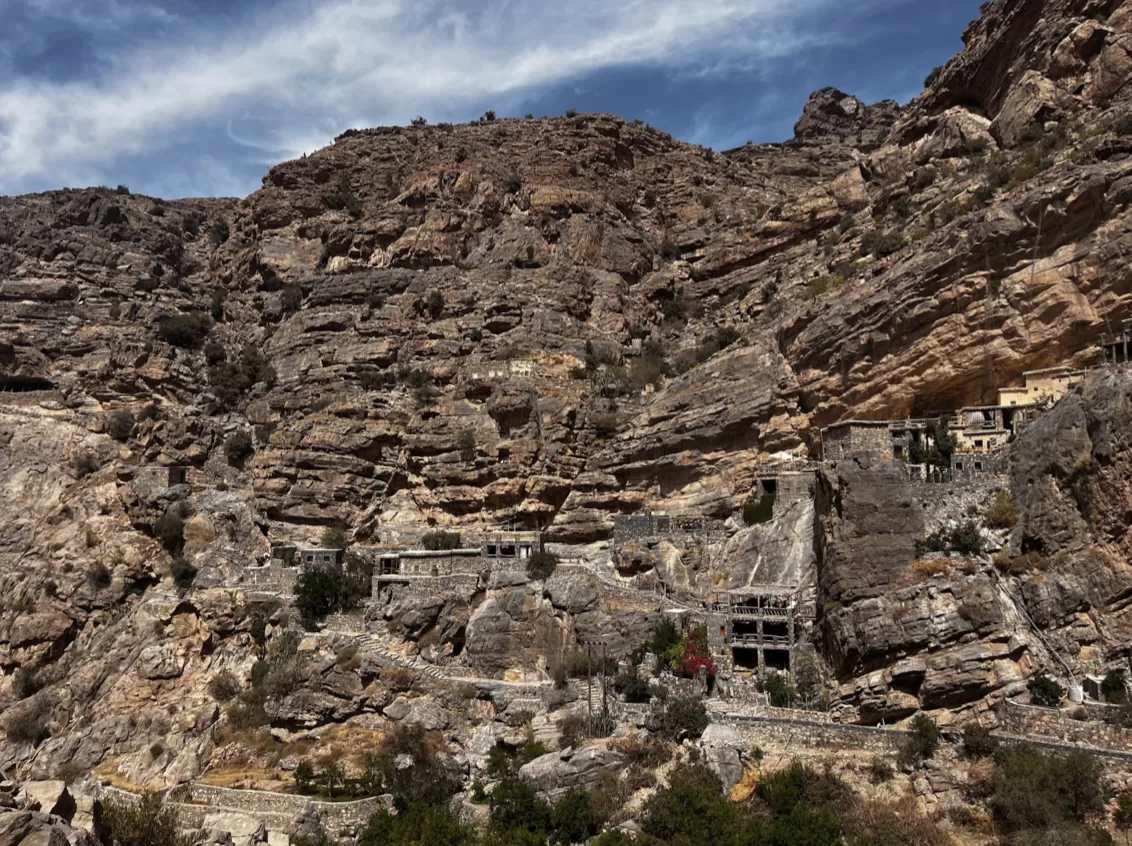
Discover Oman’s authentic mountain heritage and timeless hospitality at the Suwgra, nestled high in Jebel Akhdar -Old Soul Explorer
Note: This blog and review of the Suwgra is not sponsored and is completely based on my own experience.
Tucked in the Rose Scented Fold of the Jebel Akhdar Mountains
High above the coastal shores of Muscat rise the soaring peaks of Jebel Akhdar. Known as the “Green Mountains”, the highlands of Jebel Akhdar isn’t very green at all for the most part. The most beautiful time of year to visit Jebel Akhdar is during the Damask Rose bloom, where 3 ancient villages connected by cliff hugging stone paths are covered in pink, fragrant flowers.
Tucked high in the rose scented fold of the Jebel Akhdar mountains lies one of Oman’s most authentic places to stay. The Suwgra is built into the side of a cliff and is a 500 year old mountain village turned bed and breakfast. All of the traditional elements in the Suwgra have been retained while adding modern comforts like private bathrooms with warm water and internet. When visiting Oman, the Suwgra is one hotel you simply can’t miss. Reasonably priced, it provides a glimpse into traditional Omani living and will be a stay like no other. The Suwgra isn’t just a place to stay, it’s an experience.
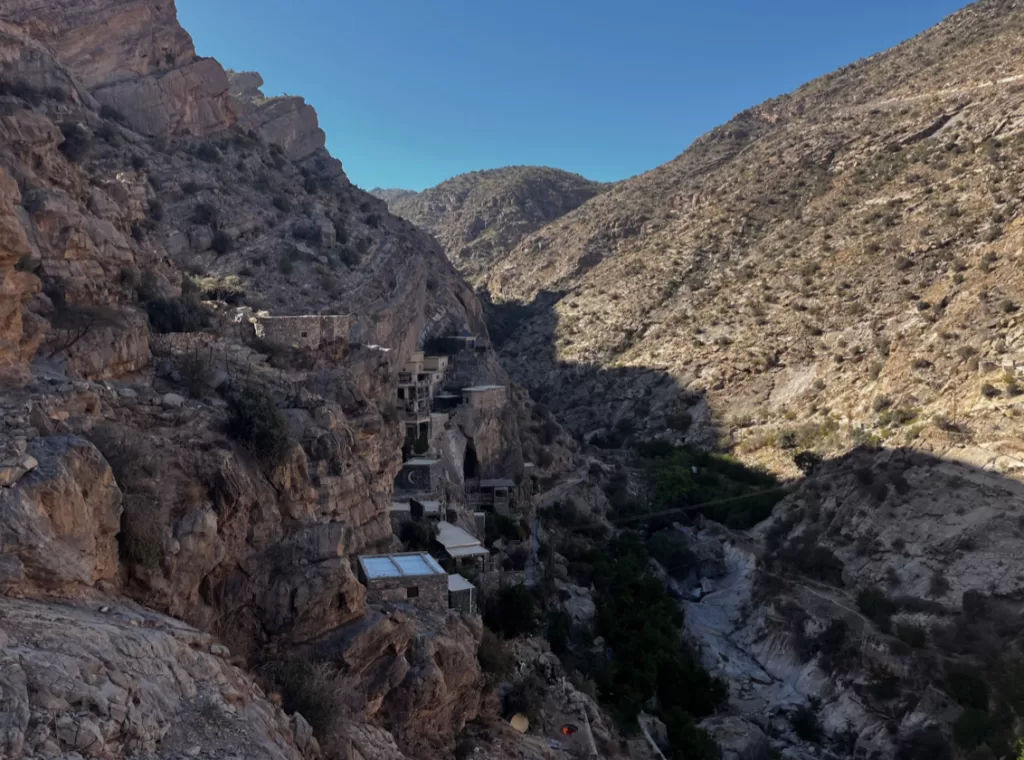
What is the Suwgra
Nestled deep in Oman’s Al Hajar mountain range, the Suwgra is Jebel Akhdar’s oldest cliffside village. Nearly 500 years old, the Suwgra was named for the once abundant “Suwgra” trees that were used to build homes and sturdy ceilings. The original inhabitants of the Suwgra carved their homes into limestone terraces and used olive, walnut, and juniper wood for additional construction and decorative elements.
Oman underwent rapid development beginning in the 1970s. The development continued into the early 2000s, with a gravel road being built just short of the Suwgra in 2004 for the first time.
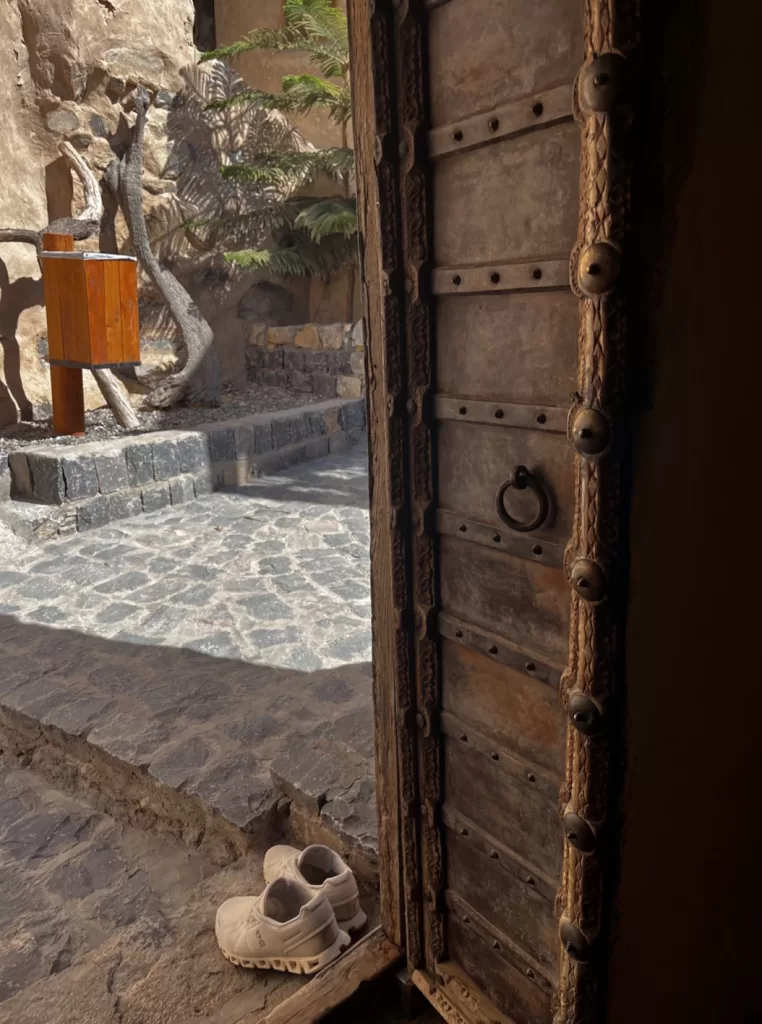
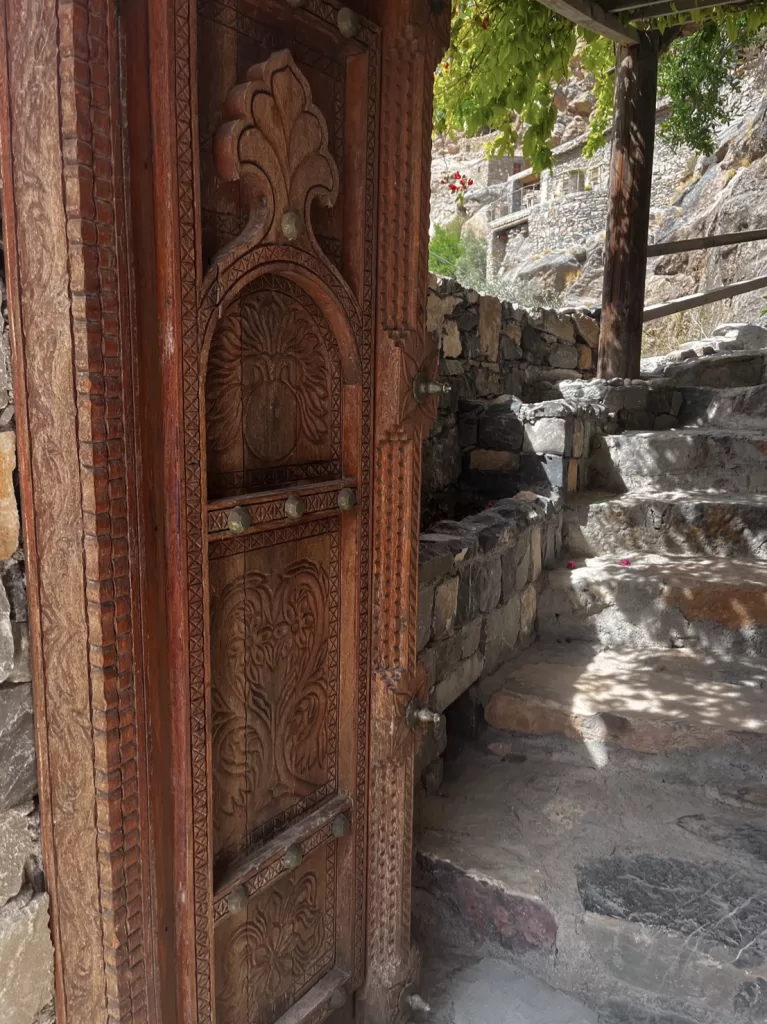
By 2014, most of the Al Sheriqi family, descendants of the village’s original residents, had relocated to newer homes down the road seeking modern utilities and convenience. The family began to restore the mountainside village in 2015, using local clay and timber, while preserving and honoring traditional Omani architecture. Intricate wood carvings, some centuries old, still adorn the doors and ceilings
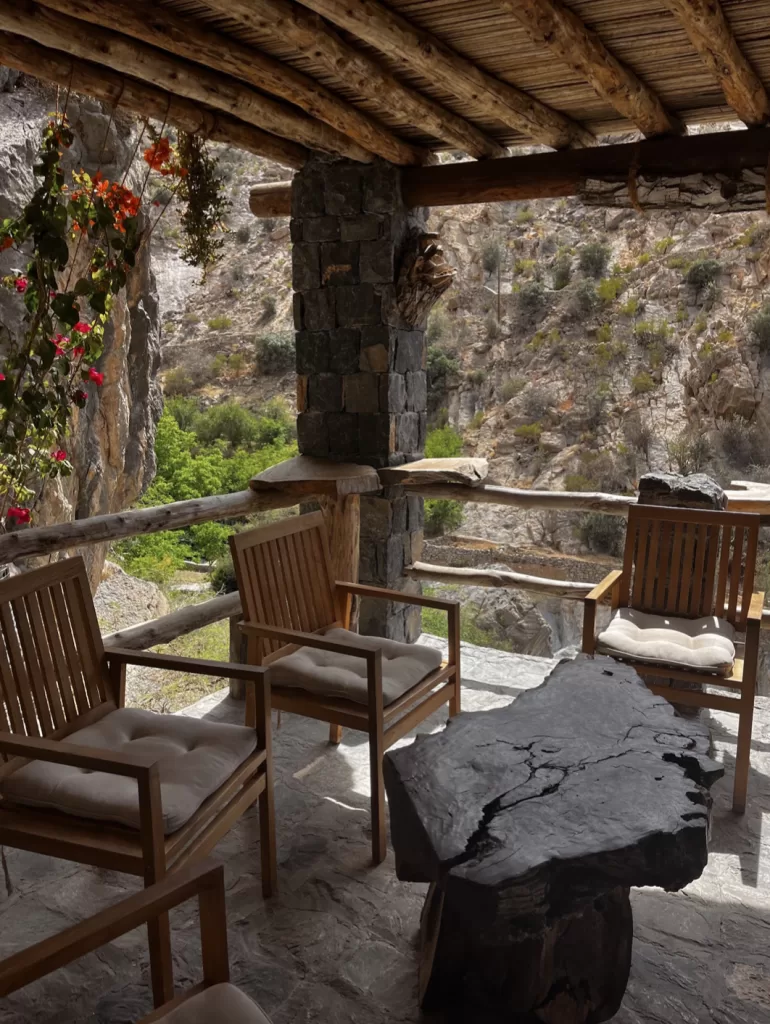
Today, the Suwgra has emerged as a beacon of sustainable tourism, including 11 rooms, each with their own private bathroom and terrace. While the accommodations are simple and clean, they remain true to the spirit of this storied Omani village. At the heart of the village is Anat Cafe, a small coffee shop with stunning views of the entire village. There are also multiple activities to either find peace and solitude in the mountains or pursue adventures in Jebel Akhdar.
The Traditional Omani Experience | Cultural Immersion in the Al Hajar Mountains
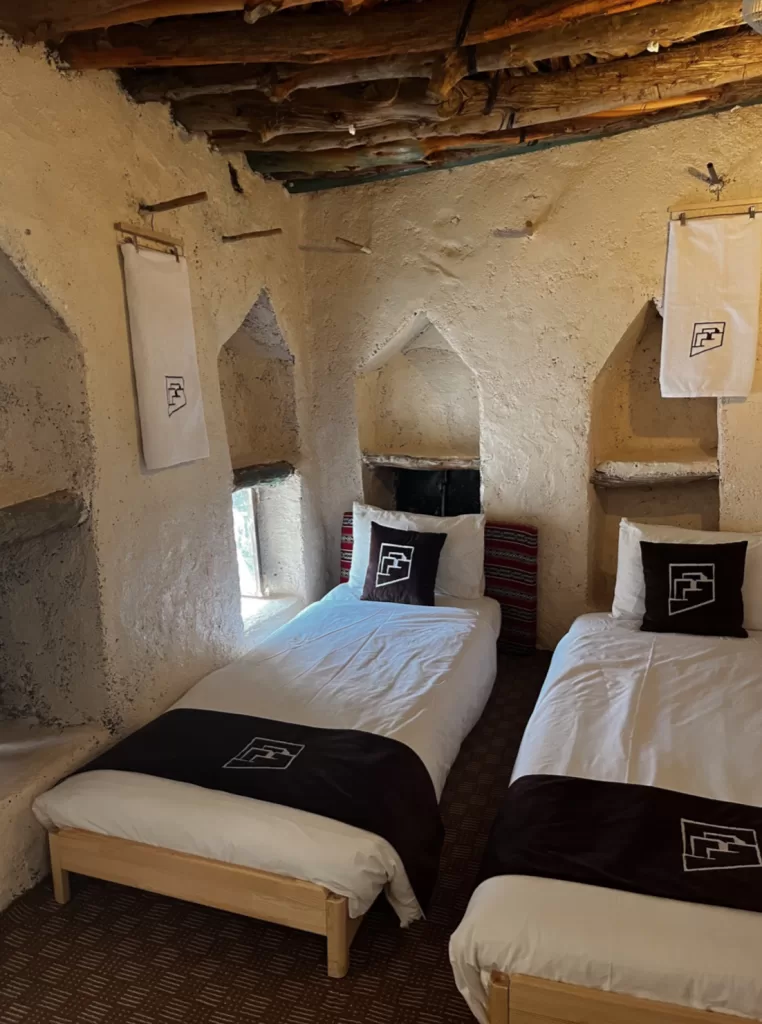
The Suwgra isn’t just a hotel, it’s a fully immersive encounter with the heritage and spirit of Oman’s Al Hajar mountains. While maintaining a serene air of mountain minimalism, every detail feels deeply intentional. From vibrant red rugs to intricate wood carvings on thick earth toned walls, staying here will transport you to another time. You’ll wake to the call to prayer echoing through the canyon, recited by one of the younger family members who still live and work in the village. The cooler mountain air offers a welcome relief from the unrelenting heat of the Arabian Peninsula.
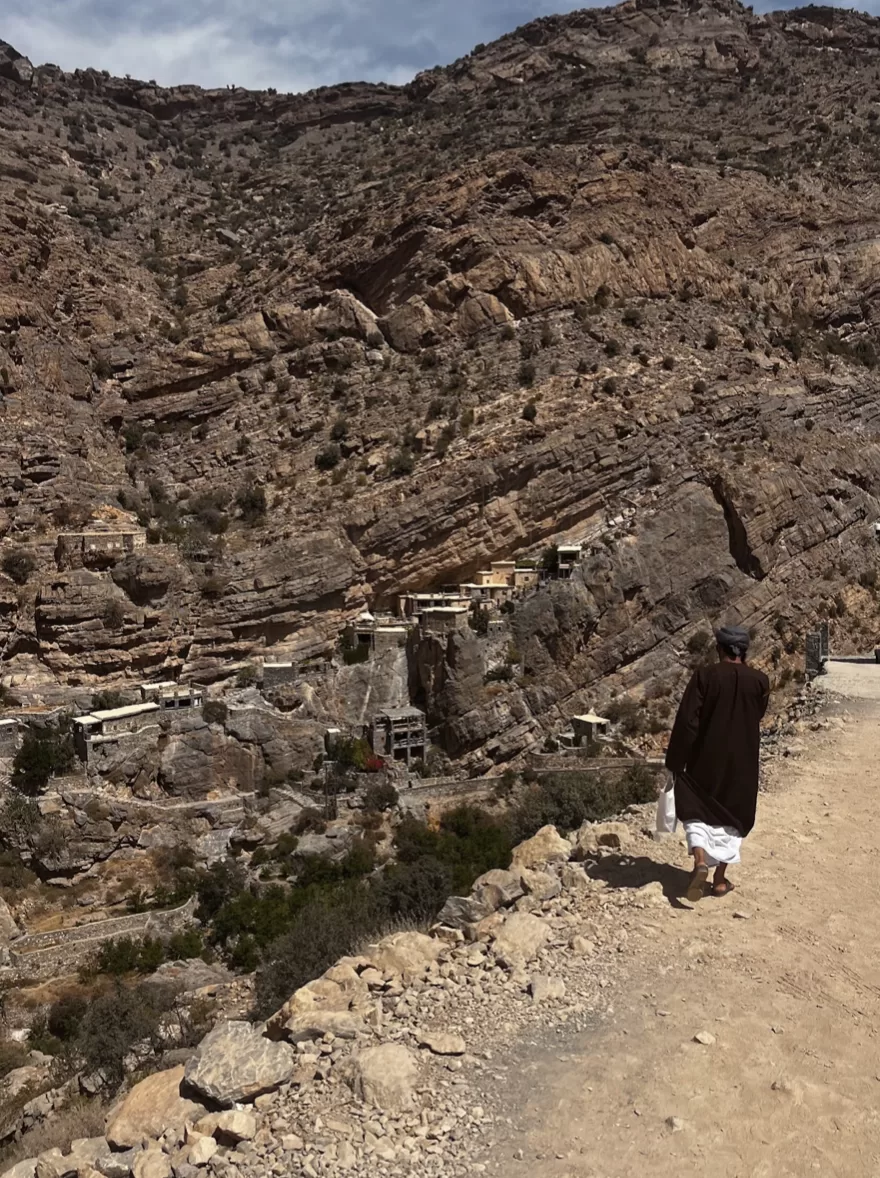
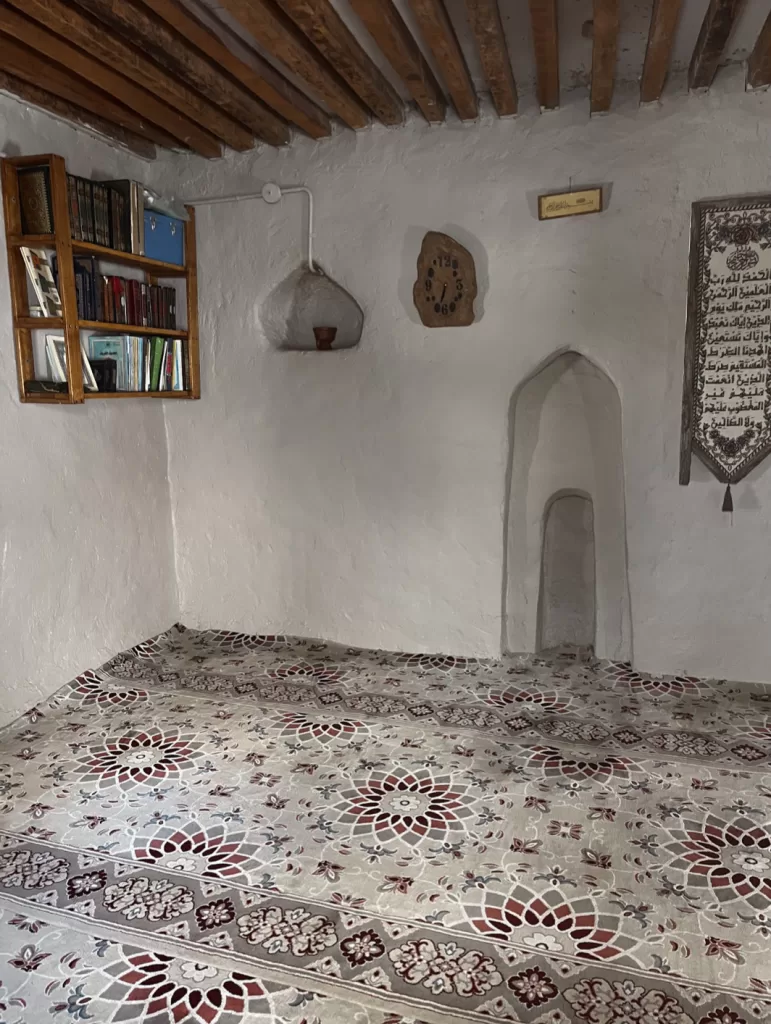
Still run by the same family that nourished the Suwgra trees, this bed and breakfast retains tradition and comfort in the same breath.
// Oman | 15 Things to do in the Corner of Arabia
My Experience at the Suwgra
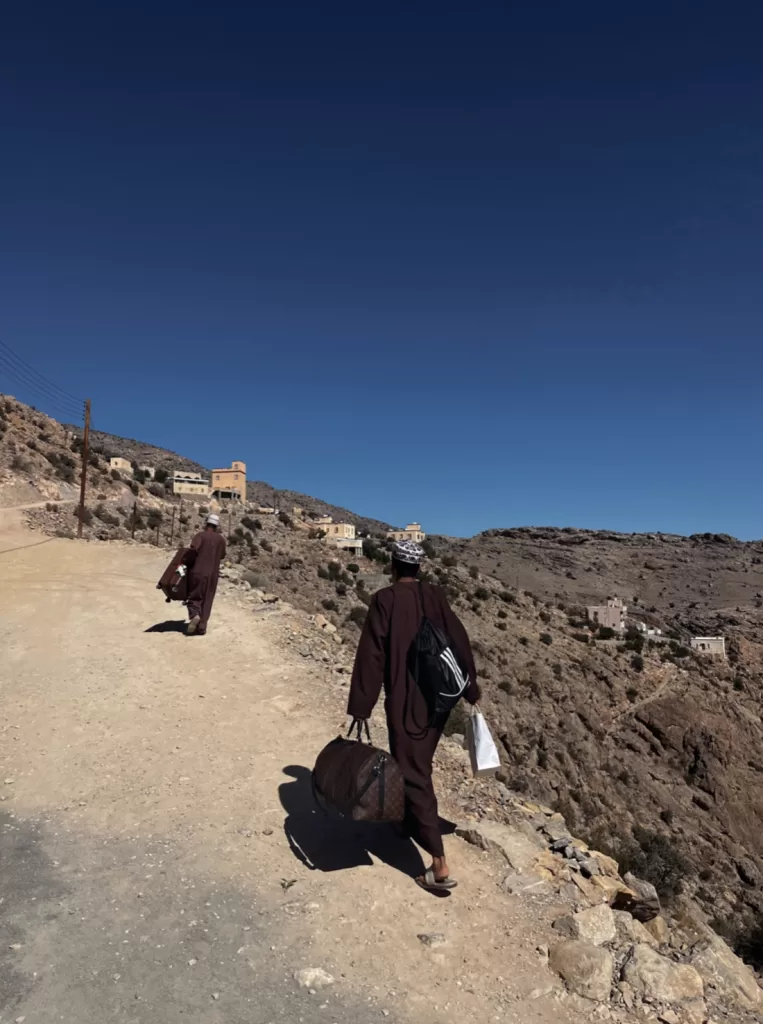
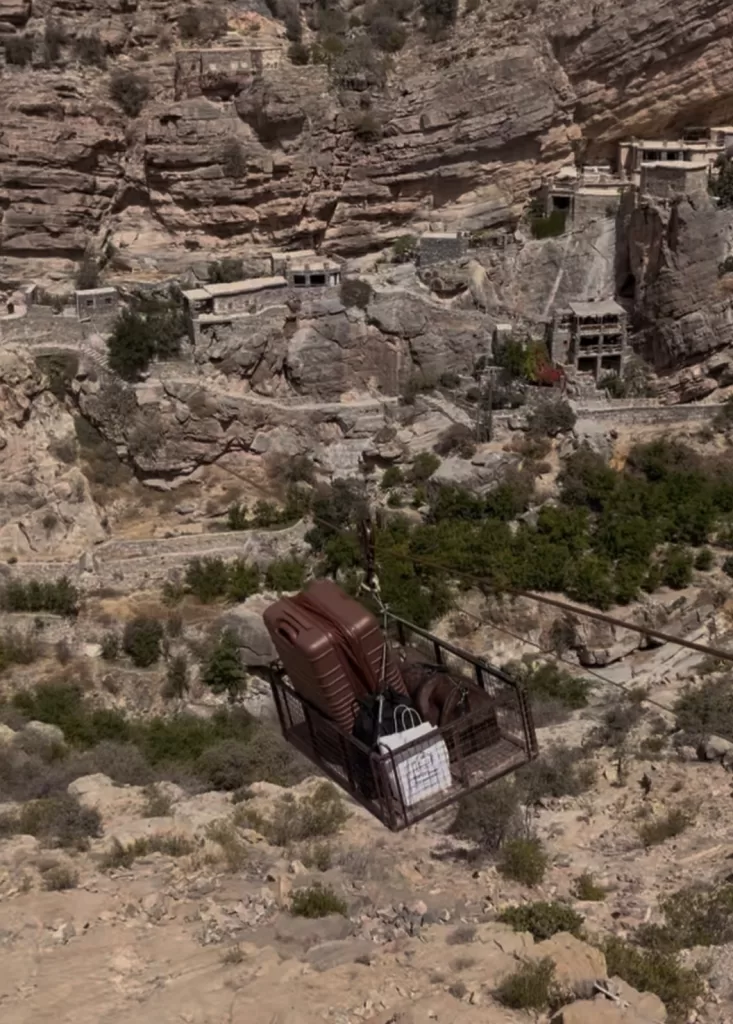
From the second I arrived at the Suwgra, I was greeted with the warmth of Omani hospitality. Locals greeted me and took my luggage. A minute later, my suitcase and Louis Vuitton duffle were flying across the canyon on a zipline, the only way to transport luggage to the hotel.
I descended a steep stone staircase which offered remarkable views of the Suwgra, carved into the mountainside, like something out of a novel or a dream. I walked through the garden where pomegranates, grapes, and olives grow in abundance. It’s important to note that trespassing in the garden without permission and guidance is not allowed.
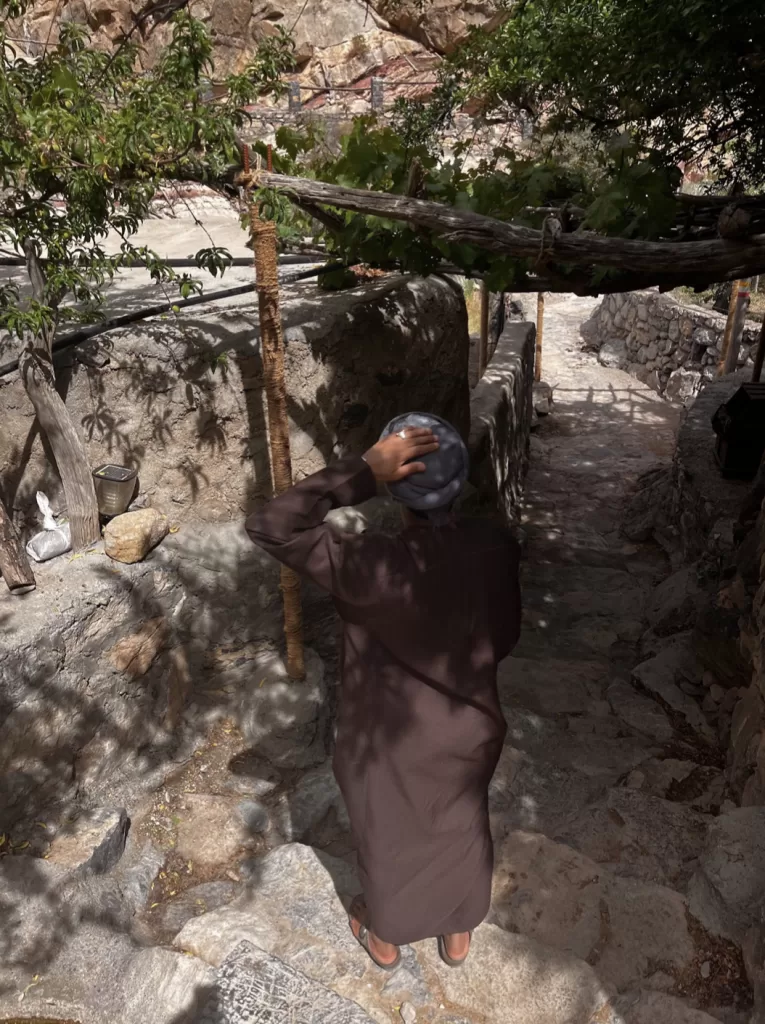
In winter, a wooden bridge is the only safe way to cross as the river rages with fresh mountain water.
When I ascended the last of the stone steps, I was received with fragrant Omani coffee with cardamom and dates. My room was simple yet rich in traditional charm, everything I needed for my stay in the Jebel Akhdar mountains. It had a beautifully carved door, Arabian rugs, and arched windows. I had a private bathroom which was very clean and had hot water. I also had a private terrace with a porch swing on it. There are multiple room types, from simple dwellings like mine to more spacious suites.
I spent lots of time at Anat cafe, enjoying the peaceful energy of this cliffside coffee shop.
Road to the Suwgra
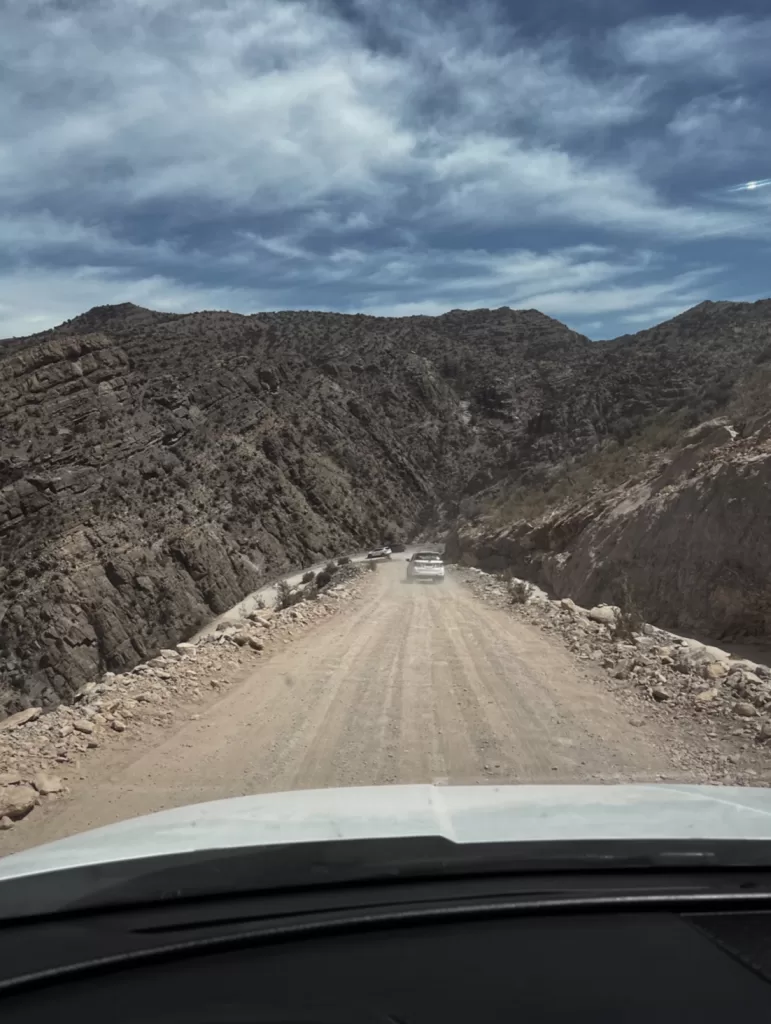
Be advised the road to The Suwgra is unpaved and extremely steep in sections.
A 4WD vehicle is required to access the village. In fact, there is a local police checkpoint at the base of the mountain and you will not be allowed to pass unless you driving a 4WD. All other vehicles are turned away.
Anat Coffee
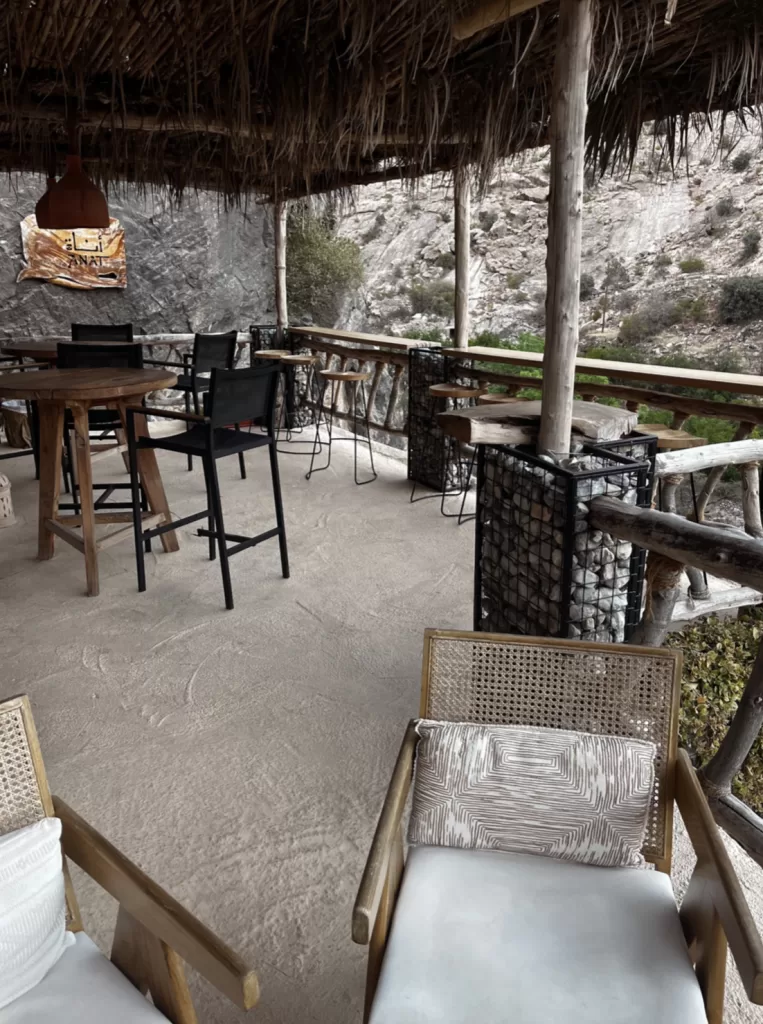
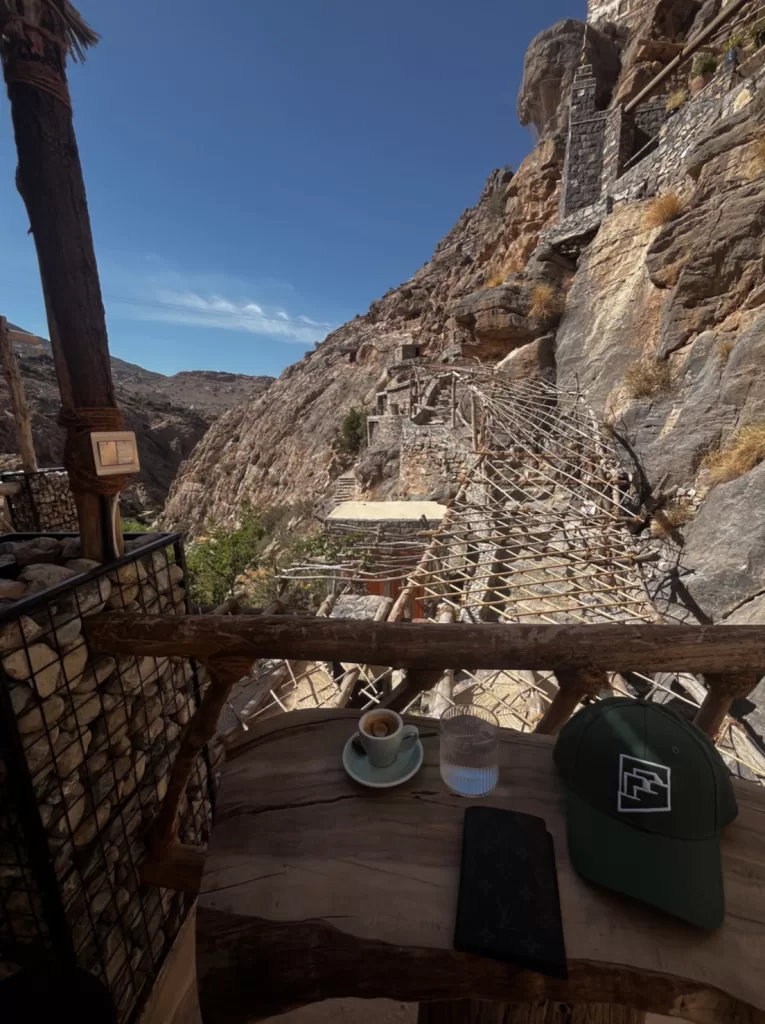
Perched just above the entrance to The Suwgra, Anat Cafe offers a serene, grounded spot to sip espresso and take in panoramic views of the mountain village and surrounding canyon.
Even if you aren’t staying overnight, visitors are welcome to stop by Anat and order a drink. Just like the rest of the village, Anat features local wood accents and earthen tones. It’s simple, rustic, and tasteful. The coffee was excellent.
Meals at the Suwgra
Breakfast and dinner are included as part of the stay. Breakfast consisted of shakshuka, Omani pancakes, afoul medames (stewed fava beans) along with fresh juice.
Dinner featured grilled meats, spiced rice, traditional Omani bread, and seasonal vegetables. Before the meal, all guests gather together in a communal space to hear stories about the history of the Suwgra.
Lunch isn’t typically included but can be arranged upon request.
Activities at the Suwgra
There’s no shortage of things to do at the Suwgra. Whether you’re seeking stillness and solitude in the mountains or a more adventurous experience in Jebel Akhdar, the Suwgra offers a rich variety of activities.
Three Villages Walk | Exploring Jebel Akhdar’s Ancient Settlements
One of the highlights of my stay was the Jebel Akhdar Three Villages Walk. Led by a guide from the Suwgra, the Three Village Walk includes stops at all three of Jebel Akhdar’s biggest historical settlements. The route winds past terraced farms with panoramic views of Jebel Akhdar and closely follows the ancient falaj irrigation channels.
While Al Aqr and Al Ayn remain partially inhabited, Al Shirayjah is now mostly comprised of renovated Airbnbs. Many families who once lived in traditional stone dwellings have since resettled in the nearby ‘modern village’ just above the road, with quicker access to modern amenities.
The Damask Rose Season in Jebel Akhdar
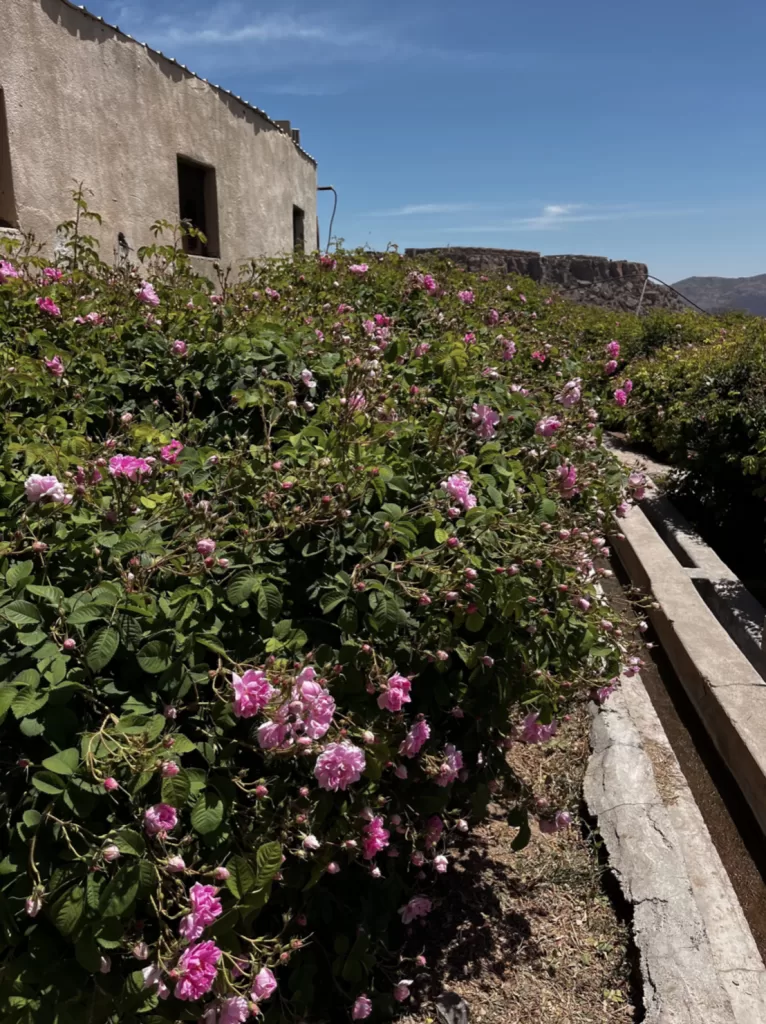
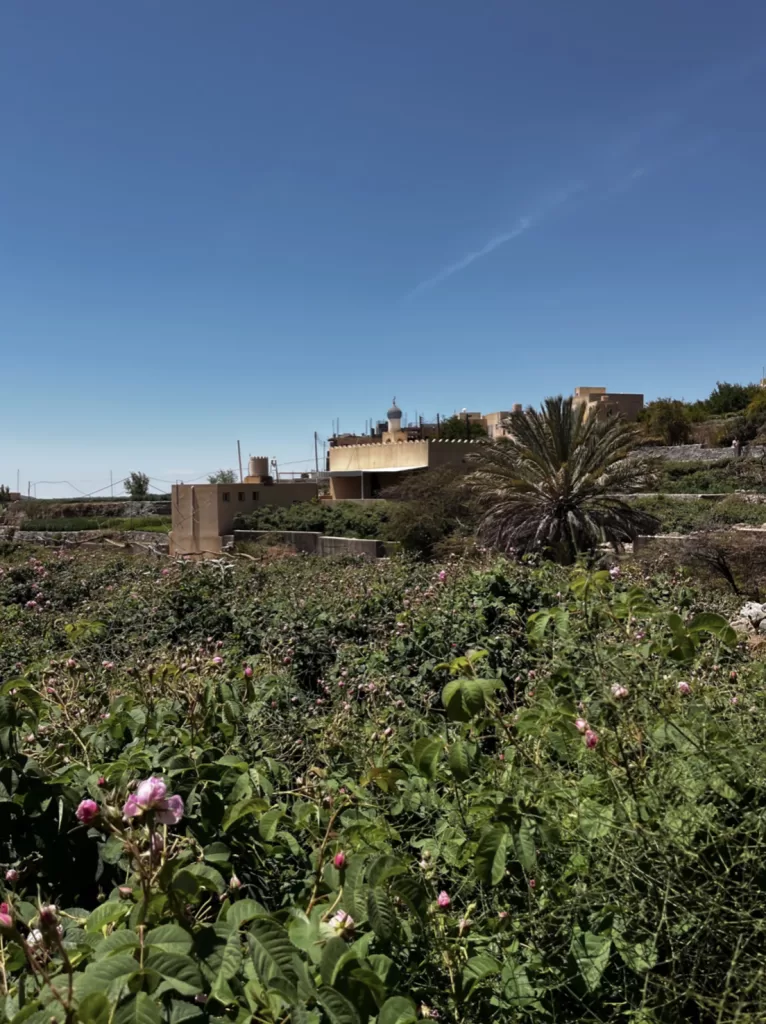
One of the reasons I decided to visit Oman in early April was to experience the damask rose season of Jebel Akhdar. Typically, the roses of Jebel Akhdar bloom from March to mid-April each year. The traditional villages and terraced farms are covered in pink and pungent damask roses. It’s a beautiful springtime activity.
My guide from the Suwgra, Mohamed, explained the cultural importance of damask roses in producing traditional Omani rosewater. I even got to help pick roses and learn the traditional process of distilling rosewater.
// For more information on the rose season in Jebel Akhdar, check out my guide (COMING SOON)
The Making of Shuwa | A Traditional Omani Experience
If you are lucky enough as I was, you’ll have the rare chance to watch the cooking of the Shuwa. Literally translated from “grilled” or “roasted” in Arabic, Shuwa is marinated meat (often goat of lamb) slow cooked underground for up to two days.
Marinated with garlic and Omani spices and wrapped in banana or palm leaves, the Shuwa is the true definition of a slow burn. The meat and leaves are often placed in a sack made of palm fiber or cloth.
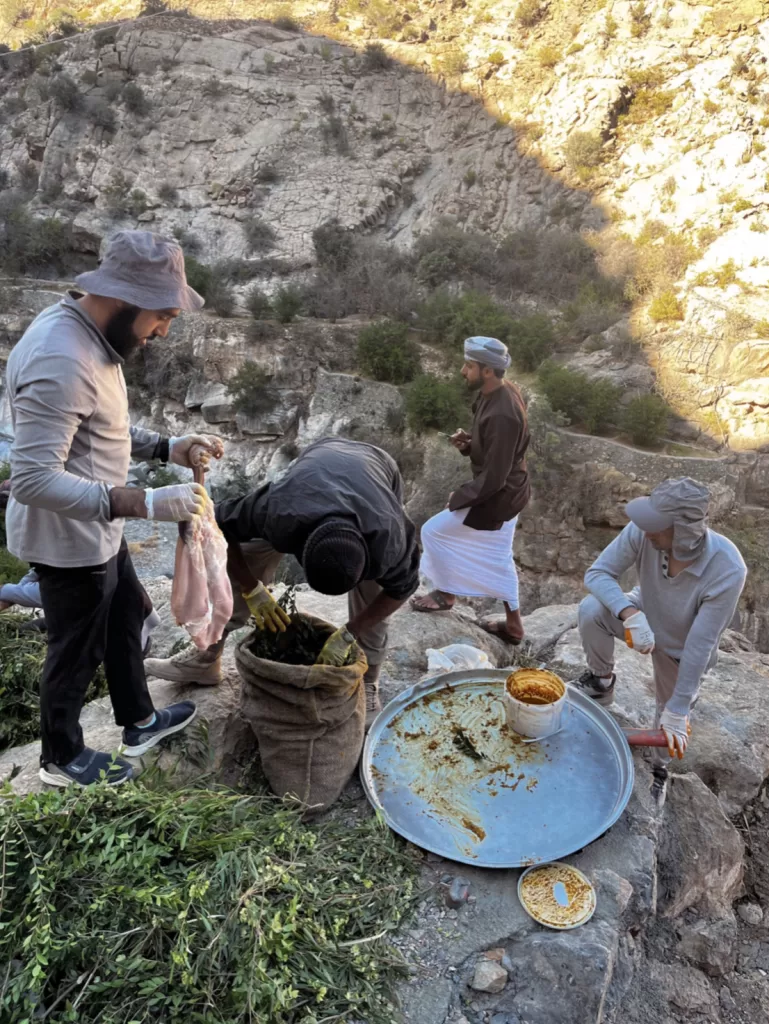
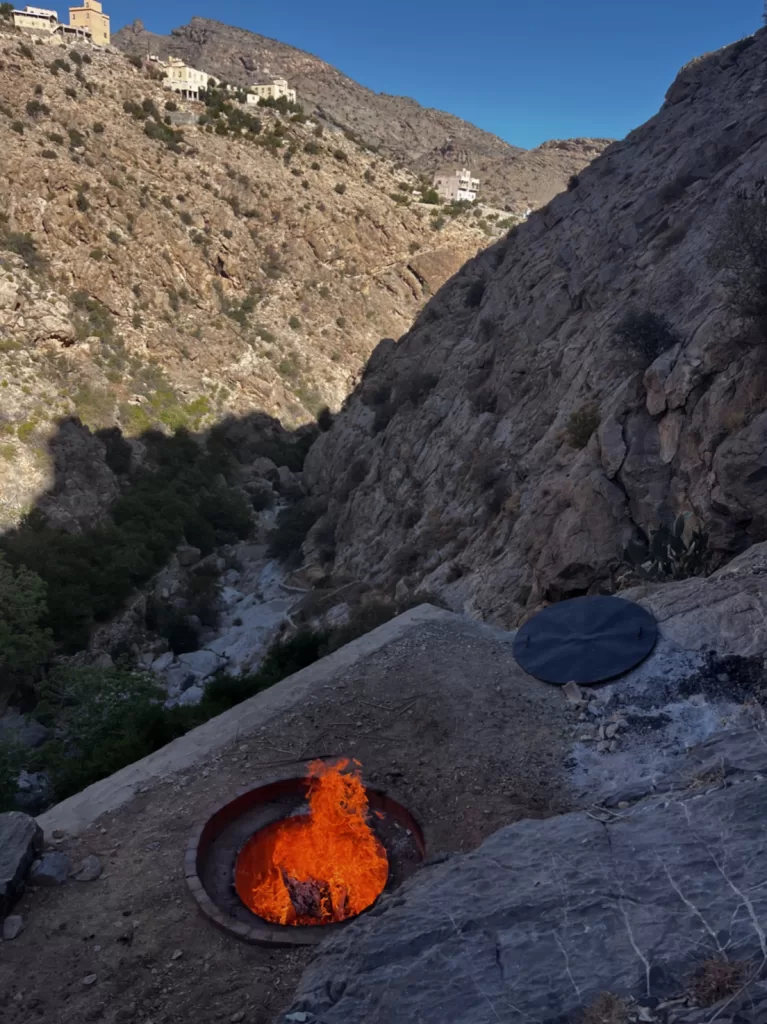
I had the privilege to watch the cooking of the Shuwa during Eid Al-Fitr during the end of Ramadan. Shuwa is a tedious process and usually prepared during holidays or weddings. It’s a symbol of pride for Omani heritage and culture. It was one of those moments that made staying at the Suwgra feel truly immersive.
// Complete 8 day guide to Oman (COMING SOON)
Hiking Trails and Mountain Views at the Suwgra
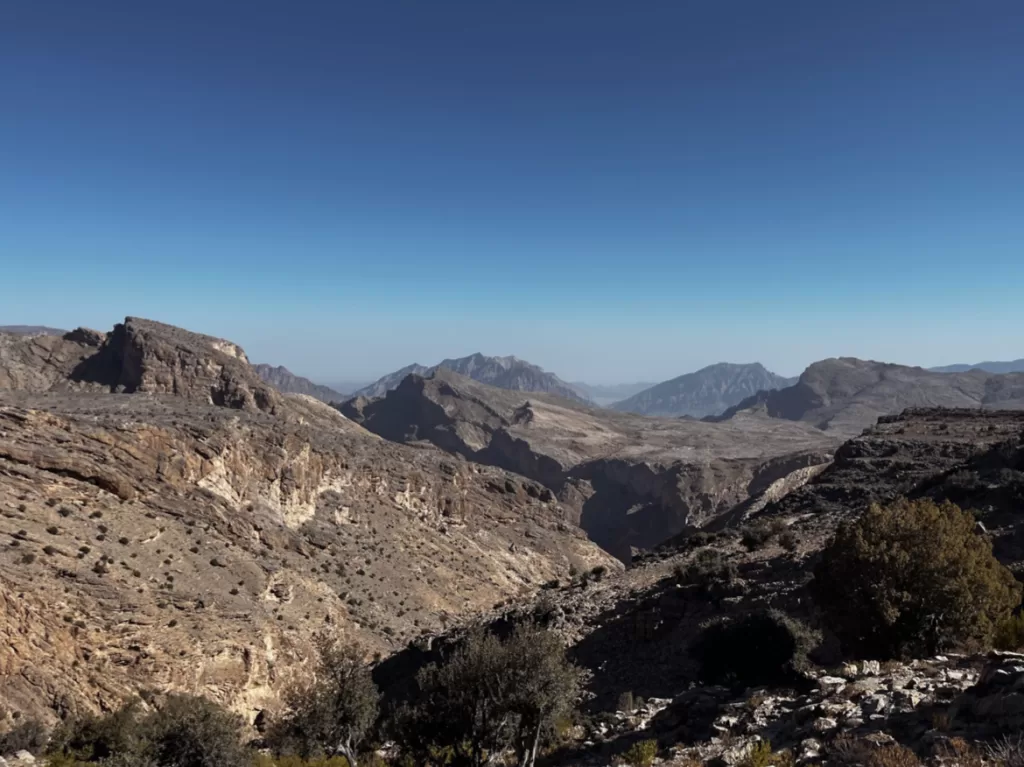
There are several trails around the Suwgra that are worth exploring.
Hike to the Top of the Mountain
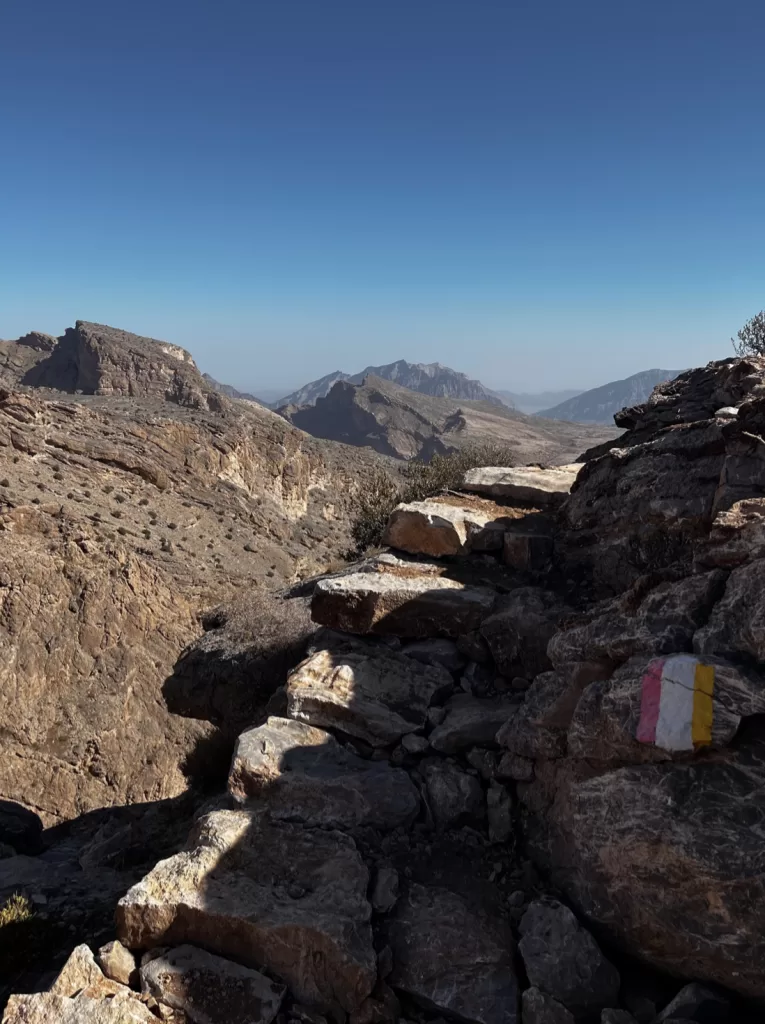
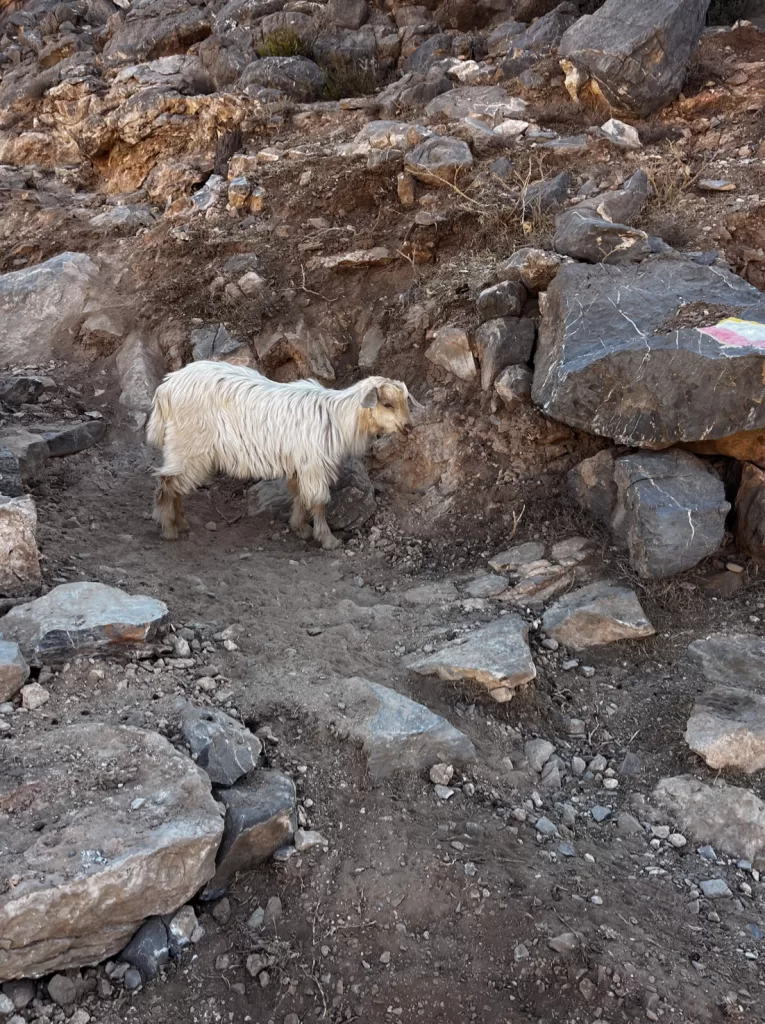
One of the shortest and most stunning is the path that leads directly above the cliffside village. Ascending upwards on a series of steep granite stairs leads to the top of the mountain. Along the way, I passed by herds of mountain goats and suwgra trees. At the top of the summit, there was an incredible panoramic view of Jebel Akhdar.
I sat under a large tree and admired the incredibly serene and stunning views of Oman’s Al Hajar mountains. It was the perfect place to pause and breathe in the fresh mountain air, a moment of tranquility and appreciation for my first visit to Oman. The hike from the Suwgra to the top of the mountain takes about an hour. It’s an easy hike but be careful for uneven rocks and slippery steps.
Hike to Al Wakan Village
For a more off the beaten path experience you can hike to Al Wakan, a traditional mountain village with terrace farms and large date trees. Al Wakan truly feels like a desert oasis, less traveled than other villages in Jebel Akhdar.
Previously used as a path for donkeys, the hike to Al Wakan is rocky and uneven at parts. It’s an all day hike, around 10 hours in total. If you decide to do the hike, start early, bring lots of food and water, and wear sturdy hiking shoes.
Hike to Al Masdara
Known as the Hidden Lakes Trail, the path to Al Masdara is one of the most adventurous hikes in Jebel Akhdar. This 3.7 mile (6km) hike takes you through lush wadis, cascading waterfalls, and past secluded freshwater pools. It’s approximately 4 hours round trip from the Suwgra.
Other Activities at the Suwgra
The Suwgra has many other exciting activities and opportunities to reconnect in the clear mountain air. Here are some of the other things to do when staying at the Suwgra.Discover the Suwgra, a hidden cultural retreat in Oman’s Al Hajar Mountains. From traditional meals and scenic hikes to goat herding and mountain meditation, this blog explores immersive experiences in Jebel Akhdar.
- Meditation
- Explore Mountain Caves
- Get to Know Other Guests
- Pomegranate Season Tour
- Goat Herding Experience
- Culture and Cooking Classes
- Movie Nights
More Things to do in Oman
There’s so much more to see in Oman. Explore my other blogs for more ideas and things to do across this soulful corner of Arabia.
- Watch the sunrise at Jebel Shams – The Grand Canyon of Arabia
- Wander the wild camel filled shore of Salalah
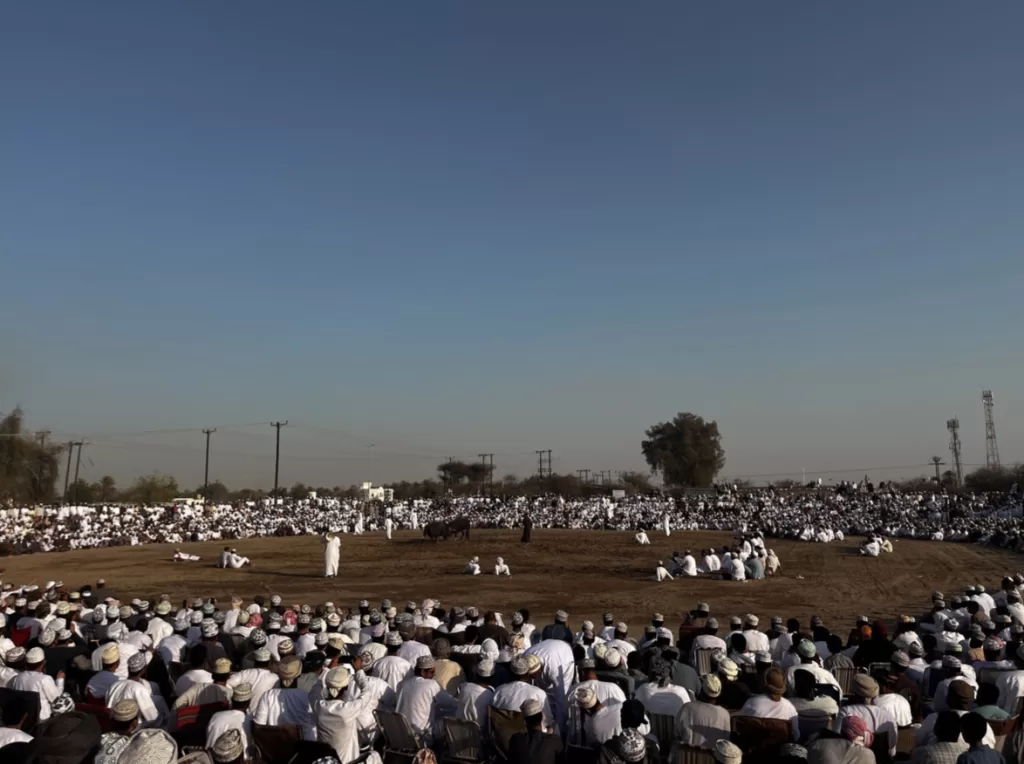
- Watch a traditional Bull Fight in Oman
- Visit Jebel Akhdar during the Damask Rose bloom (COMING SOON)
- Discover the cosmopolitan, coastal, and chill capital of Muscat (COMING SOON)





0 Comments