
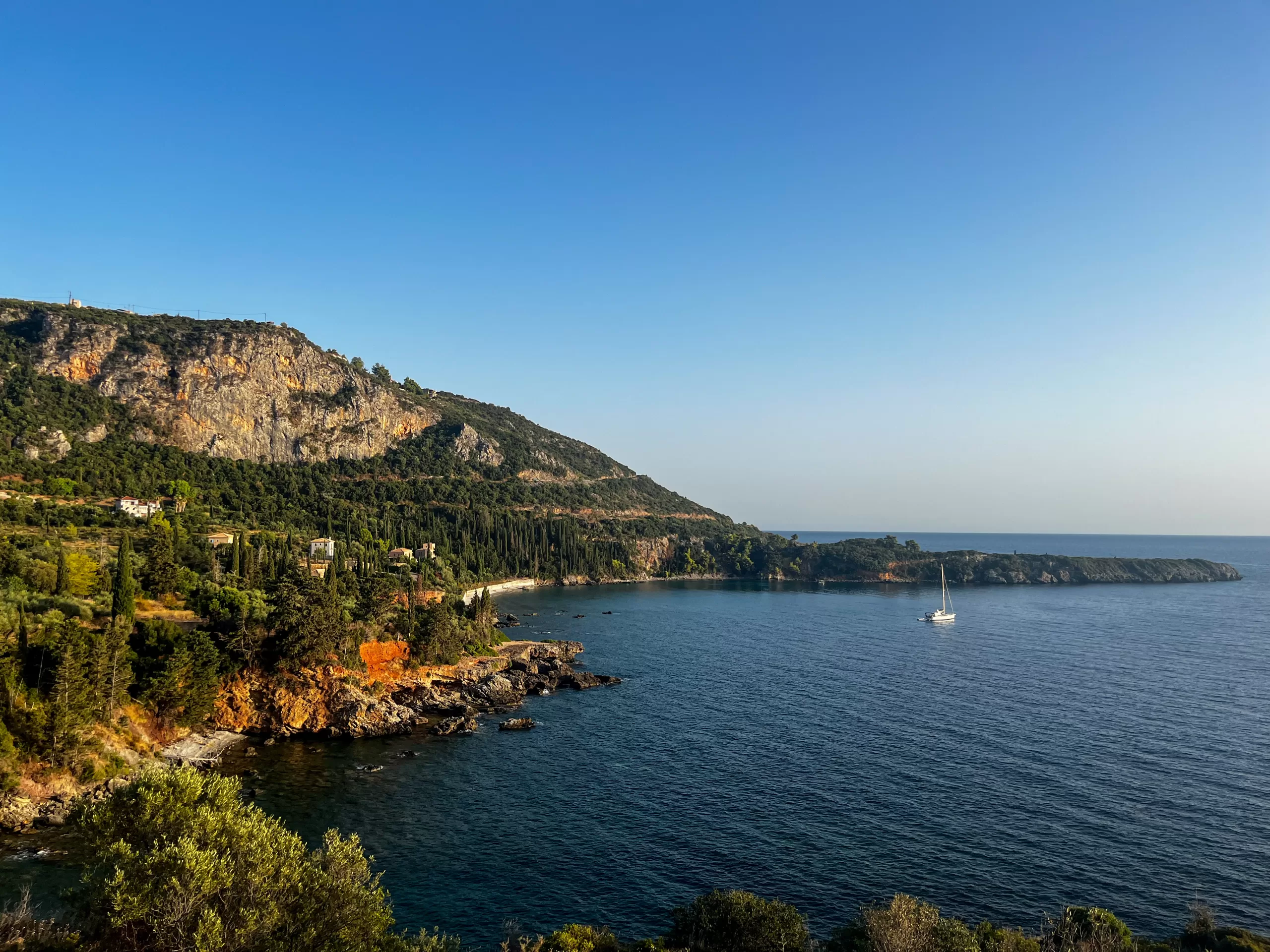
The Mani Peninsula is one of the most remote and untouched regions in all of Greece. Located at the very bottom of the Peloponnese, it’s the southernmost part of the Greek mainland. Wild olive groves and towering cypress trees extend from the mountains all the way to the sea. Tall stone towers dot the Mediterranean landscape, creating a unique sense of mystery. Until recently, the Mani wasn’t very touristed. Traveling here is an encounter with the very essence of the Greek spirit and culture. The Mani was never occupied by the Ottoman Empire. Subsequently, many of the key leaders of the Greek Revolution of 1821 hailed from the peninsula’s seaside towns and rocky villages.
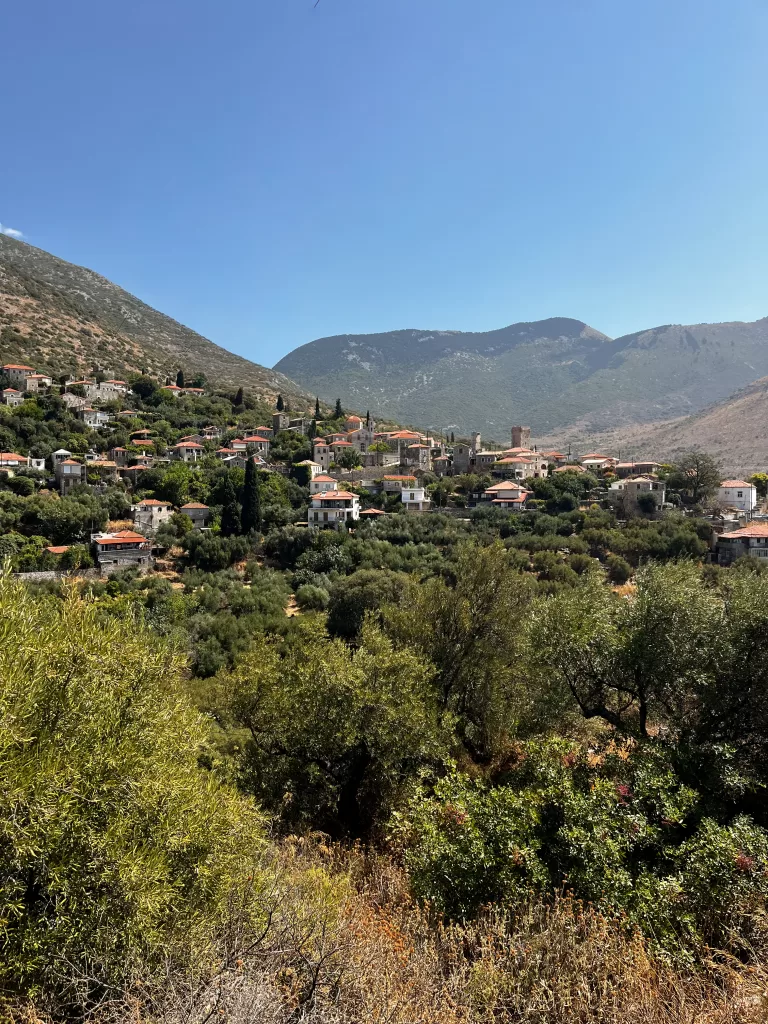
There are many traditional villages with unique architecture, which is distinct from the rest of Greece. Family homes were built tall and slender with thick walls and narrow windows. The design of these towers was oriented towards practicality rather than aesthetics, as families and tribes often warred with one another for dominance. This was Greece’s true “Wild West”. The internal violence and conflict of the Mani has long passed. Today, travelers are greeted with charming villages, beaches concealed by walls of olive and cypress trees, and rugged landscapes unlike anywhere else in Greece.
In my Mani Travel Guide, I share personal and practical tips along with how to plan the perfect journey into one of the most secluded and untamed places in all of Greece. I’ve also included my map with all the towns, beaches, and highlights for the perfect road trip through the Mani Peninsula.
Where is the Mani
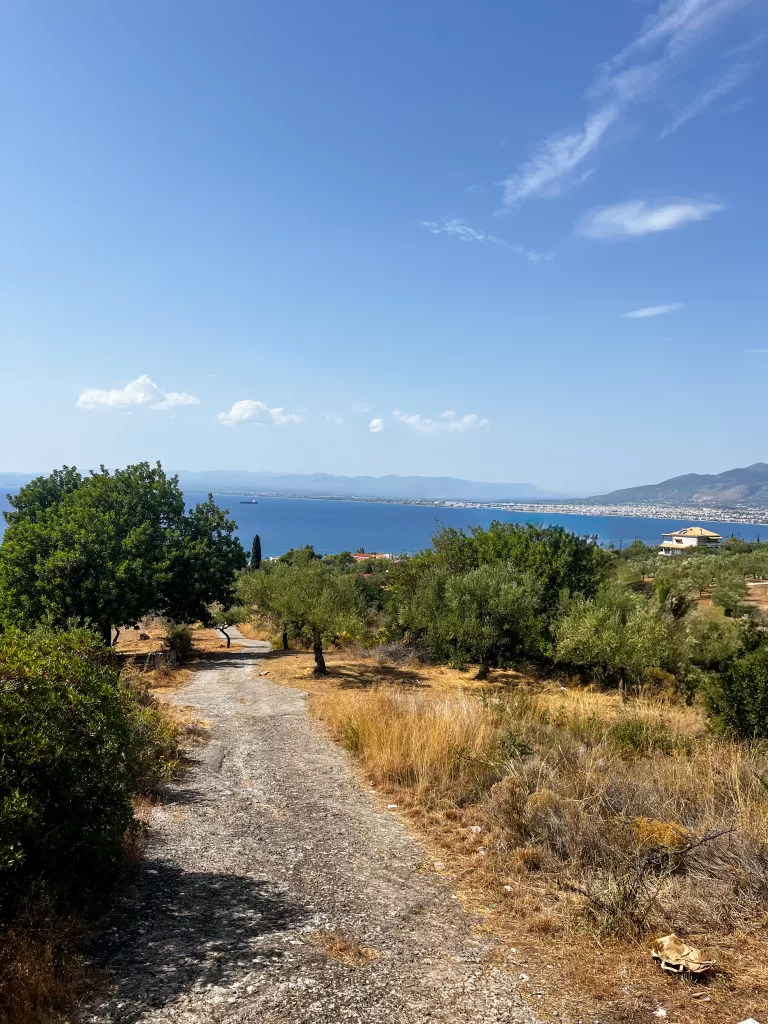
Located just south of the coastal port city of Kalamata, the Mani is a slender and mountainous peninsula. It’s the middle of the three peninsulas at the southern tip of Greece’s Peloponnese region, forming a shape that resembles a fork. It boasts the southernmost point on the Greek mainland marked by the lighthouse of Cape Tainaron. In Greek mythology, this spot was thought to be the entrance to Hades, or the underworld.
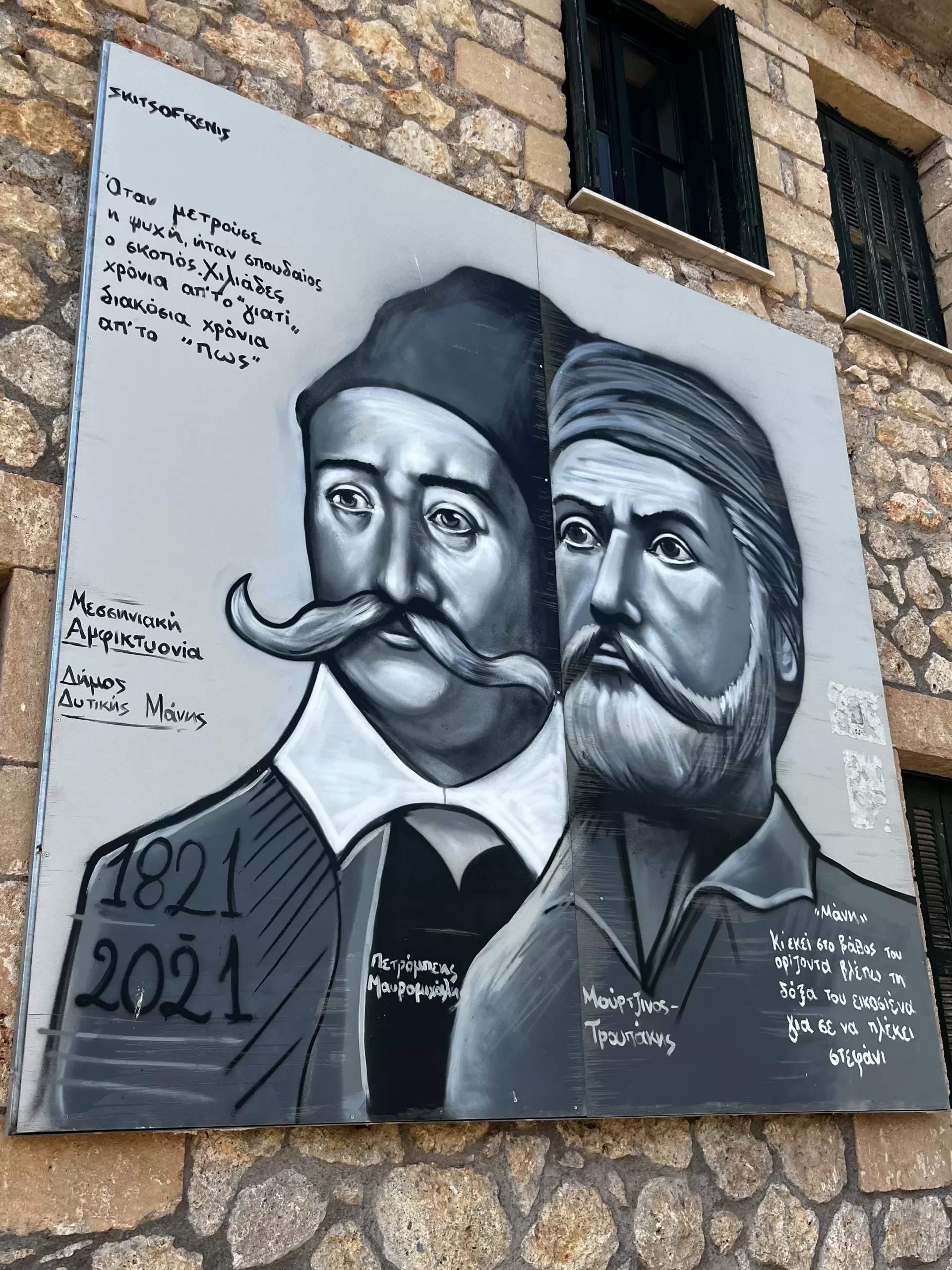
Due to the rugged and inaccessible terrain and its history of tribal conflict, many of the key leaders of Greece’s Independence movement from the Ottoman Empire hailed from the Mani.
My Mani Guide – All You Need to Know About Greece’s Wild Southern Peninsula
Experience the untamed spirit of the Mani Peninsula, one of the most remote and storied regions in all of Greece. From its stone towers to its soaring mountains and secluded coastlines, discover why this austere corner of the Peloponnese feels a world away from the rest of the country.
Mani Guide Essentials
- Country: Greece
- Region: Peloponnese (Laconia & Messenia)
- Language: Greek (English spoken in tourist areas)
- Currency: Euro
- Emergency Information: 112 (all emergencies), 166 (medical), 100 (police)
- Climate: Mediterranean: hot, dry summers and mild winters
- Best time to visit: May–June, September–October
Getting to the Mani
To reach the Mani Peninsula, you have to get to Kalamata in the south of Greece. From Athens, you can either fly, drive, or take the bus to Kalamata.
The flight from Athens to Kalamata is usually less than an hour. Tickets are very affordable and there are multiple direct flights a day.
Additionally, you can drive from Athens to Kalamata. It’s a roughly 4 hour trip one way on the A7 Motorway. Along the highway, you will find many toll stations that collect fees. These toll stations collect between 1-2 euro per stop. They span the entirety of the road making them impossible to avoid. In total, it costs around 15-20 euro one way on the highway. There are smaller side roads throughout the Peloponnese, but the time it would take to reach Kalamata would nearly triple, not to mention some of them being in questionable condition. It’s worth the time and convenience to just use the tollway.
There’s also a bus connecting Athens to Kalamata. The bus departs from the Kifissos KTEL Bus station and takes 3 hours to reach Kalamata. There are multiple trips a day, the earliest departing Athens at 7:00 a.m. Typical tickets cost around 25 euros. This is a great option for budget travelers since It’s cheaper than flying or renting a car
// You can purchase your KTEL bus tickets and view routes from Athens to Kalamata here
Getting Around the Mani
The easiest way to get around the Mani is by renting a car. Having your own car will give you the greatest flexibility to go off the beaten path and explore some of Mani’s unexpected treasures.
You can either rent a car in Kalamata or drive from Athens to the Mani like I did. It was one of my greatest adventures in Greece to drive from Athens to the southernmost point of the Greek mainland. It was a roadtrip of a lifetime.
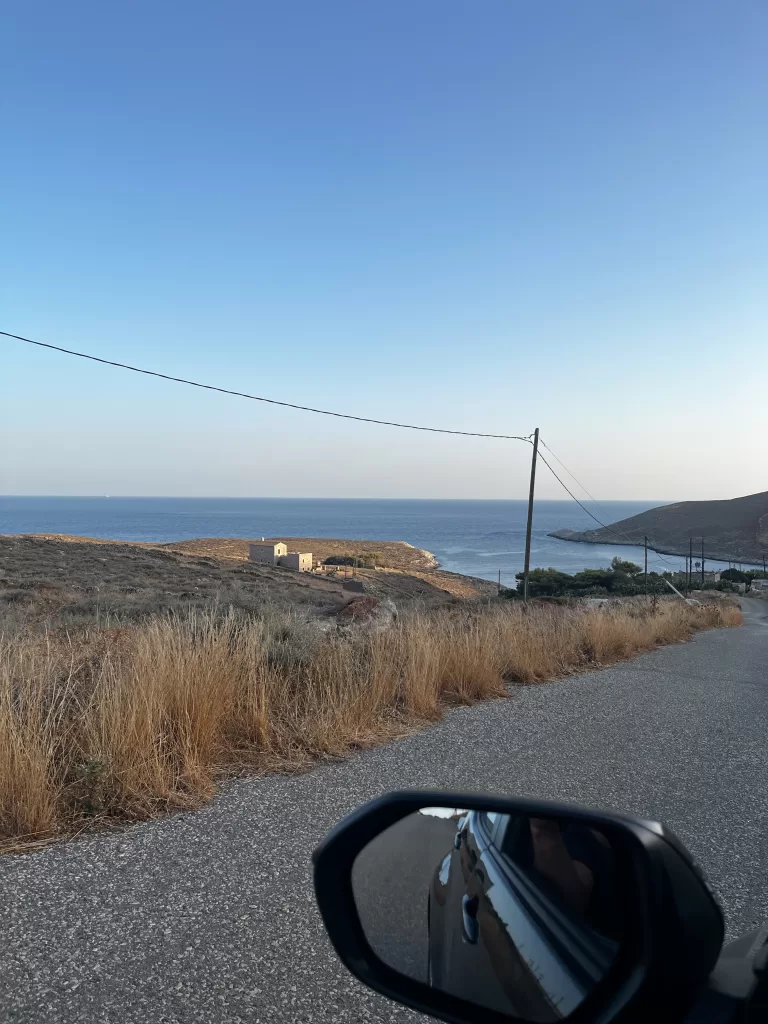
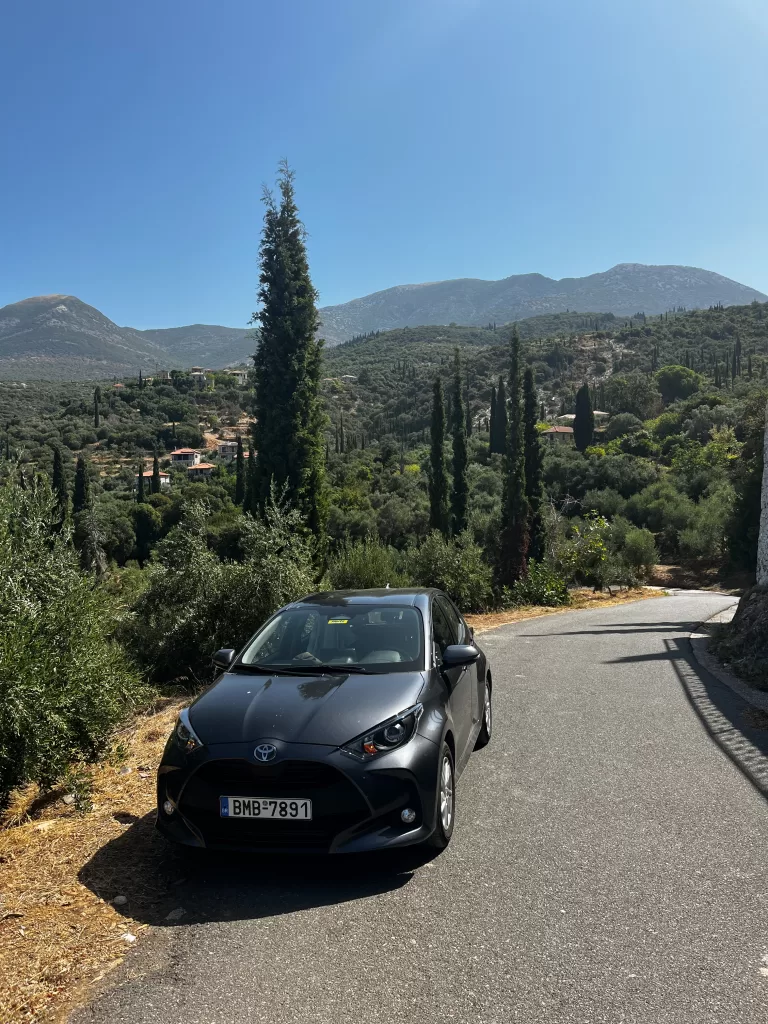
The main roads of the Mani are paved and are overall easy to drive on. Side roads are often made of gravel or dirt and are more narrow. I wouldn’t recommend driving at night since there are barely any street lights in the Mani.
Buses run from Kalamata through the Mani connecting bigger towns like Areopoli and Gerolimenas. However, many travelers report that buses are infrequent and not super reliable.
Mani Places to See and Highlights
The narrow and mountainous Mani Peninsula is full of countless hidden beaches and rolling hills, carpeted with endless olive groves and cypress trees.
I’ve described every place I visited in the Mani so you can plan your own adventure and roadtrip through the southernmost region of the Greek mainland.
Kalamata
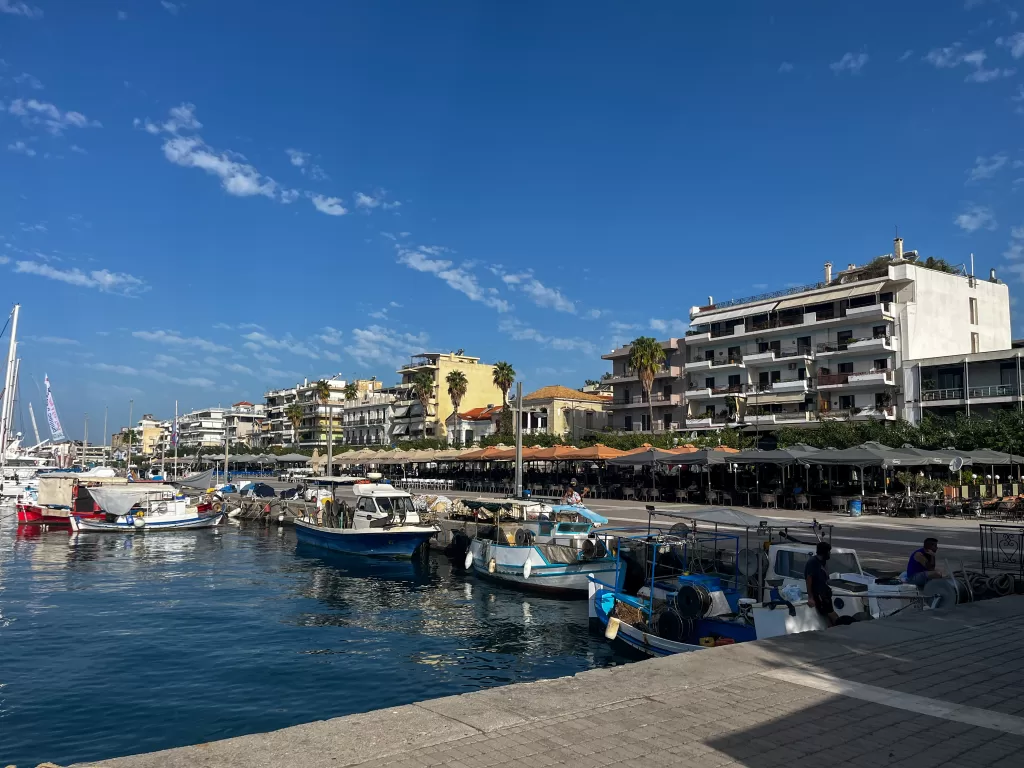
Kalamata is the natural starting point for trips to the Mani Peninsula. It’s the second biggest city on the Peloponnese and is the capital of the Messinia region. Kalamata is a lively city and is one of my favorites in all of Greece. It’s full of charm and character: local cafes buzzing with life, narrow streets where laundry hangs over balconies, and motorbikes speeding through the alleys.
Overlooking the coastal city and Mediterranean Sea is the Castle of Kalamata. Built in the 13th century by the Franks, it is one of the city’s proudest landmarks. At night, It’s illuminated by soft orange lights. The waterfront promenade, which runs along Navarinou Street, is full of restaurants and coffee shops where you can sit near the water or go for a morning swim.
You can easily spend a few days in Kalamata before setting off on your road trip through the Mani Peninsula.
Polylimnio Waterfalls
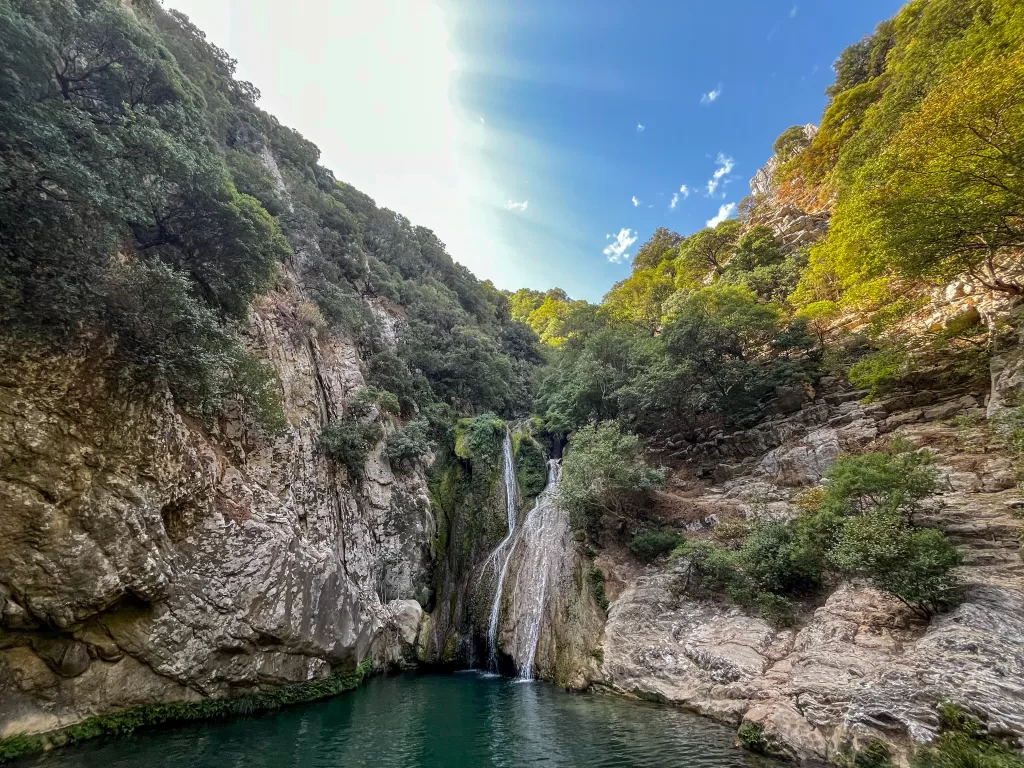
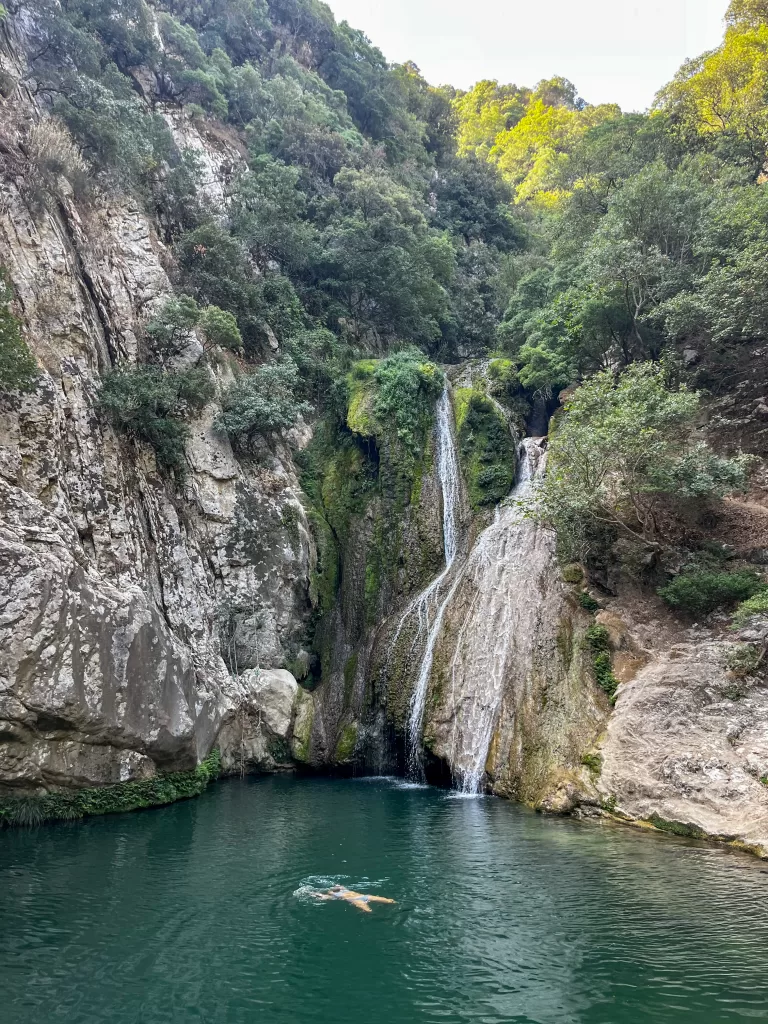
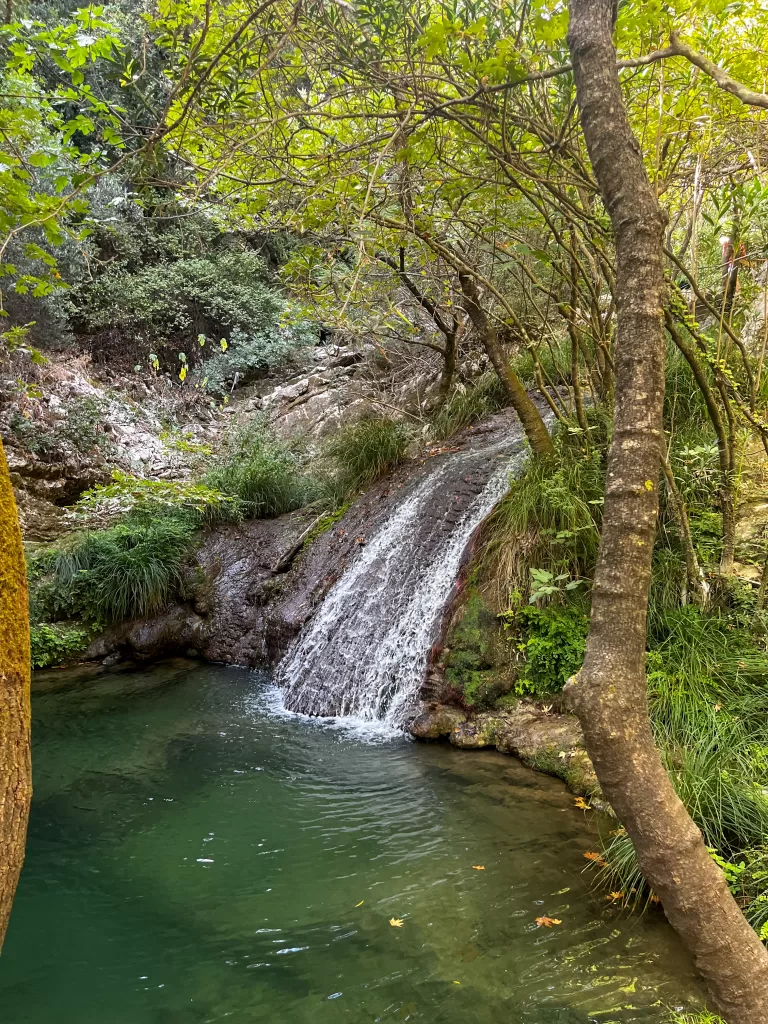
While in Kalamata, I made a minor detour before heading south into the Mani. Roughly 45 minutes west of Kalamata’s city center, the Polylimnio Waterfalls are a series of cascading freshwater streams that empty into a set of sparkling emerald pools. The largest of the waterfalls is at the back of the canyon.
You can swim in the refreshing freshwater pools and let the waterfalls rush over your head. At first, it’s a little brisk, but as you swim and adjust, the water is actually surprisingly pleasant. The entire hike took me around two hours to complete, which included time swimming under the waterfalls. Parking is free and I’ve added the location in my map.
// Here is the Alltrails directions to the hike and the start of the trailhead
Barreira Beach Bar
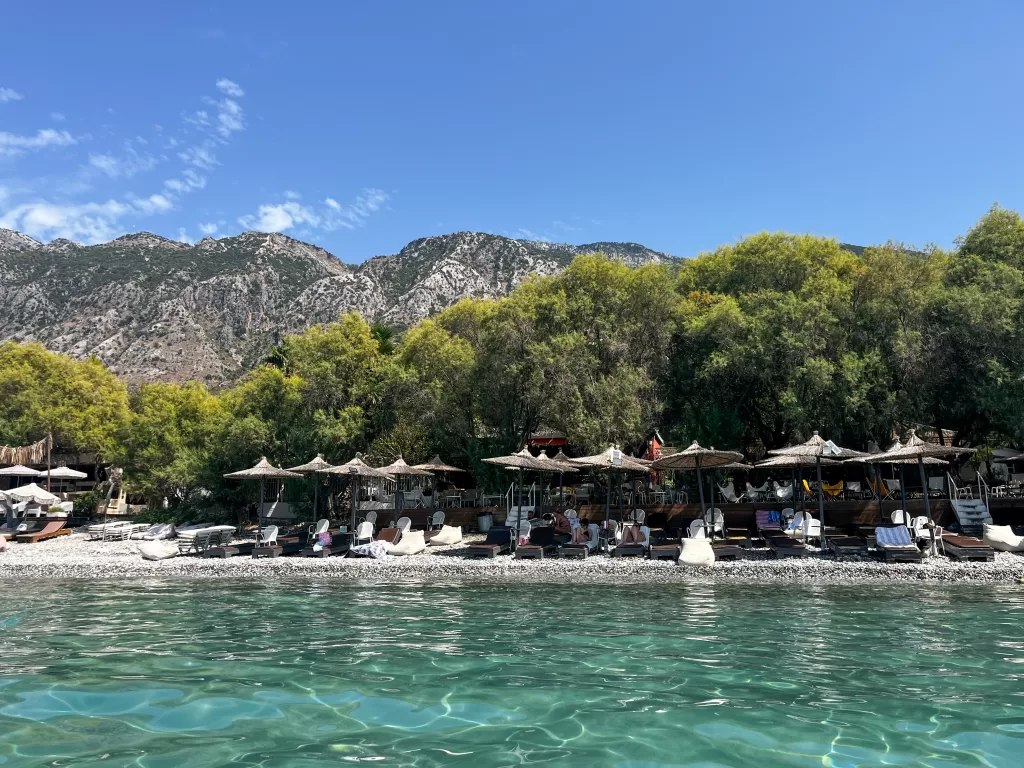
As I drove out of Kalamata south toward the Mani peninsula, I found a small beachfront that caught my attention. Barreira Beach Bar is a warm and coz spot right on Kalamata’s shoreline with umbrellas, lounge chairs, and eclectic decor.
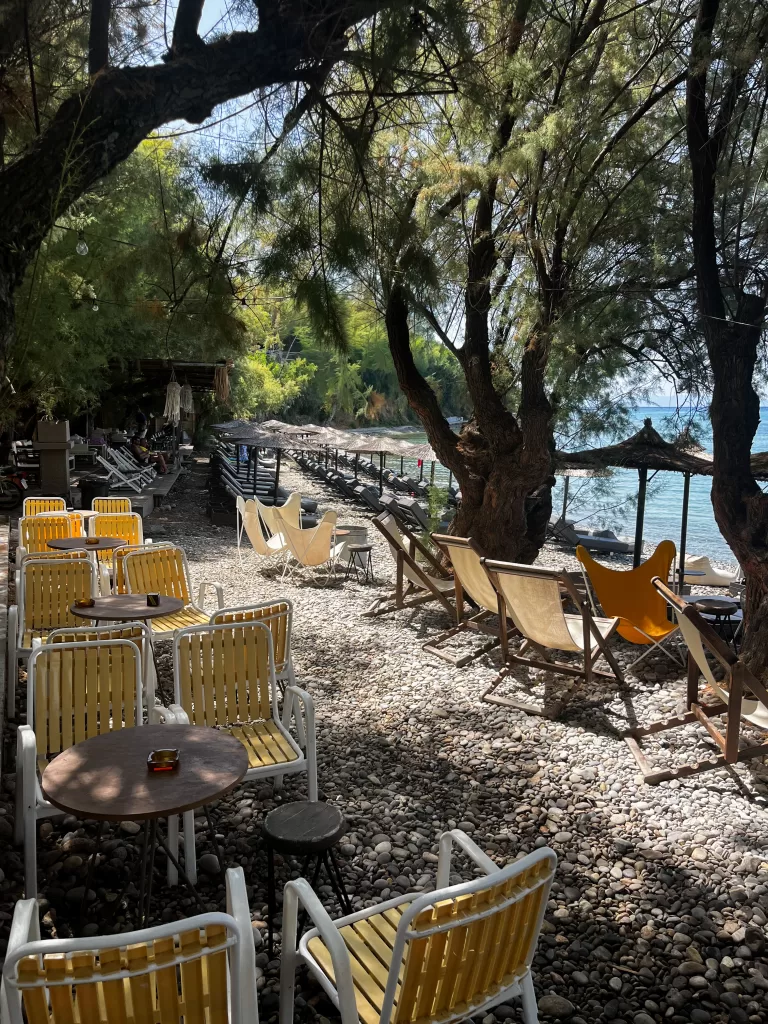
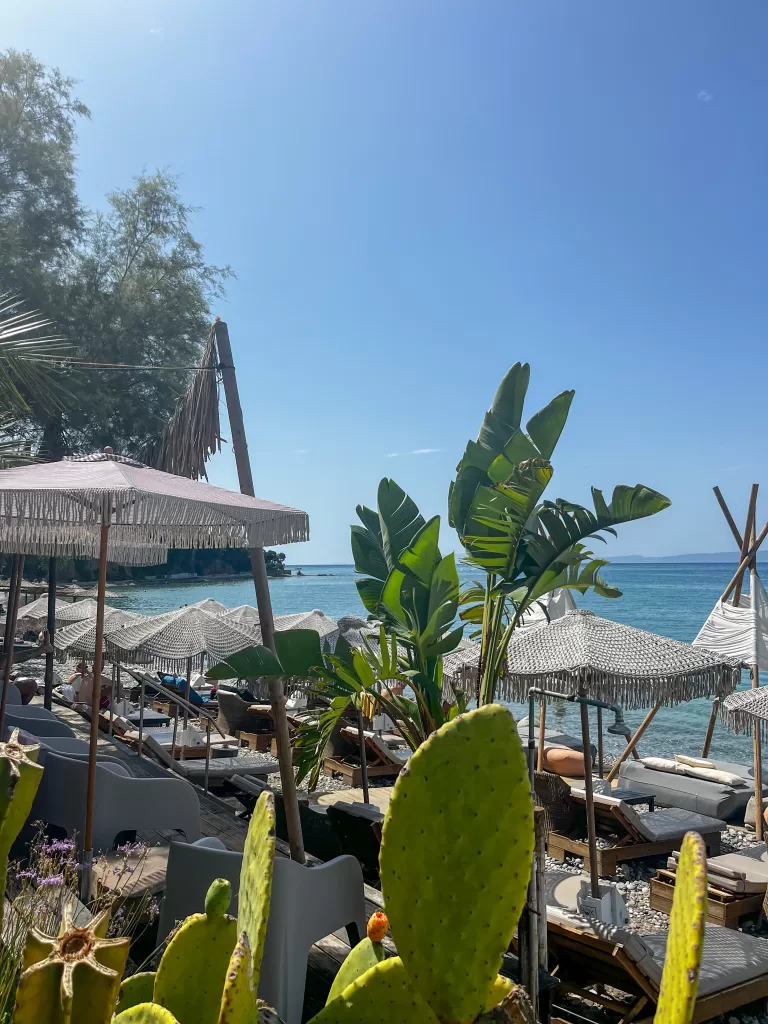
It’s the perfect spot to lounge for a few hours sipping drinks and swimming in the warm waters of the Mediterranean Sea. The entire beach is backed by soaring limestone mountains, highlighting the beauty and contrast of Kalamata’s terrain. The beach has small pebble rocks, so I recommend bringing water shoes. Like many of the beaches in Greece, these rocky shores are not fun to walk on barefoot.
The Drive Down South into the Mani Peninsula
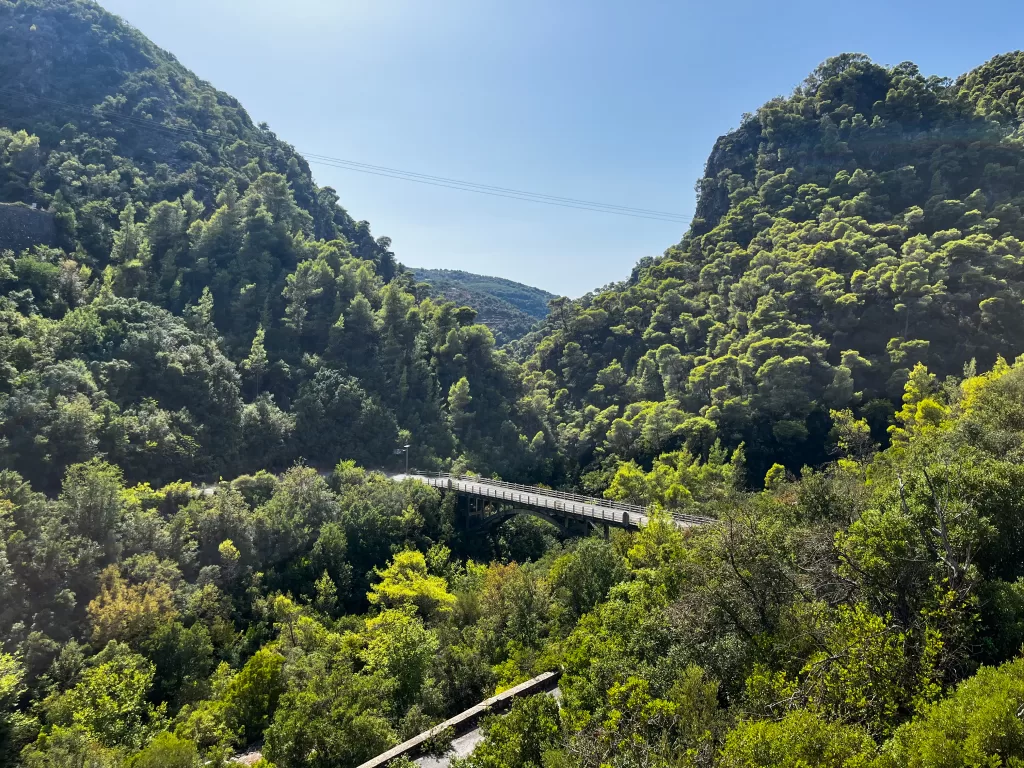
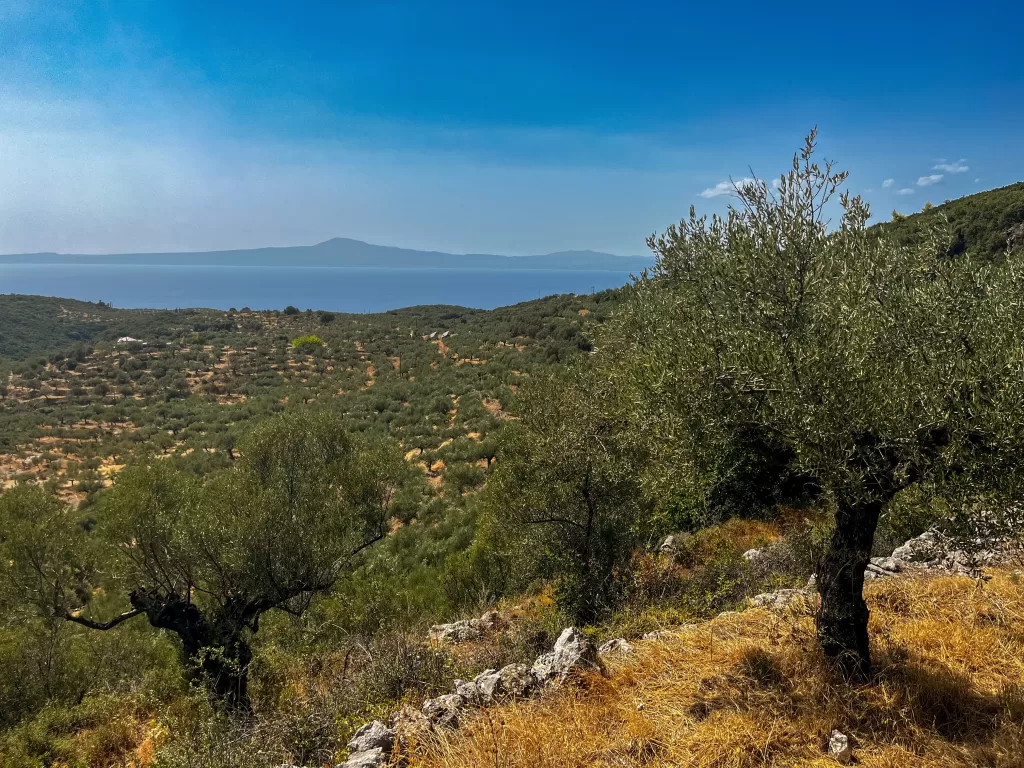
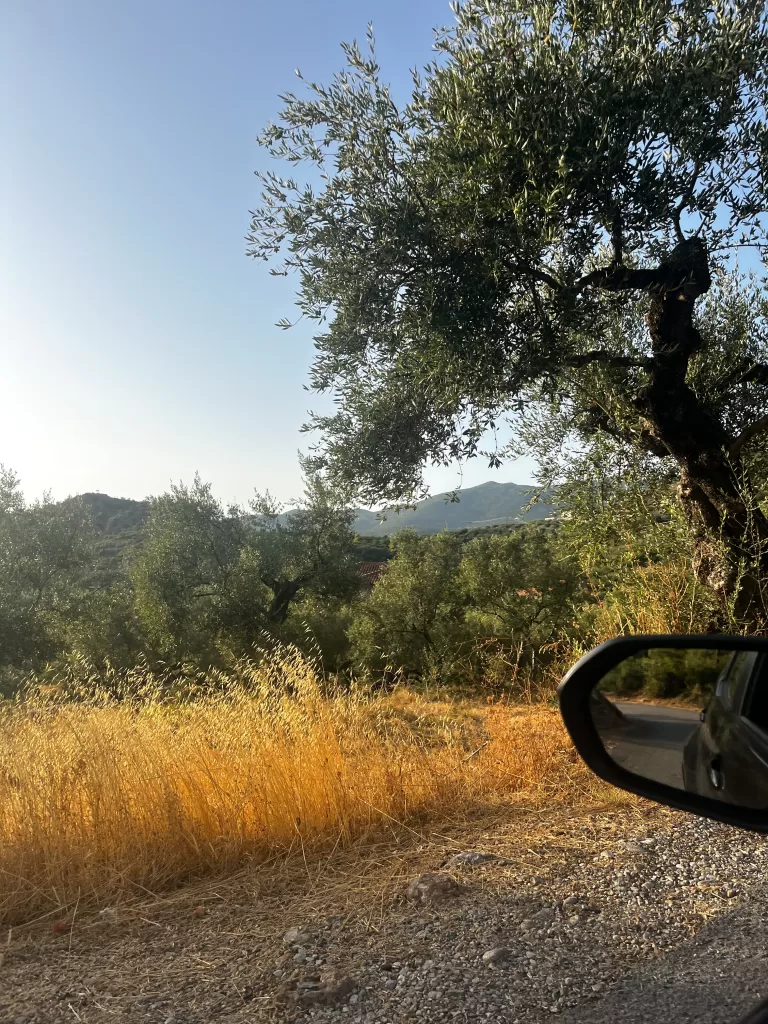
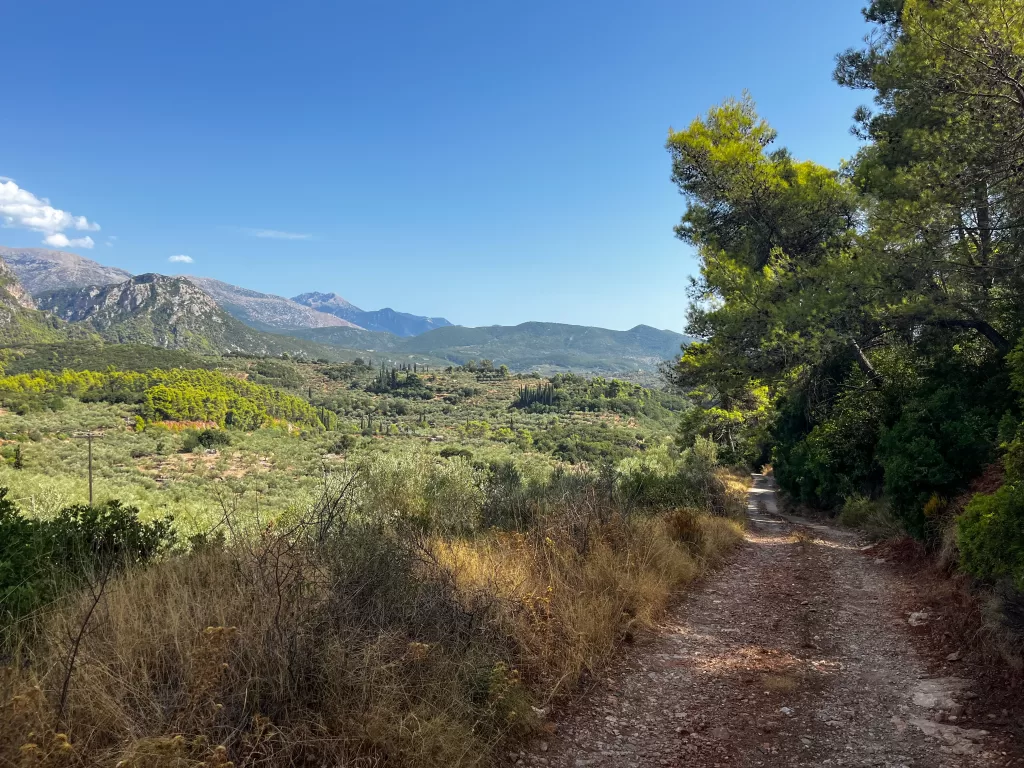
The drive south from Kalamata into the Mani is an unforgettable drive. The road is filled with endless olive groves, towering cypress trees, and pine forests. The landscape only becomes more dramatic and rugged the deeper you travel into the Mani.
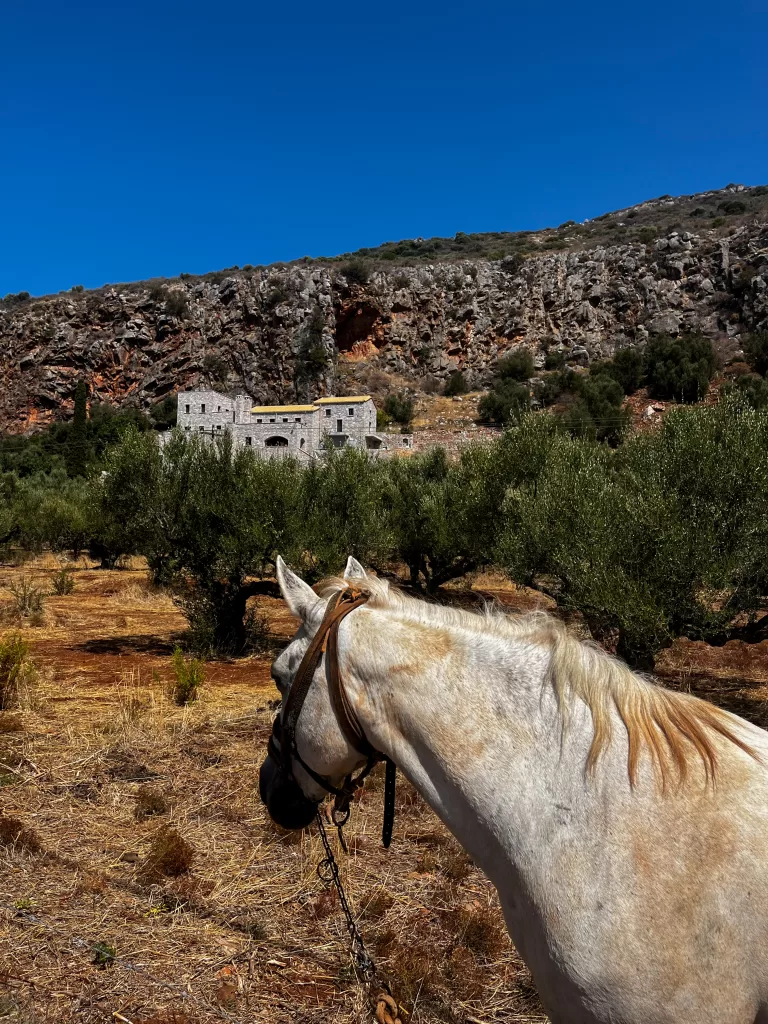
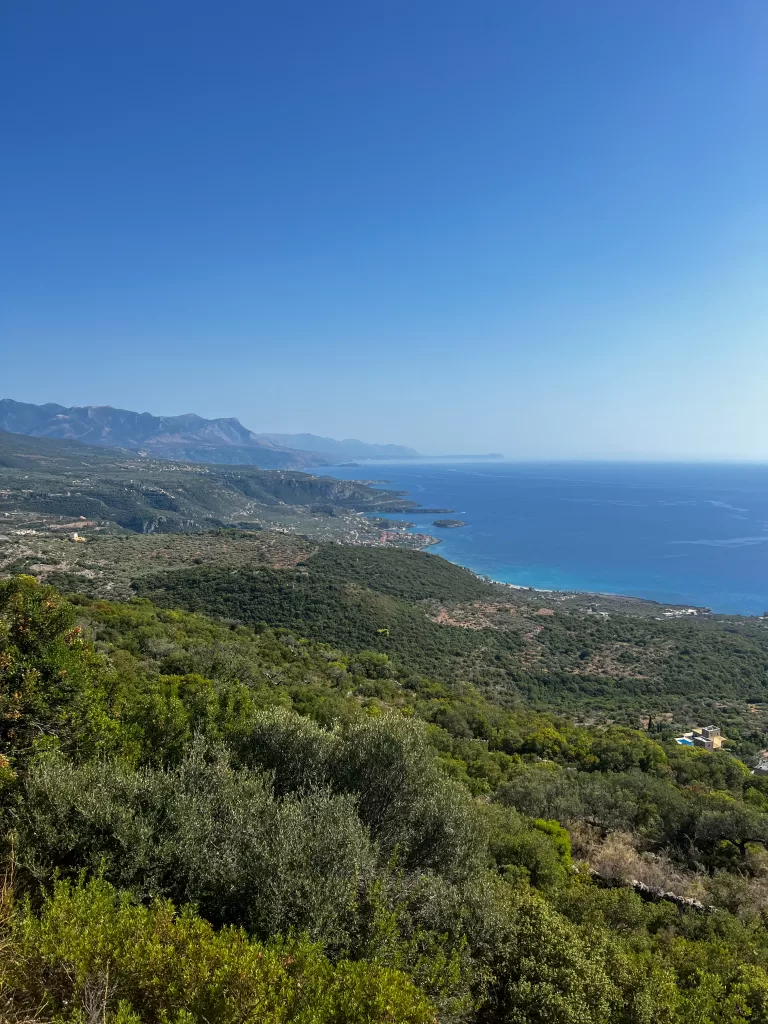
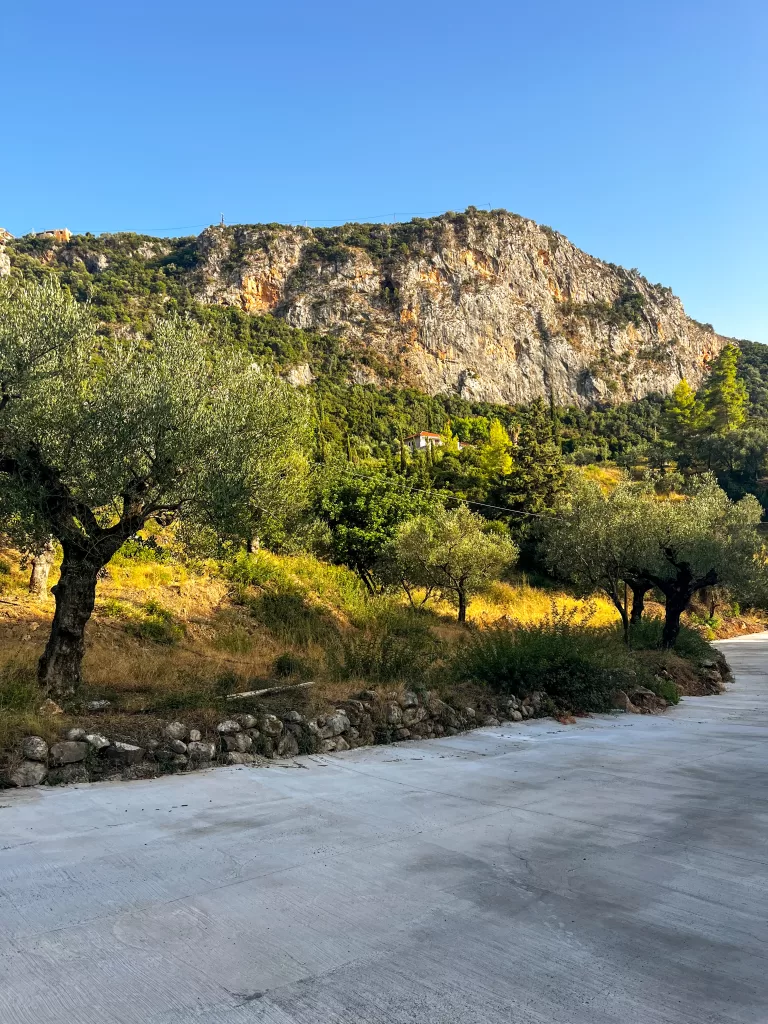
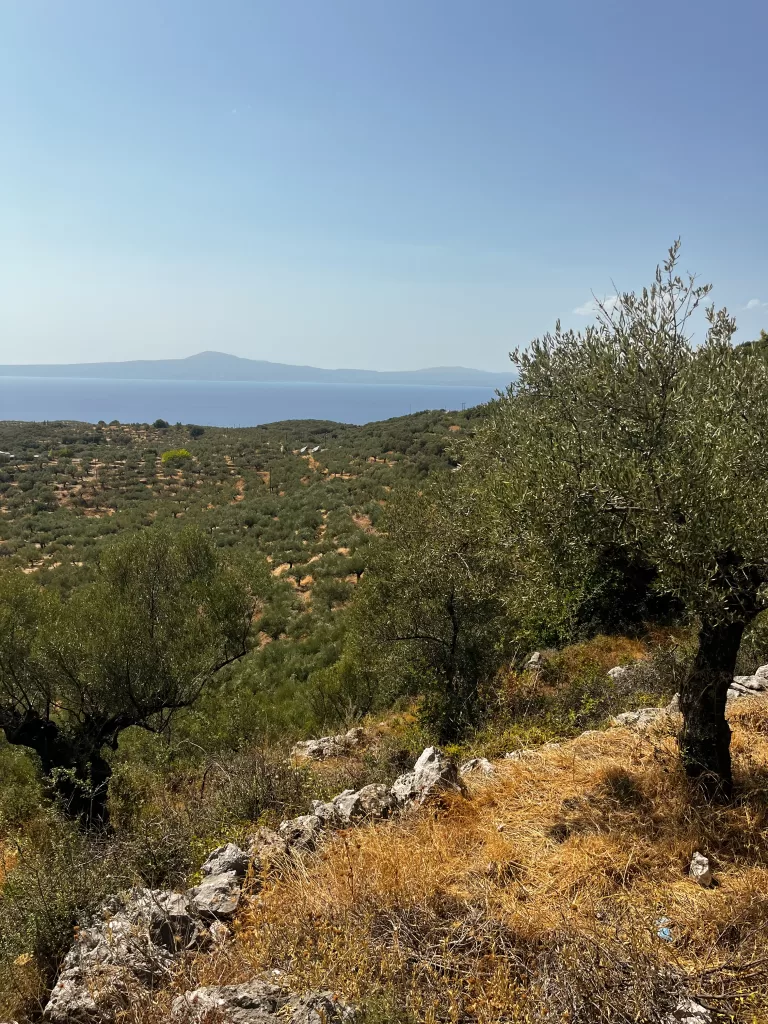
I discovered gorgeous side roads with endless olive trees overlooking the sparkling Mediterranean Sea. The nature of this region is one of the most raw and wild in all of Greece. Photographers and nature lovers will want to take their time to capture the scenery and surrounding villages.
Maniot Architecture
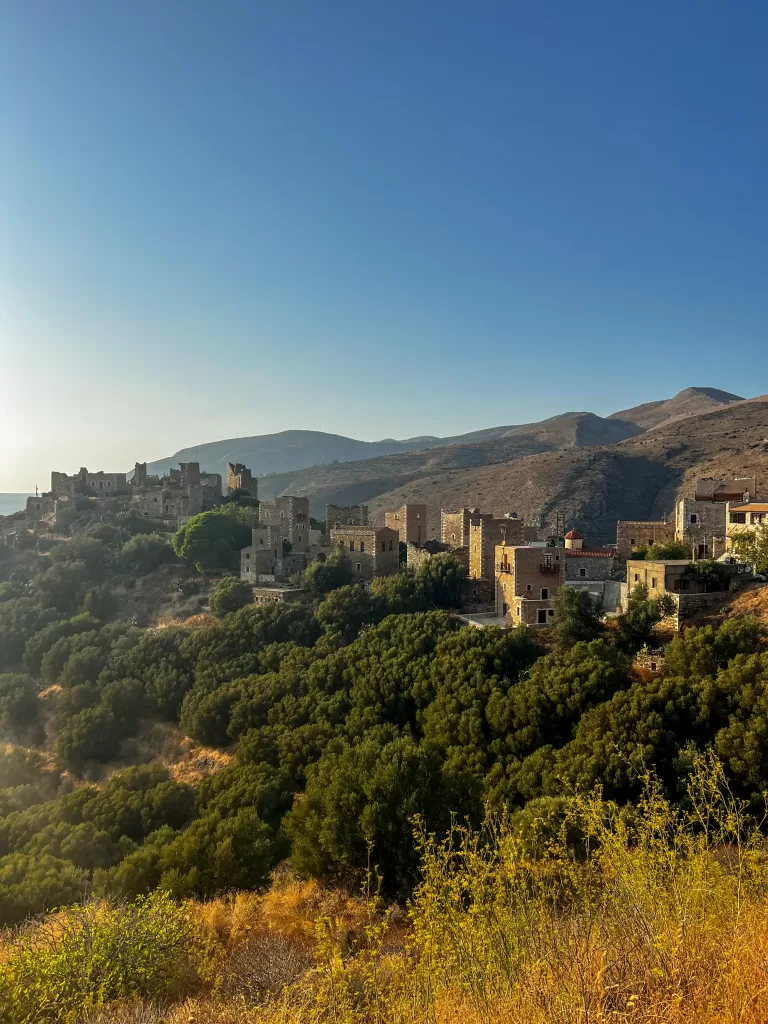
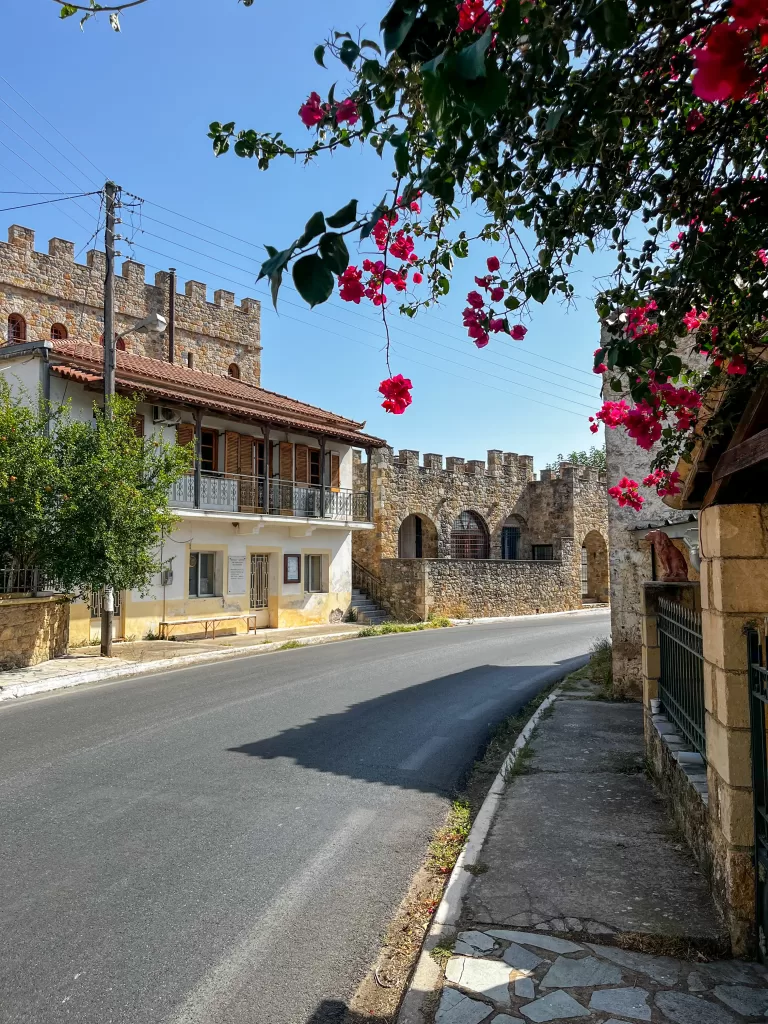
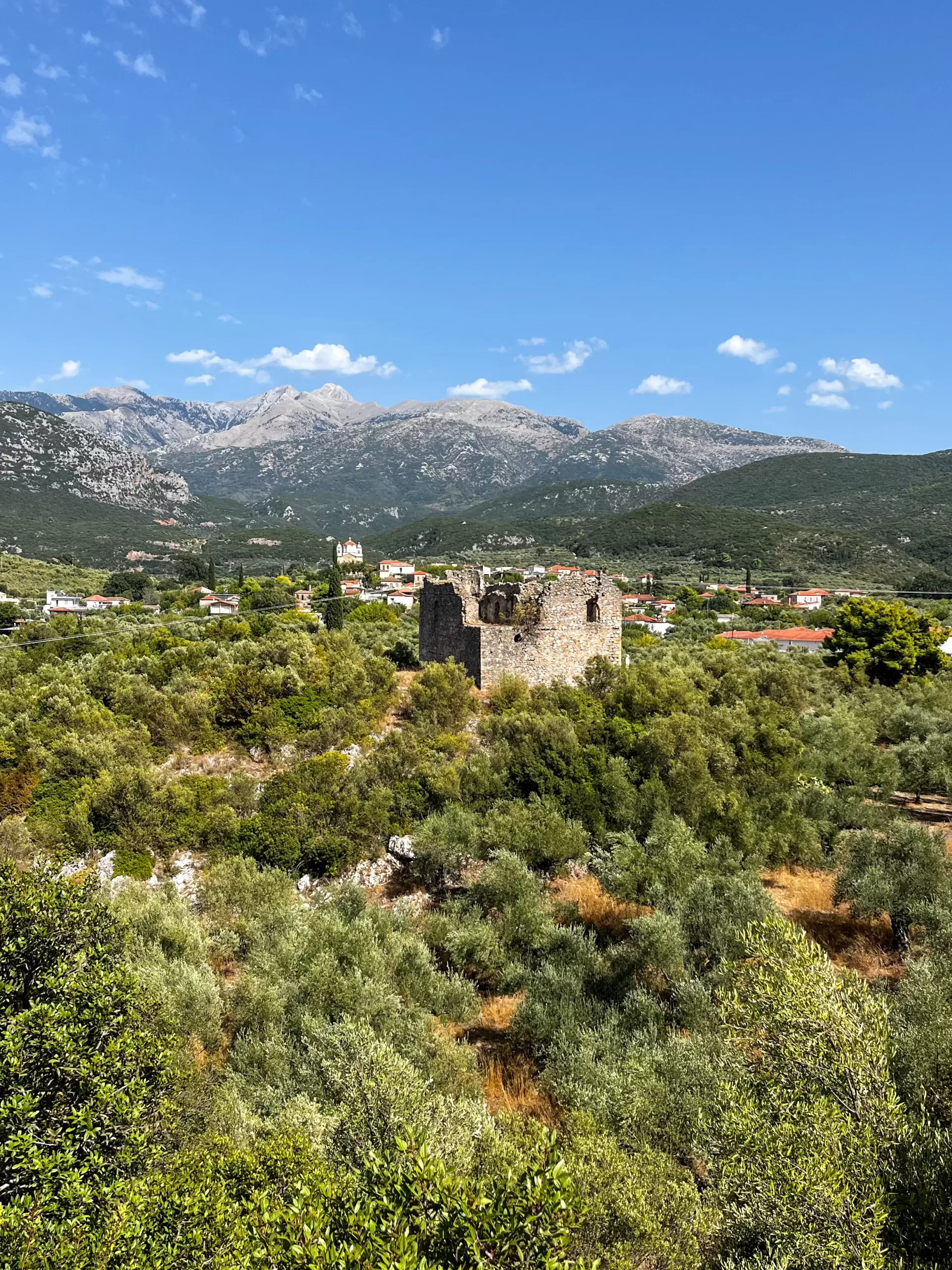
Along the road, I came across many old brick towers and fortified stone villages. This architecture is distinct to the Mani peninsula and is unlike anywhere else in Greece. The thick walls and tall towers were essential for the threats of both outside invasion and internal rivalries. The toughness of the region is demonstrated in these unique structures; ghosts of the peninsula’s past can be found everywhere in the Mani.
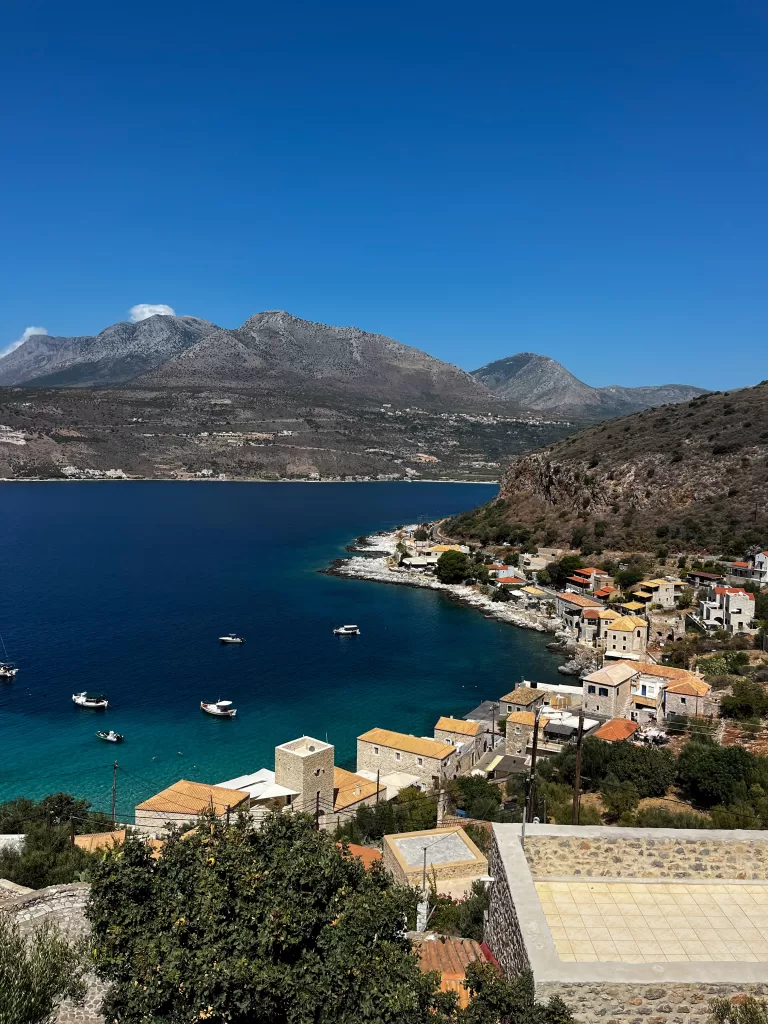
The villages of Kampos, Stavropigi, and Vathia showcase the unmistakable fortress-like architecture of the Mani. Homes are built out local stones, which helps harmonize with the natural surroundings. It’s very different from the white washed architecture of the Greek Islands.
Kardamyli
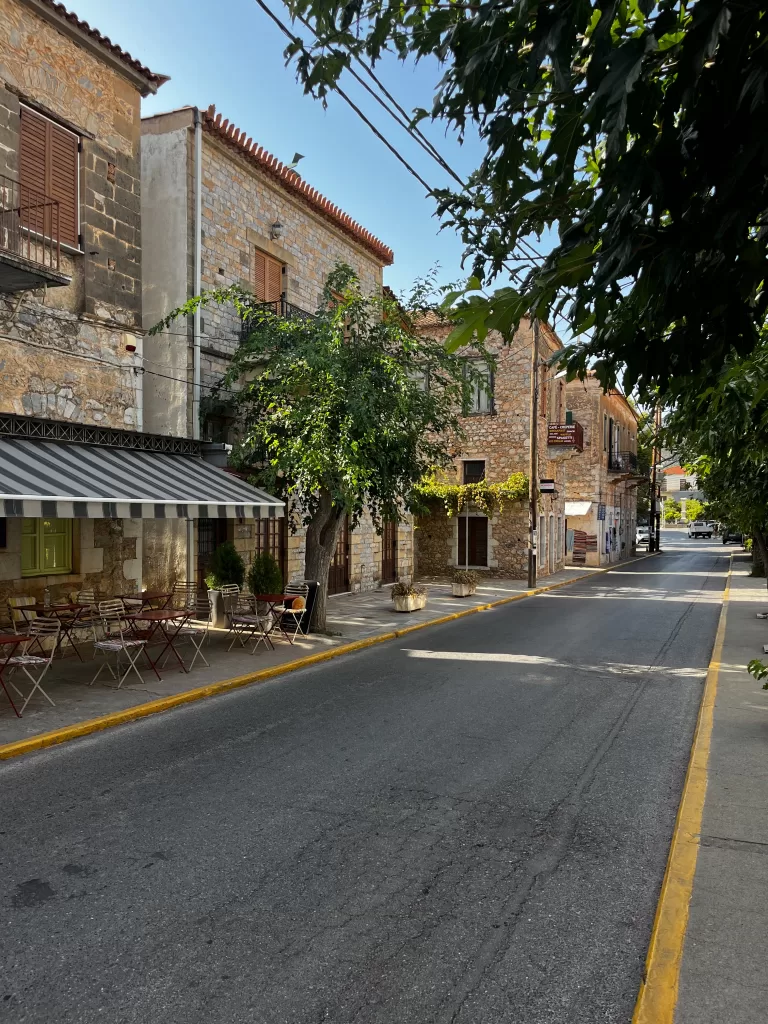
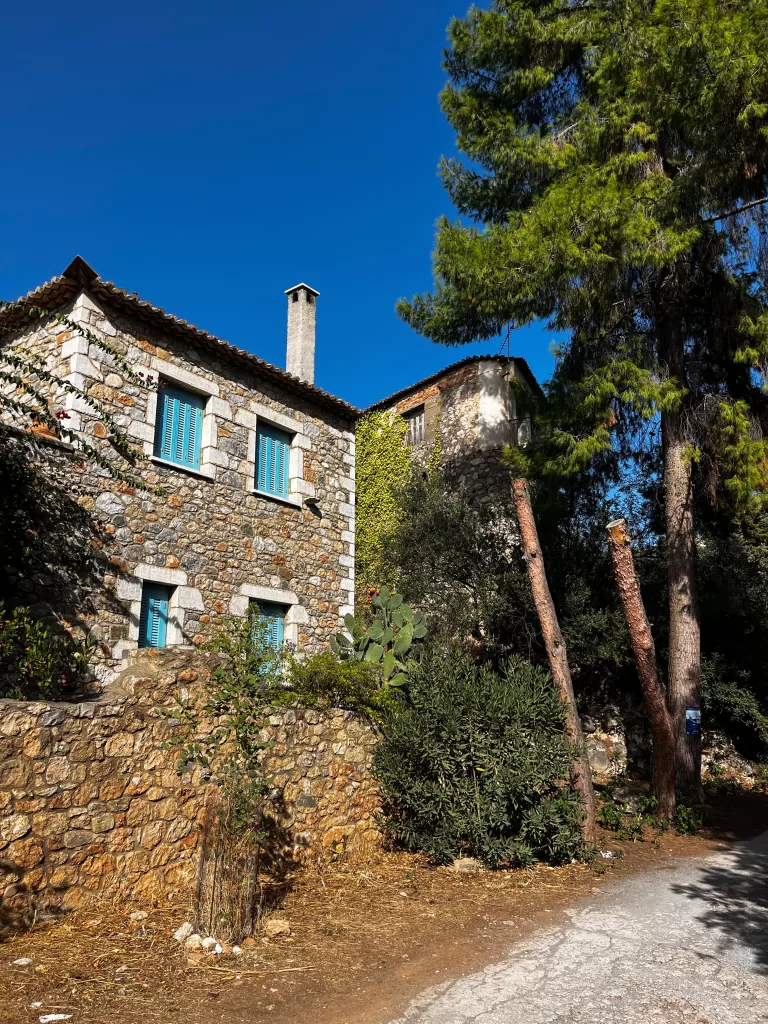
Kardamyli is one of the most charming towns in the Mani. Quaint streets lined with mulberry trees are filled with local cafes, artisan shops, and apartments adorned with wrought iron balconies. Outside the main streets, on shaded dirt roads, proud old homes built with sturdy stones look as though they’ve seen generations come and go from the Mani Peninsula’s arid soil. This is one of the best destinations to savor the Mani at a slower pace.
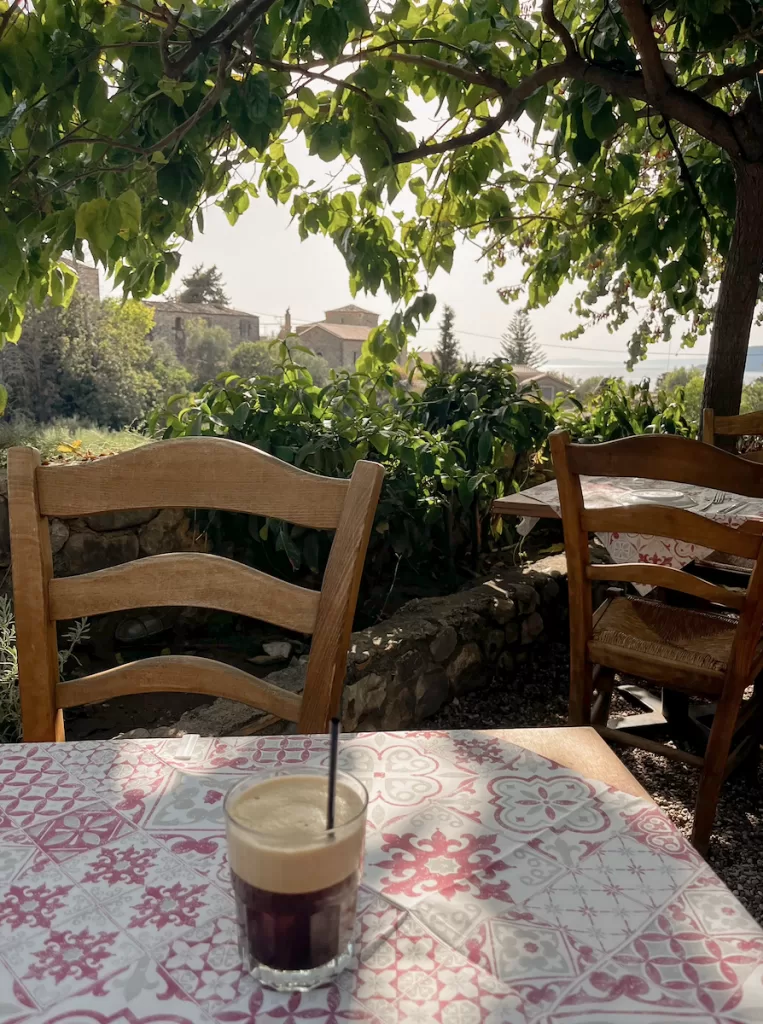
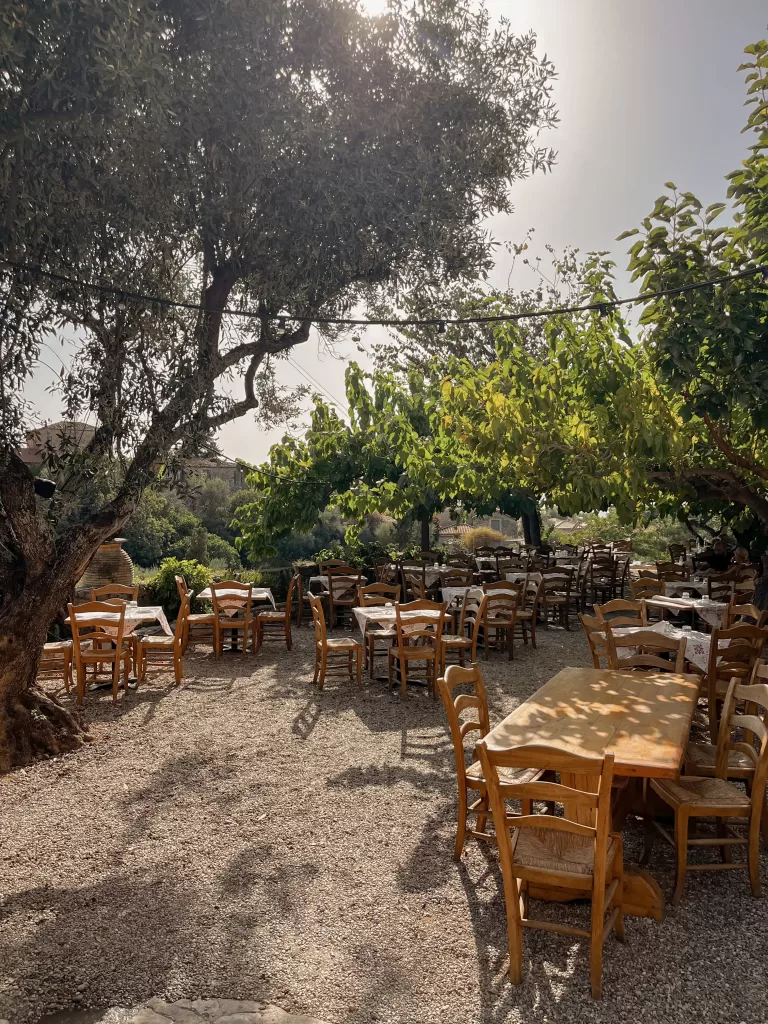
Just outside the streets of the main town is the Old Kardamyli Traditional Restaurant. This little taverna is shaded by ancient trees with sturdy wooden tables. It’s placed right in the heart of an expansive olive grove. It feels like it’s actually part of the landscape rather than a place to eat. The menu includes local Maniot recipes cooked with fresh and local ingredients. There’s also several friendly kittens who call the restaurant home.
Kalamitsi
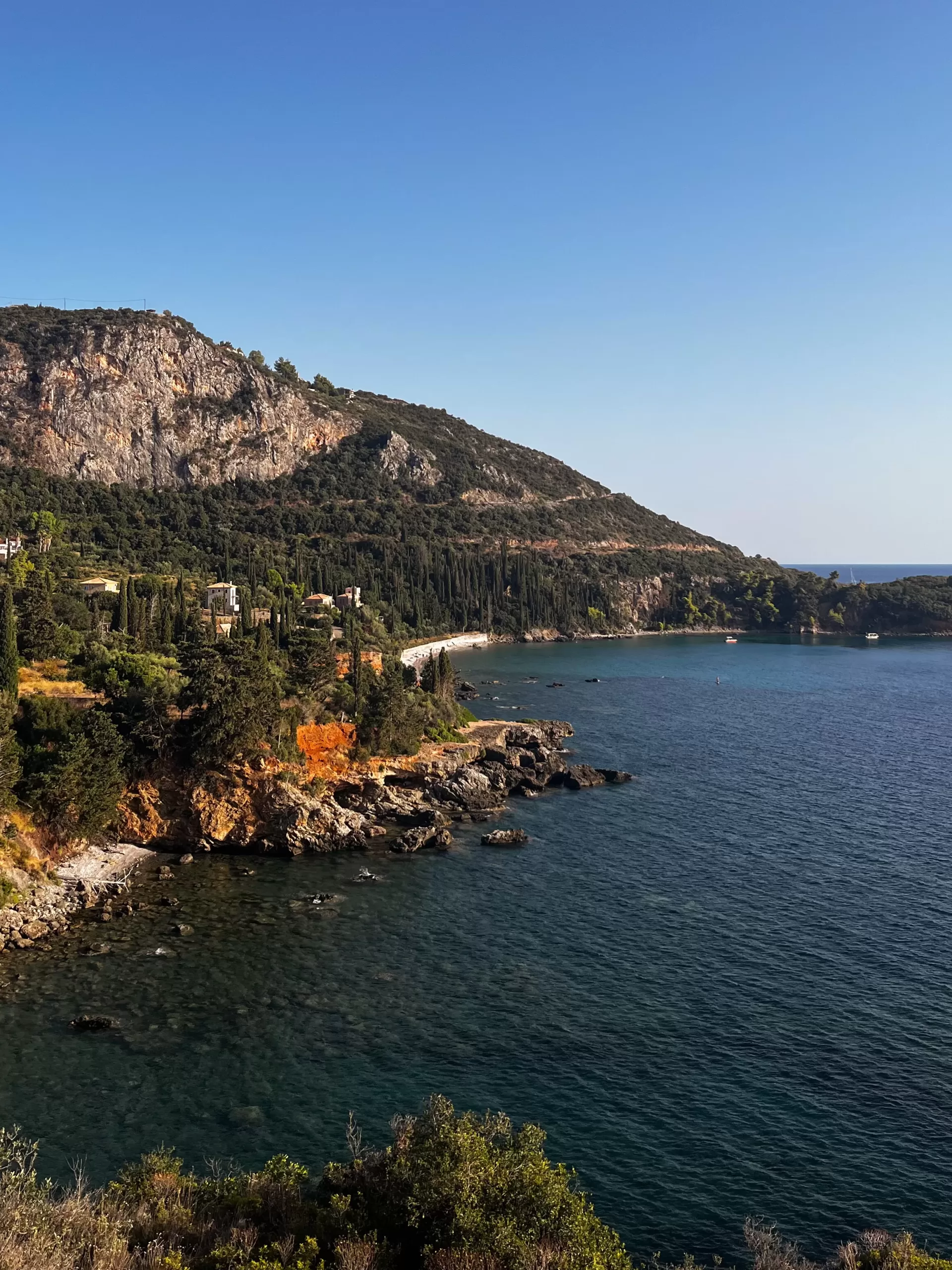
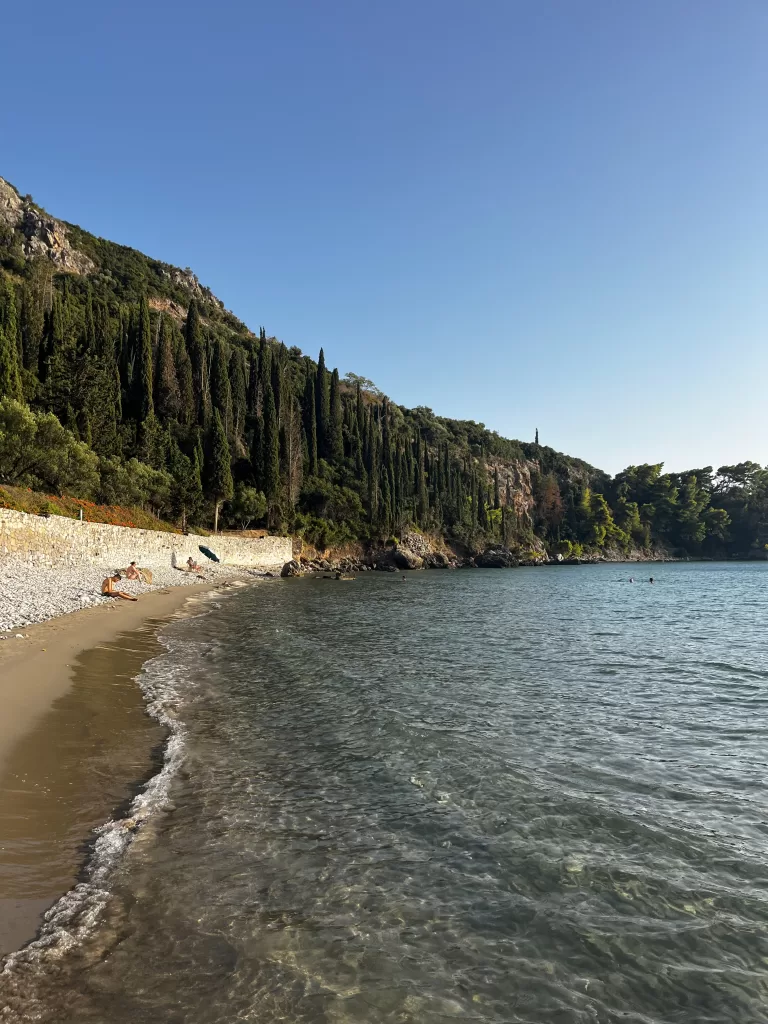
Just down the road from Kardamyli lies Kalamitsi, one of the most idyllic coastlines in all of Greece. Kalamitsi Beach is framed by towering cypress trees and the water is shallow and calm for swimming. The view of Kalamitsi Beach is truly breathtaking, opening up to a vista of the tree covered coast and the deep blue waters of the Mediterranean Sea. There’s a place to park and enjoy the view just off the main road which I’ve included in my Google Maps.
It’s the perfect spot to swim and lounge amidst the lush Mediterranean vegetation. Kalamitsi is still one of the most underrated beaches in all of Greece.
Patrick Leigh Fermor Home
My fascination with the Mani Peninsula began when I read Patrick Leigh Fermor’s Mani: Travels in the Southern Peloponnese. Patrick, an English expat who served with the Allied forces during the liberation of Crete during WWII, was one of the greatest travel writers in the 20th century and a lover of Greece.
Patrick and his wife Joan moved to the Mani and built a grand home in Kalamitsi. Their house was built entirely in traditional Maniot architecture and constructed from local materials. Inside the home, hundreds if not thousands of books belonging to Patrick and Joan line the shelves. A panoramic terrace on top of a rocky cliff overlooks the Mediterranean Sea and the cypress trees covering Kalamitsi Beach. Additionally, the house has a private path down to the shoreline.
Patrick Leigh Fermor’s home is now a private guesthouse. Individual rooms or the entire property can be booked at a time. Understandably, prices can surge during summer months. Additionally, tours operate several times a week or on request.
// Book your stay at patrick Leigh Fermor’s House or join a tour here
Agios Nikolaos
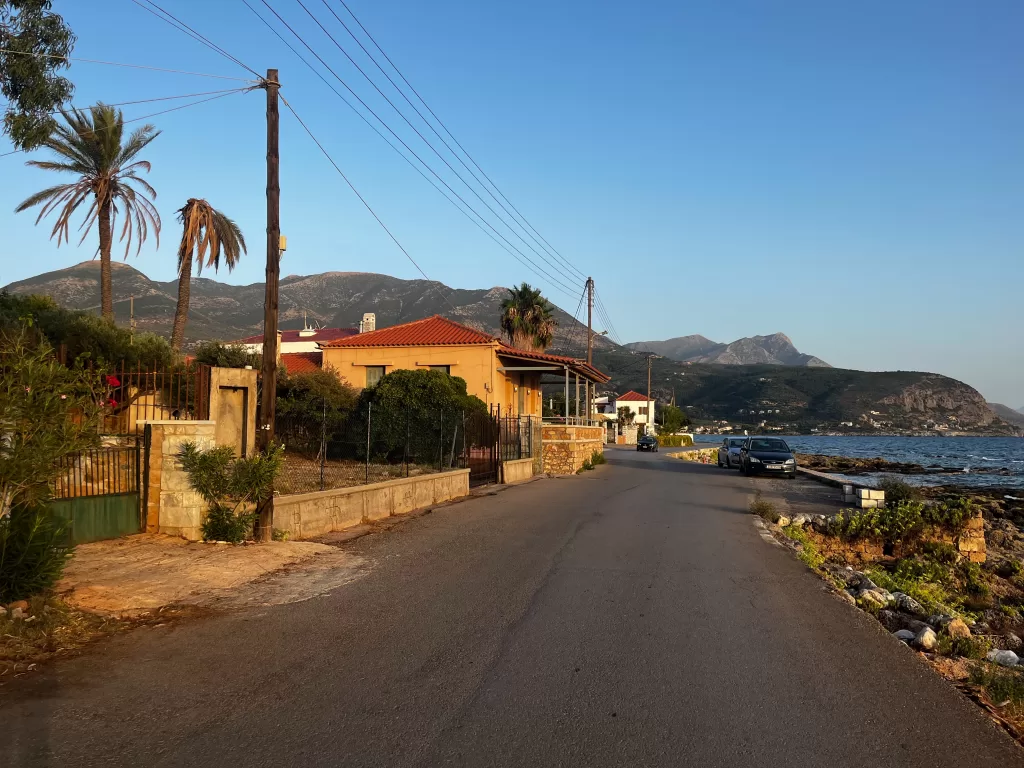
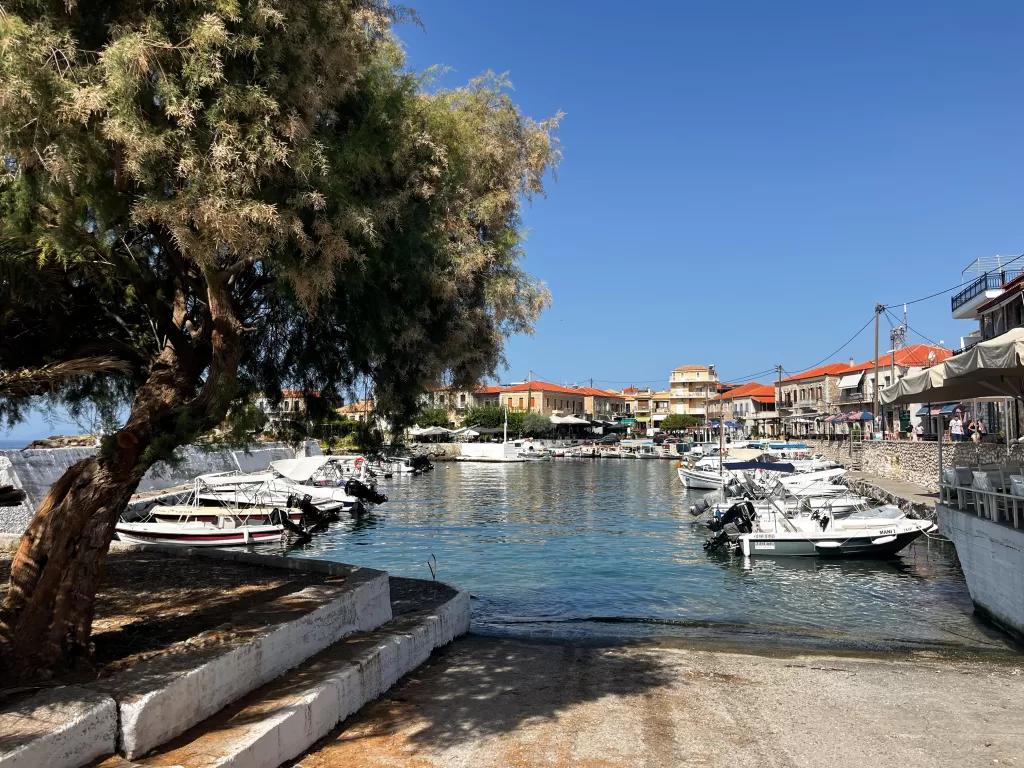
Around 15 minutes south of Kalamitsi is Agios Nikolaos, a rocky seaside town framed by the Taygetus mountain range which spans the entire western side of the Mani Peninsula. Its rugged beauty made it a memorable half way point on my road trip through the Mani.
Its unique setting sandwiched between the Taygetus mountain range and the Mediterranean Sea give it an idyllic, almost cinematic feeling. You could easily spend a few days in Agios Nikolaos, swimming in the sea and eating at the local family run tavernas.
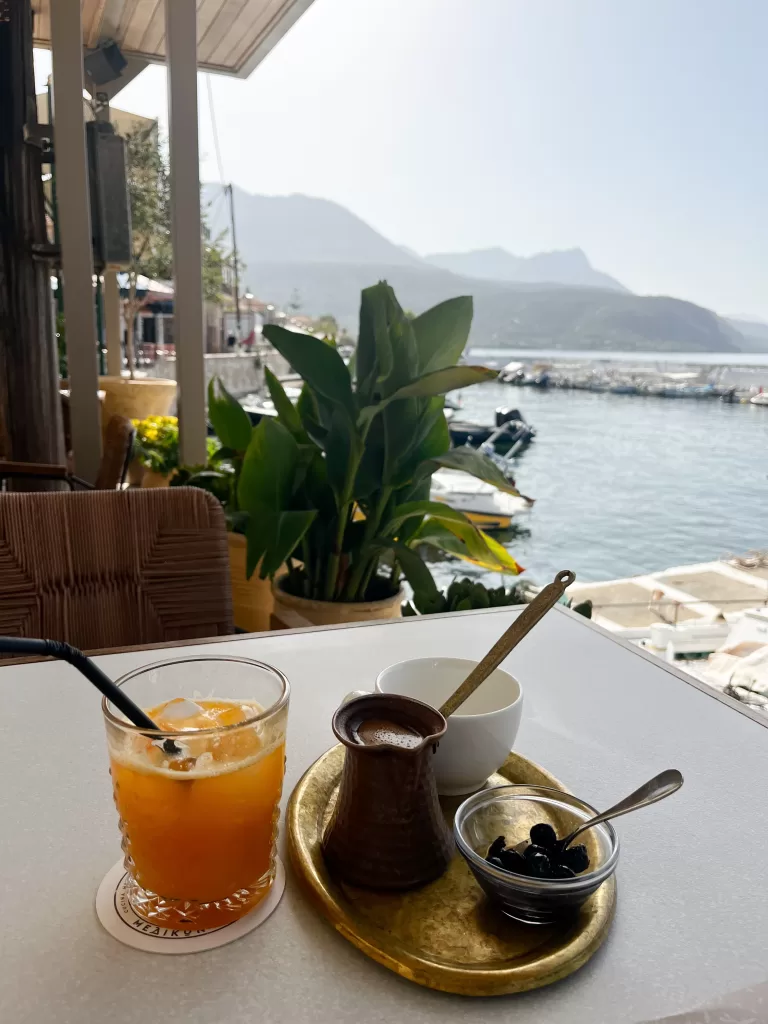
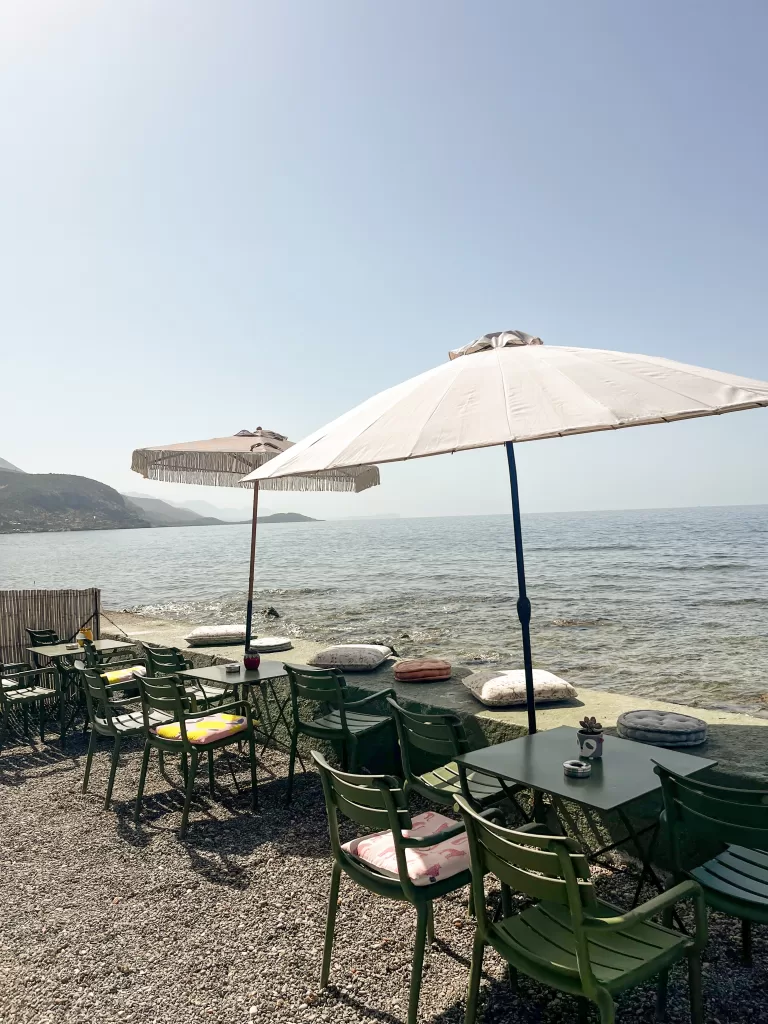
I stayed at Calme Suites, a charming bed and breakfast. The property includes a group of fully renovated stone residences built with traditional Maniot architecture. It’s a one minute walk from the sea. Another perk of staying at Calme Suites is free breakfast at Medikon, a seaside cafe right on the waterfront. It has a large breakfast selection. I highly recommend getting the Greek coffee served in a traditional copper kettle called a briki. It’s a very authentic Greek experience.
Byzantine Churches of the Mani
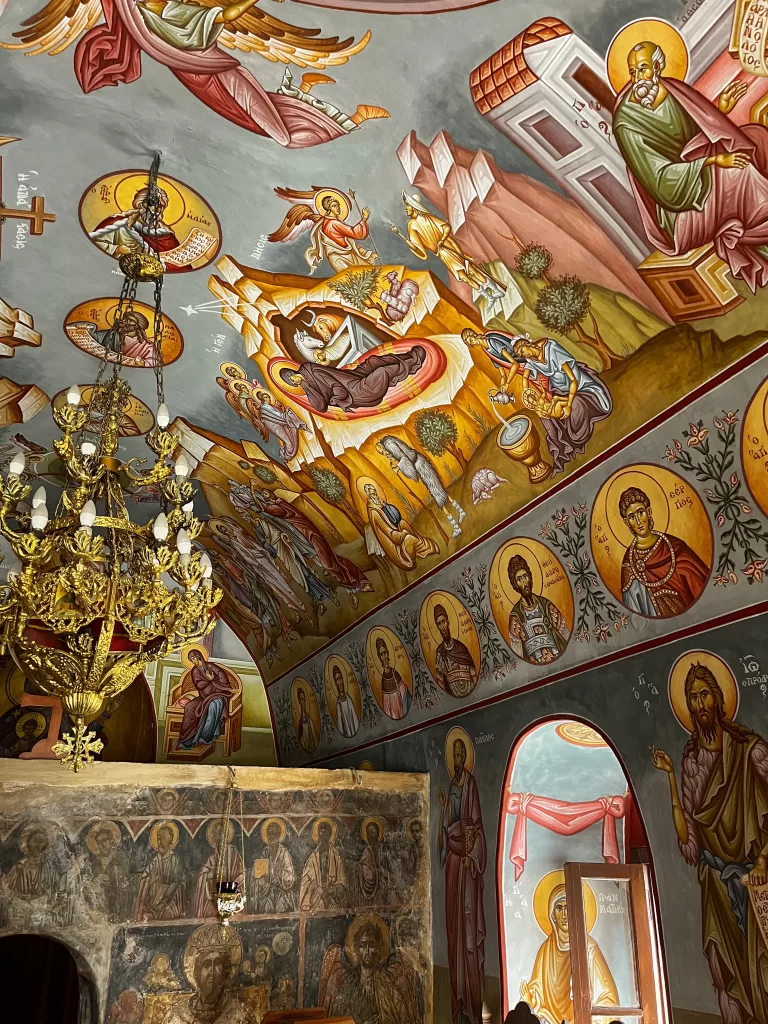
As I continued driving south deeper into the Mani, I was amazed by how many churches and chapels dot the countryside and rolling hills of the peninsula. Many are small domed structures crowned with orange clay roofs.
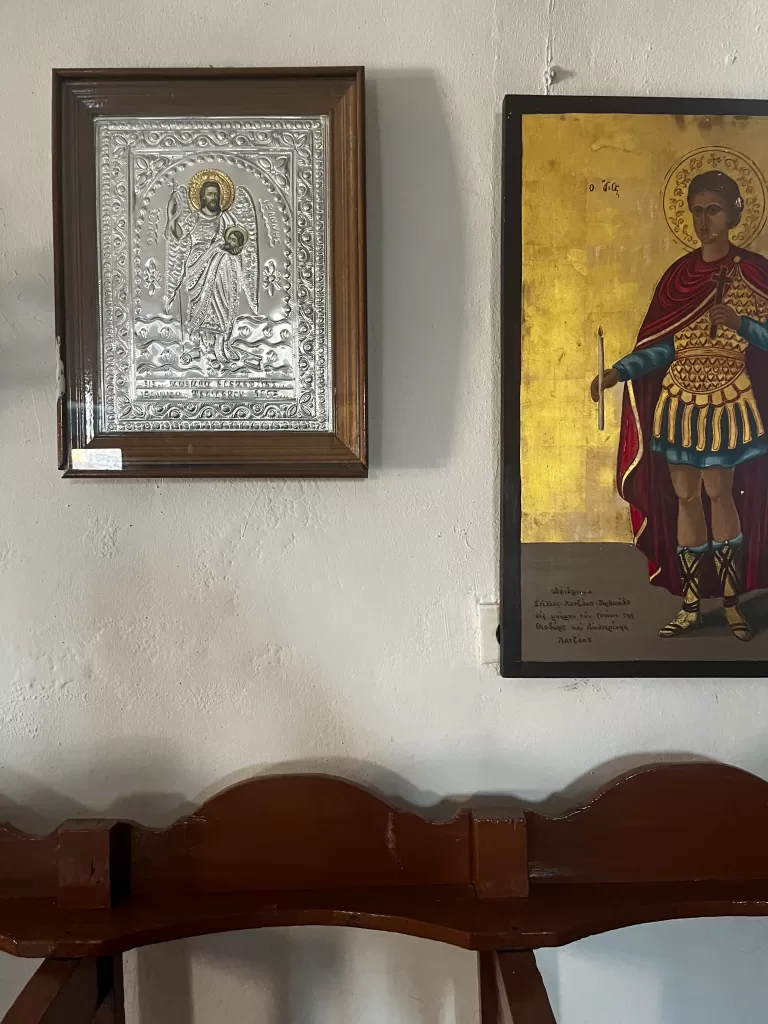
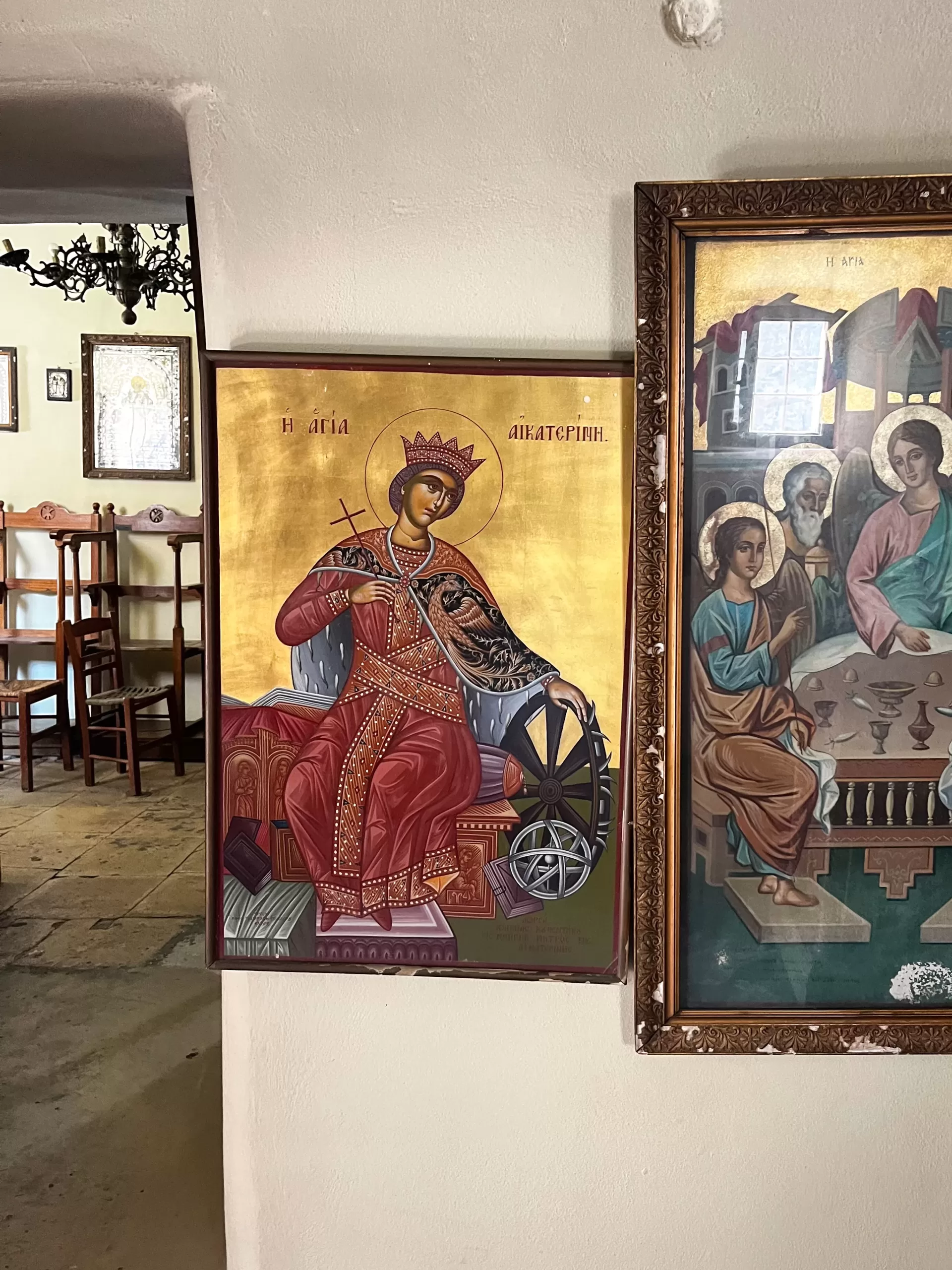
The majority of these churches were built during the Byzantine period and are painted from the floor to ceiling with Orthodox icons. Some of the icon frescos are nearly 500 years old. The icons are visibly worn and withered by time and years of soot from burning incense and lighting beeswax candles.
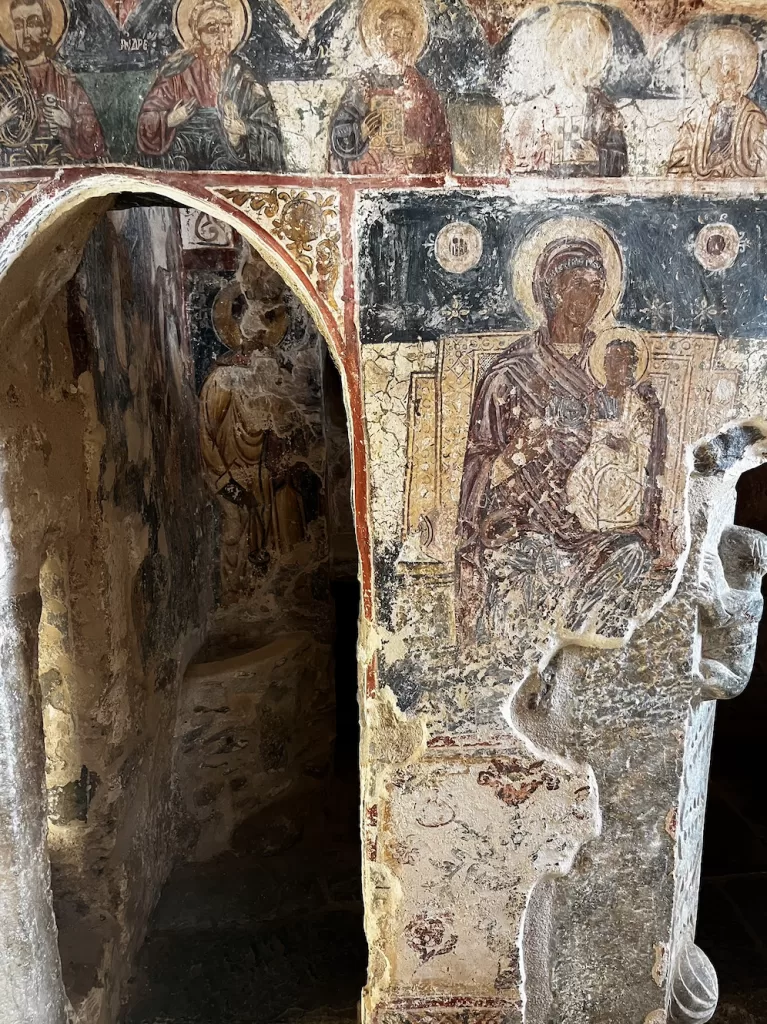
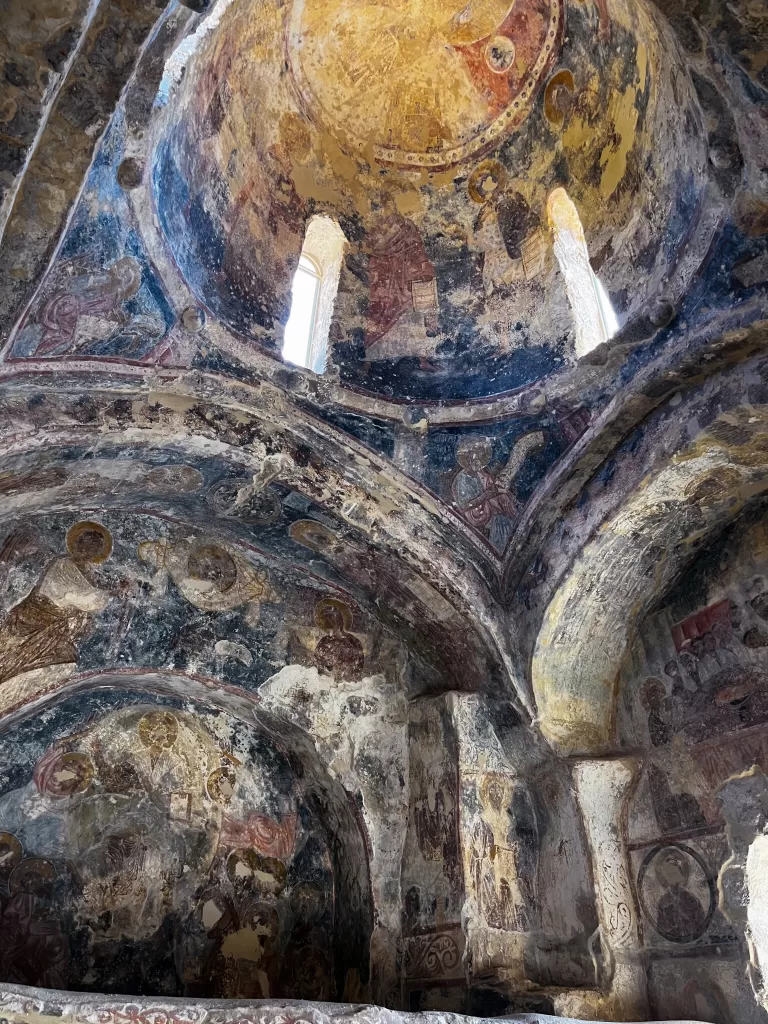
You can find these churches throughout the entirety of the Mani. Many are undergoing restorations to preserve the unique historical and spiritual heritage of the region.
Maniatika Artopoiemata Greek Bakery
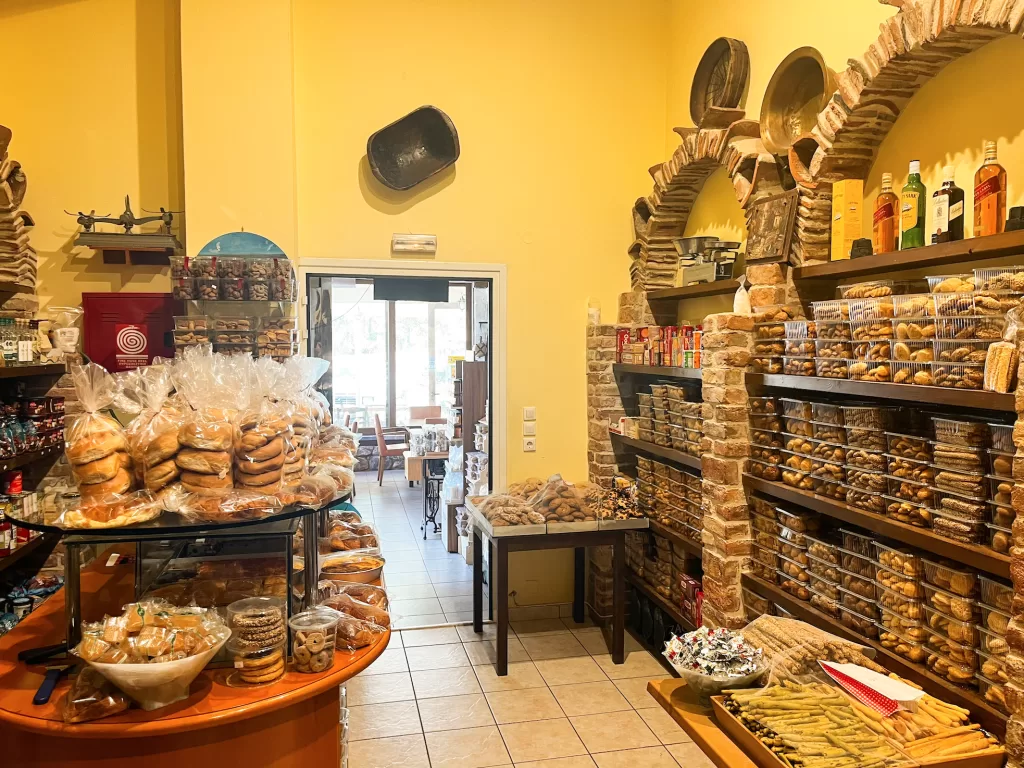
As you continue onwards from Agios Nikolaos, you’ll pass one of the best bakeries in all of the Mani. Maniatika Artopoiemata Bakery is full of locally produced Maniot products like olive oil, honey, jam, fresh breads, and traditional Greek pastries.
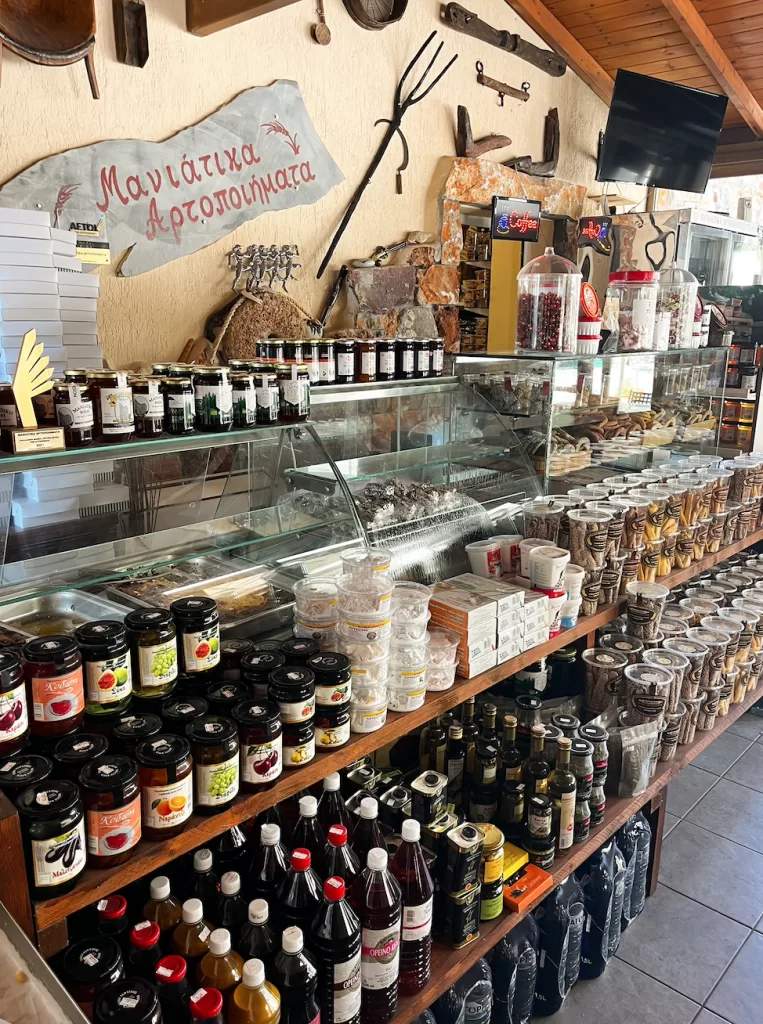
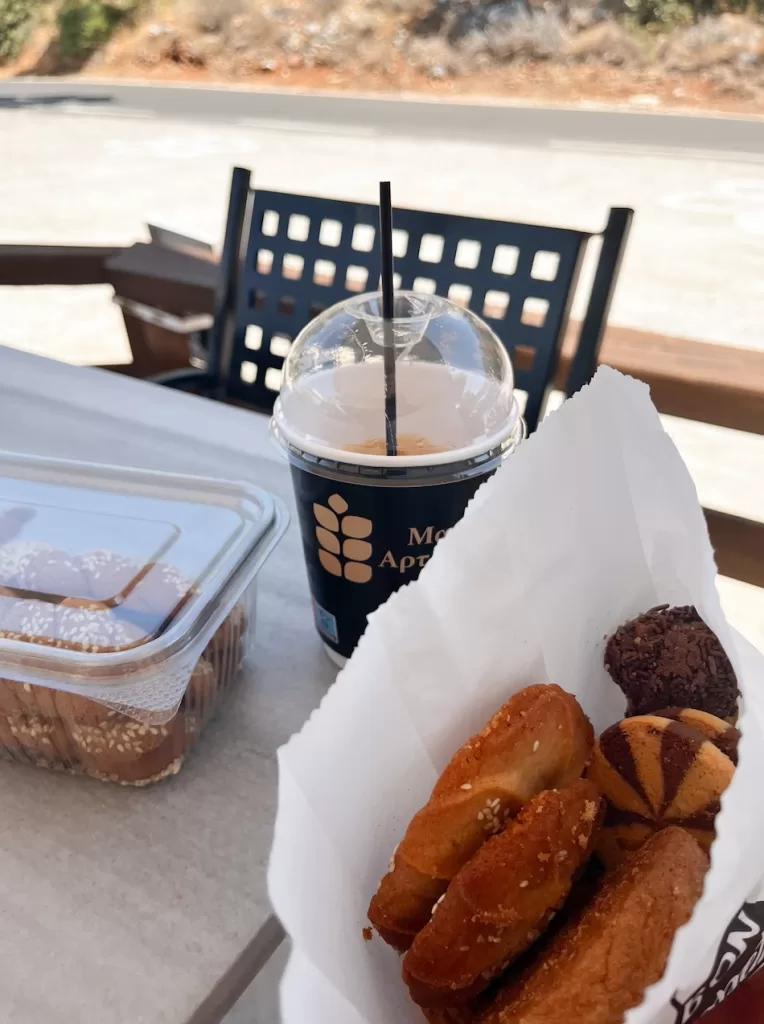
I was amazed at their expansive selection of Greek desserts and cookies. I got an assorted bag of traditional Greek cookies to try as many as possible. This is an absolute must stop on a trip through the Mani. They also have a large patio to enjoy your sweets and a coffee.
Areopoli | Capital of the Mani
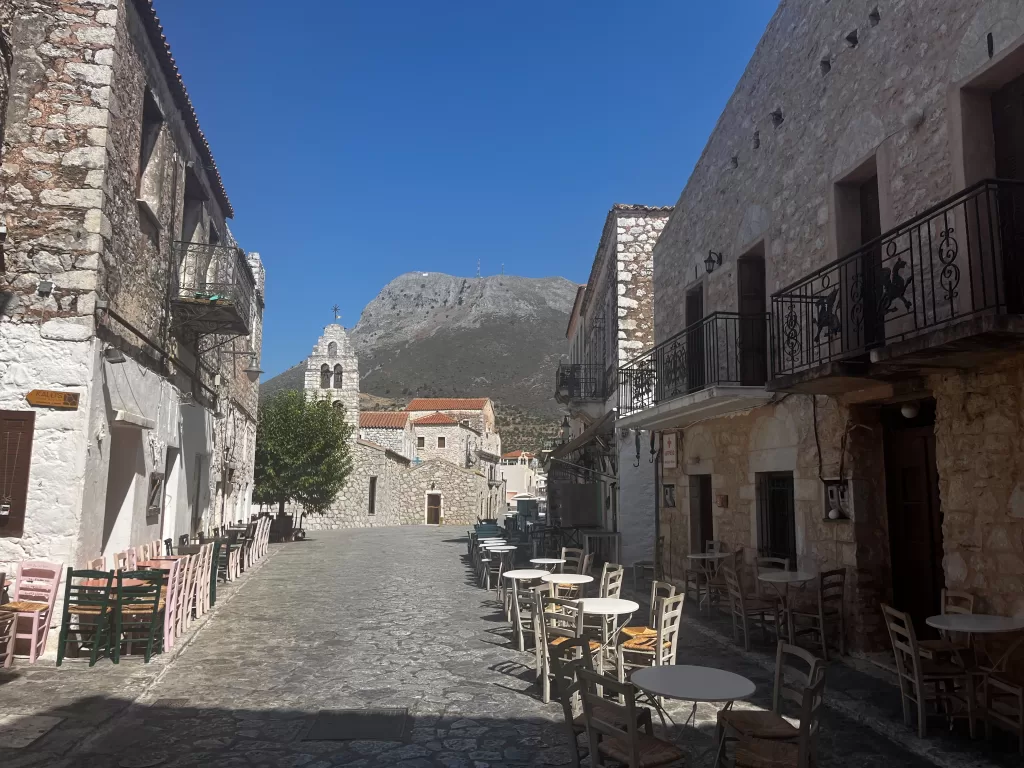
Areopoli is the historical capital of the Mani Peninsula. Due to the region’s history of tribal conflicts and internal struggles, Areopoli is named in honor of Ares, god of war.
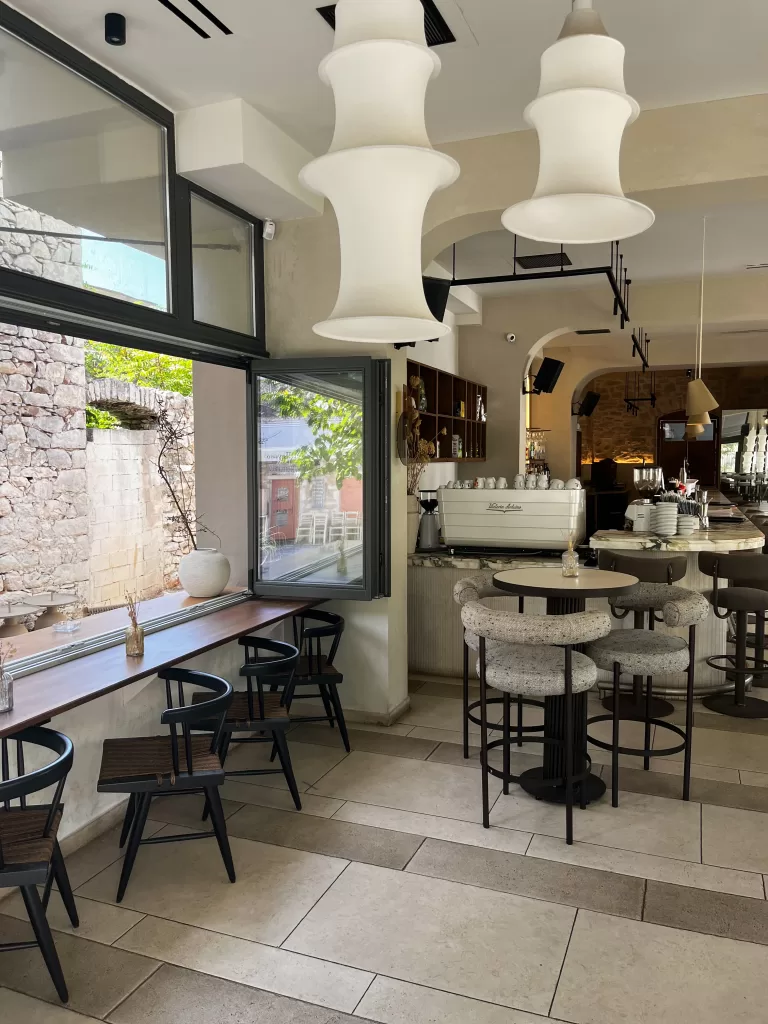
Areopoli is a fascinating village to explore. The town is lined with old cobblestoned streets, stone towers, and several Greek Orthodox chapels with vivid paintings of the life of Jesus and the Virgin Mary. There are many modern coffee shops as well and restaurants serving local dishes and souvlaki gyros. The atmosphere of Areopoli is laid back and mellow yet full of tavernas and artisan shops.
During the summer months, Areopoli has many concerts and traditional panagiris (Greek festivals) with barbecued lamb and Greek dancing. It serves as an epicenter of cultural life in the region.
Kyrimai Hotel
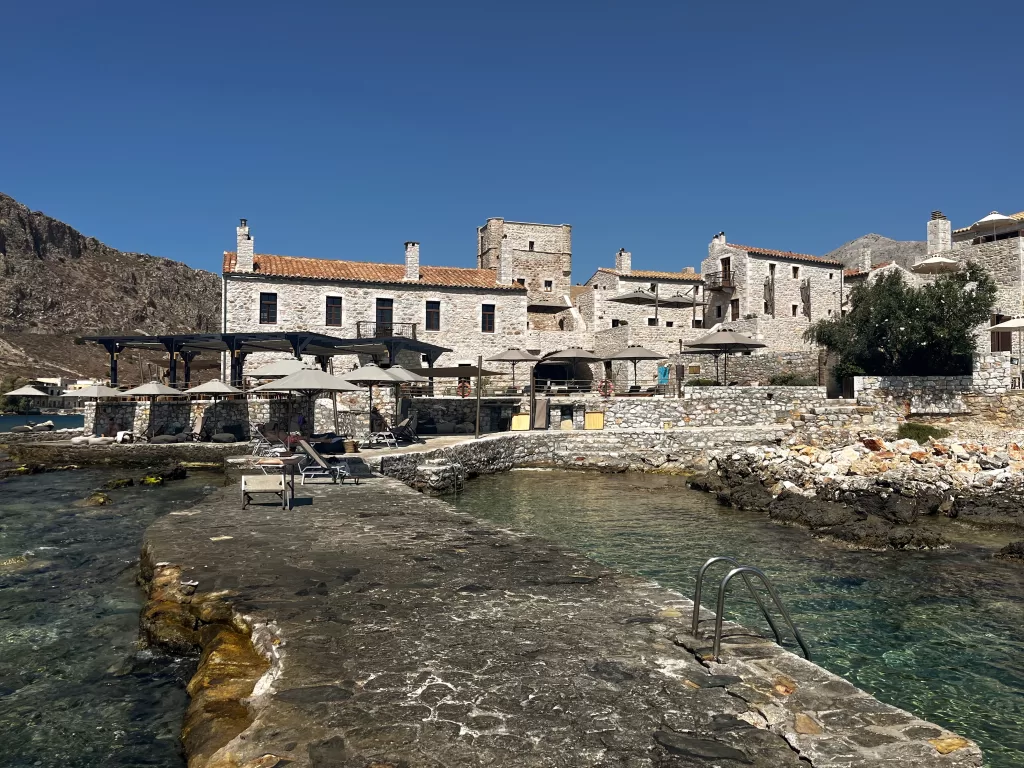
Located in the fishing village of Gerolimenas, Kyrimai Hotel is one of the most enchanting properties to stay at in all of the Mani. Formerly a private stone home for a wealthy trading family, Kyrimai Hotel was converted into a 5 star property and retains all the character and charm of its former glory. No detail was spared, with detailed maps of the region and old photos displayed throughout the hotel. Arches, panoramic terraces, and hidden staircases add to the architectural depth of Kyrimai Hotel. It evokes the very soul of the Mani and the best of Greek hospitality.
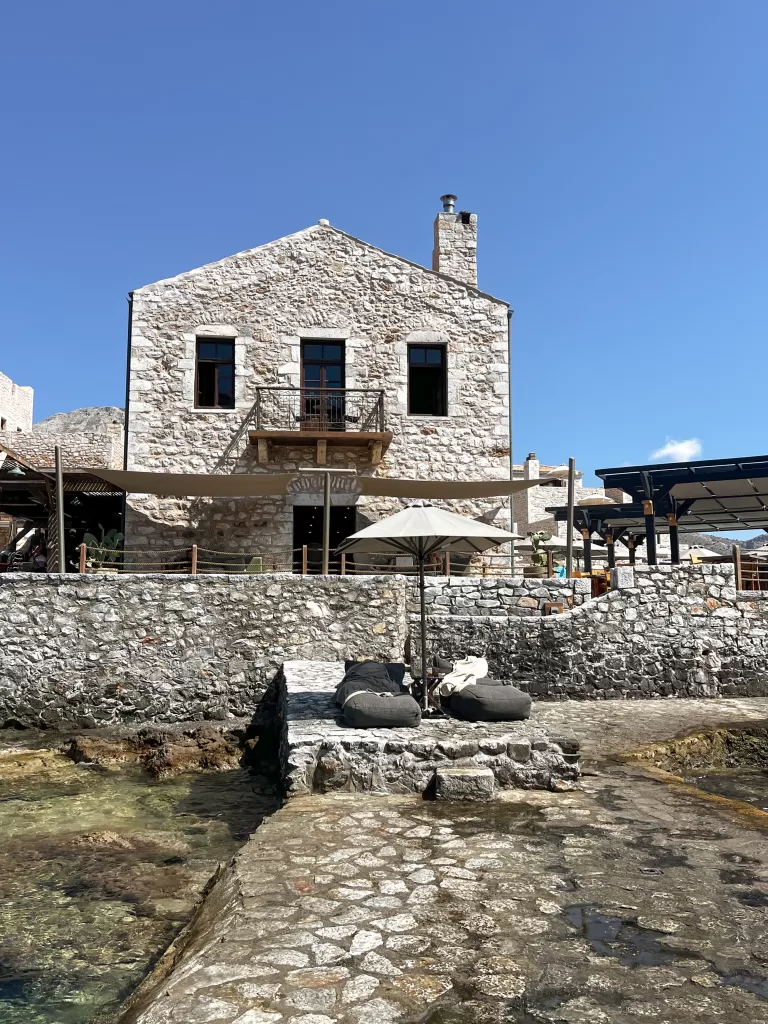
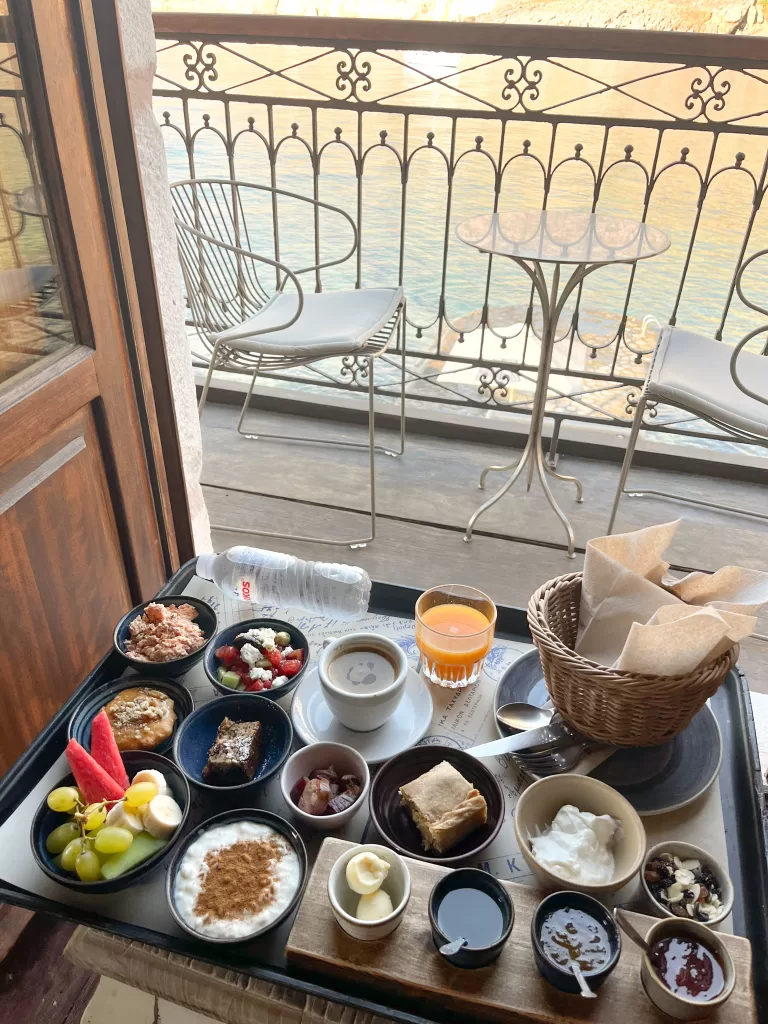
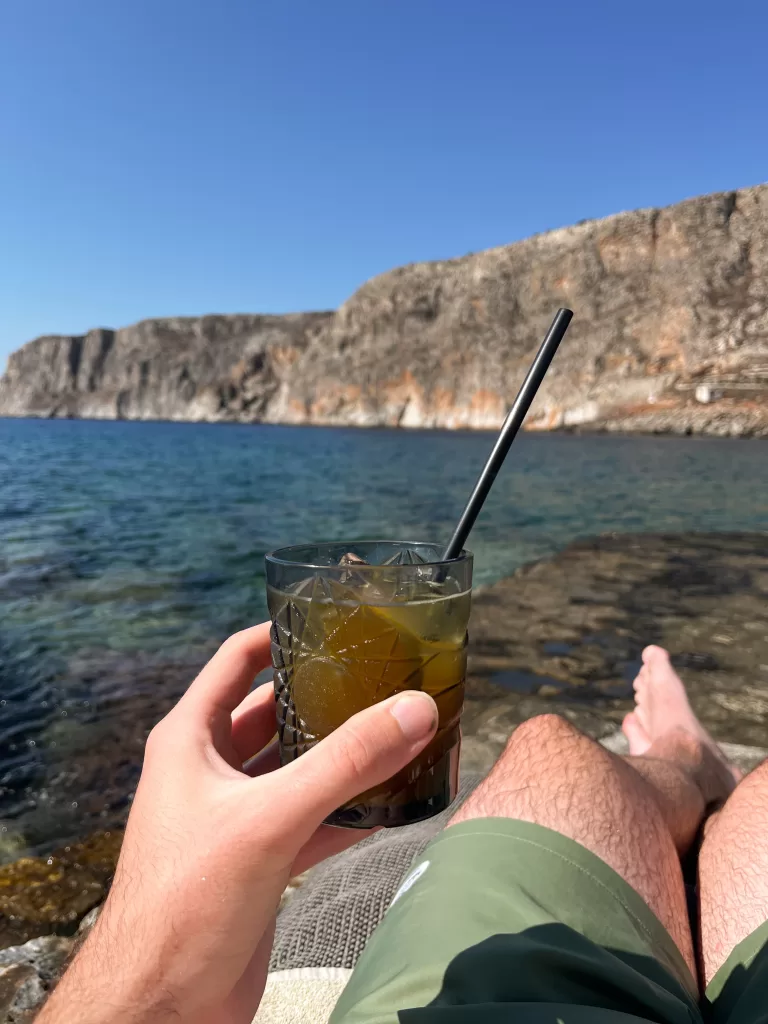
The hotel sits right on the shores of the Mediterranean Sea. The sound of the ocean literally lulls you to sleep. Kyramia has both a pool and lounge chairs near the sea to relax. I spent hours sipping Greek coffees and orange juice vodkas while diving off rocks into the warm embrace of the sea. I would suggest spending at least a leisurely half a day at Kyrami just to enjoy the rejuvenating elements of the property’s slow pace.
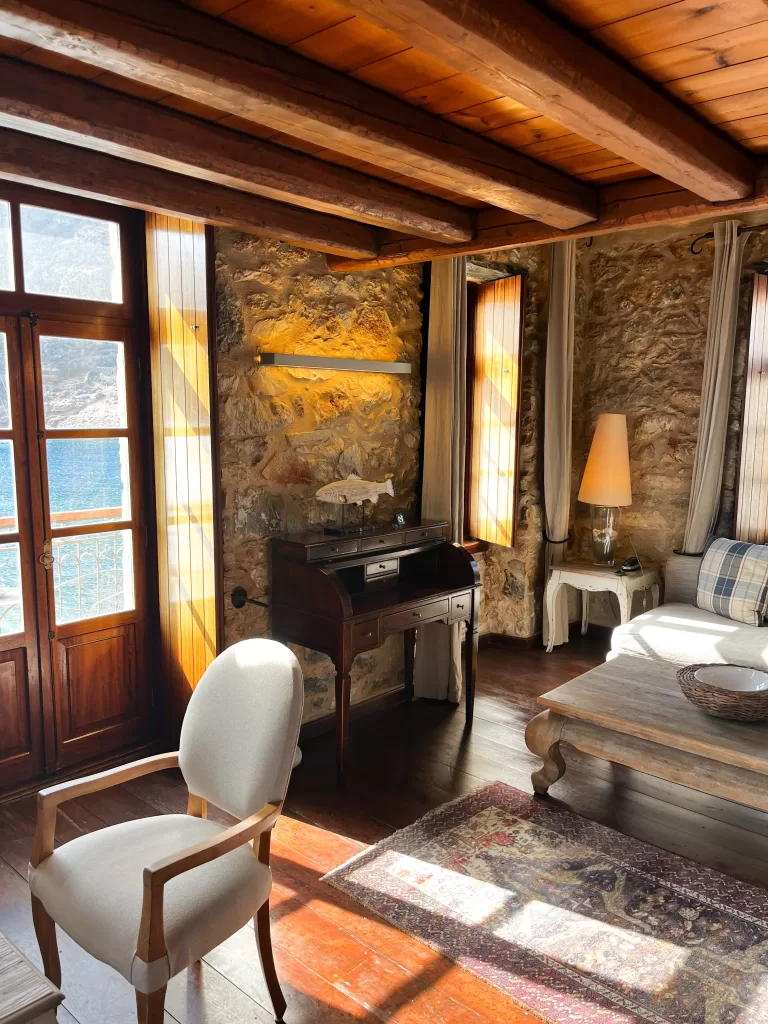
I booked the Master Suite. This room is truly magical, with countless windows to let in the sea breeze and a private patio overlooking the Mediterranean Sea. The canopied bed is upstairs and requires climbing a set of old wooden stairs.
Vathia Stone Towers
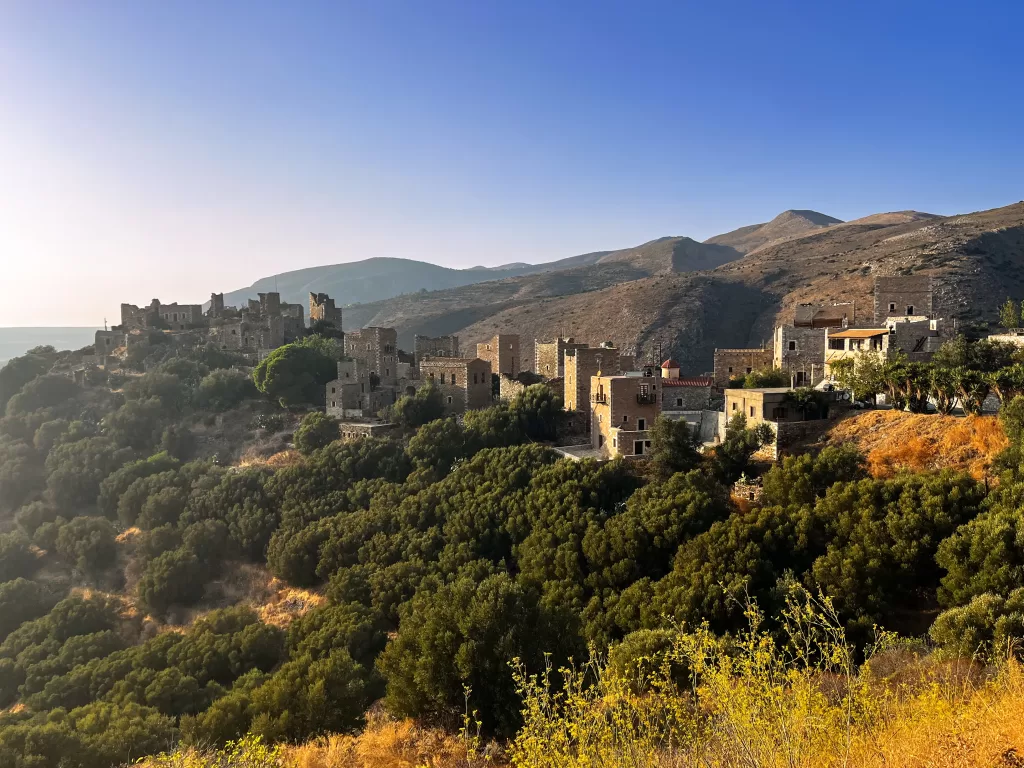
One of the most surreal towns in all of the Mani Peninsula is Vathia. Now semi abandoned, Vathia is considered a “ghost village”. The town is full of many tall stone towers where local clans and families fought one another for dominance. Exploring Vathia feels like stepping back in time to a different world. The towers of Vathia stand as silent witnesses to the history of the Mani’s tribal past. Vathia is especially beautiful to visit in the late afternoon before sunset.
Cape Tainaron
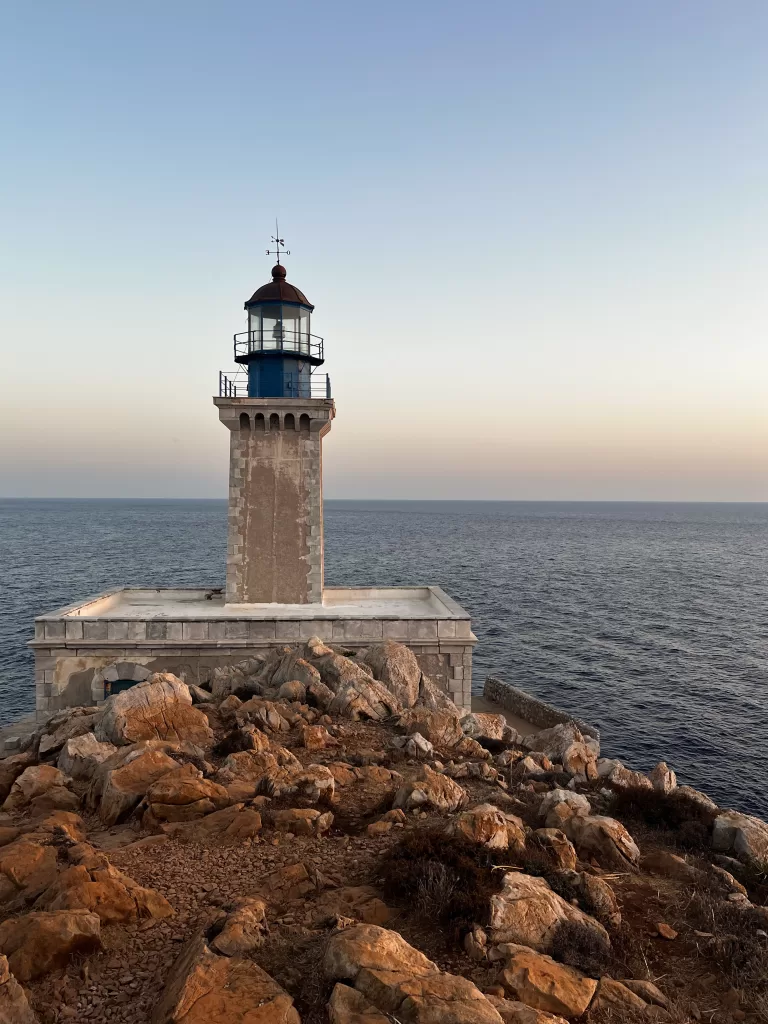
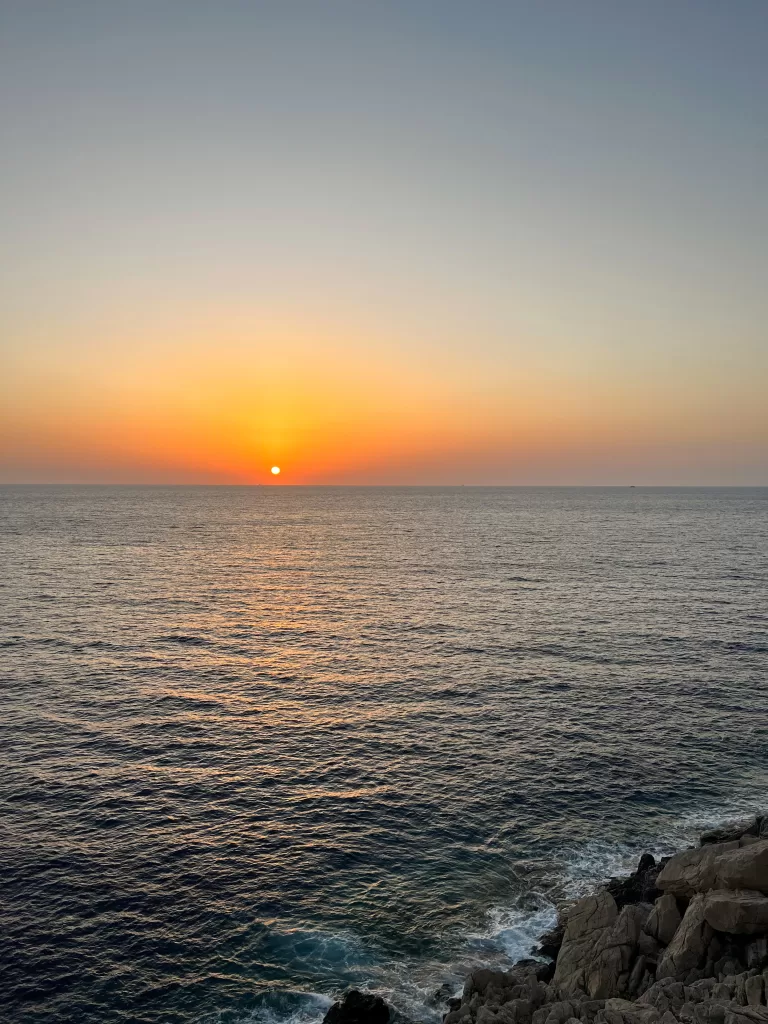
In my opinion, Cape Tainaron is the most special place in all of the Mani. It’s the southernmost point of the Greek mainland (with Crete being 150 miles further south). Cape Tainaron is marked by a simple lighthouse built on the last rocks of Greek earth. Seeing the sunset here was truly a once in a lifetime experience for me, as I watched the fishing boats and shipping vessels moving in the distance, the backbone of the Greek economy. There is a unique energy here, the place where the Ionian and Aegean Seas meet and where the ancients thought the entrance to Hades or the afterlife began.
The walk to the lighthouse is around an hour each way. It’s an easy path for the most part, but as you approach the lighthouse, sections of the trail become more rocky and uneven. I suggest starting the walk back from the lighthouse shortly after sunset to avoid hiking in total darkness.
3 Day Mani Guide Itinerary
Below is everything I did in 3 days exploring the Mani Peninsula. Feel free to alter my itinerary to travel the rugged beauty of the Mani at a slower pace.
Day 1 in Mani Guide
- Explore Kalamata and walk the Navarinou Promenade
- Visit the Polylimnio Waterfalls
- Swim and sunbath at Barreira Beach
- Take a slow drive south from Kalamata into the Mani
- Photograph the olive groves and stone towers
- Savour a Greek coffee in Kardamyli
- Enjoy the view of Kalamitsi Beach
- Visit the Patrick Leigh Fermor House
- Stay in Agios Nikolaos
Day 2 in Mani Guide
- Have a slow breakfast at Medikon
- Take your time driving through the olive and cypress forests
- Visit old Byzantine Churches
- Indulge in Greek pastries at Maniatika Artopoiemata Bakery
- Wander the streets of Areopoli
- Check into Kyrimai Hotel and explore the property
- Swim in the Mediterranean Sea at Kyrimai
- Explore the ghost town of Vathia and its stone towers
- Watch the sunset at Cape Tainaron, southernmost point of Greece
Day 3 in Mani Guide
- Indulge in a traditional Greek breakfast
- Spend a day lounging by the sea at Kyrimai Hotel
- Walk the streets of Gerolimenas
- Drive the Eastern coast of the Mani peninsula
Other Greece Blogs and Guides
I hope you found my Mani Guide helpful as you prepare for your journey through one of Greece’s most untamed and historic regions. If you have any questions or thoughts, feel free to leave a comment below. I’d love to hear about your experience exploring the Mani. Happy travels!
Here are some of my other Greece blogs and guides for inspiration for your upcoming trip:
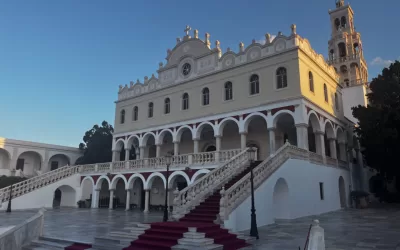
- Church of the Panagia Evangelistria (Greece’s most visited church)
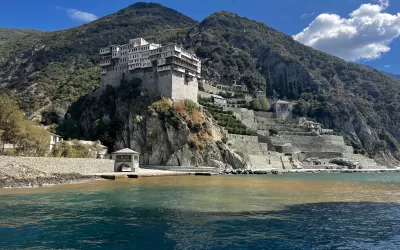
- Mount Athos Guide | How to Visit Greece’s Holy Mountain
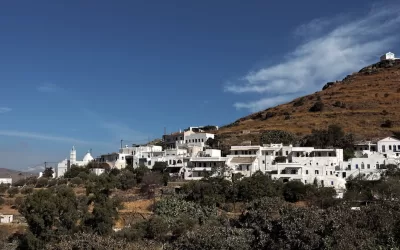
- Tinos Island Guide
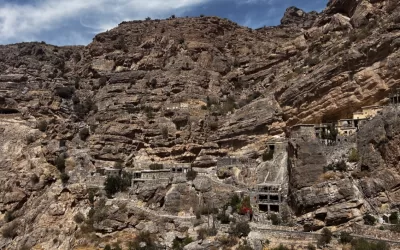
- Karpathos Island Guide
- Chania Town Guide
- Crete’s Akrotiri Peninsula
- Orthodox Easter on Crete (COMING SOON)
- Crete Island Guide | Exploring Greece’s biggest island (COMING SOON)
0 Comments