
Discover Bull Fighting in Oman, an off the beaten path experience and deeply rooted cultural tradition – Old Soul Explorer
Oman is a country rich in authentic experiences and unforgettable moments. My first trip discovering this otherworldly corner of Arabia was filled with remarkable adventures watching the sunrise on the cliffs edge of Jebel Shams, wandering the wild camel-filled shores of Salalah, and exploring the modern sprawl of Muscat.
However, the most exciting moment of my trip came in a more rural, less-traveled encounter with Oman. In fact, it was one of the most off- the beaten path experiences I’ve had in all my travels, watching the bull fights of Oman
Bullfighting in Oman is an ancient tradition. Centered on the battle of two large bulls, the Omani bull fights are a community event and symbol of cultural pride. However, bullfighting in Oman is not a tourist event. Being prepared to properly attend while understanding the risks is crucial to fully enjoy this once in a lifetime experience.
This blog is designed to serve as a guide for those who wish to spectate one of Oman’s unforgettable bull fights.
Where to Watch the Bull Fights
The bull fights in Oman are a centuries old event rooted in the cultural identity of the Northern provinces of Oman which are called governorates. The Omani bull fights are practiced in the governorates North of Muscat and are most common in cities and towns including Barka, Sohar, and Liwa. However, many of the bulls are bred in Salalah in Oman’s southern Dhofar region.
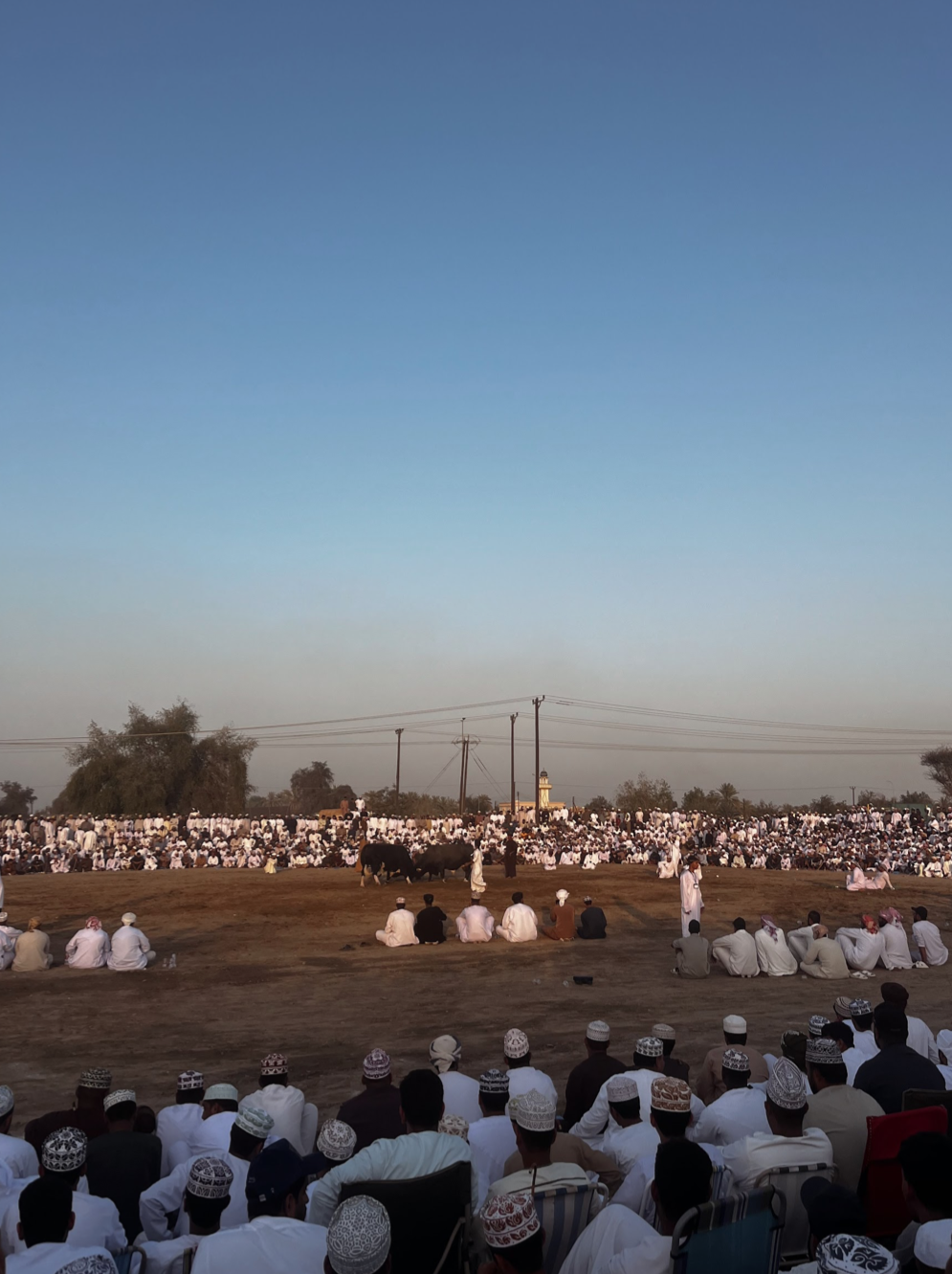
Smaller spontaneous fights occur throughout the year (mainly on Fridays) while bigger events are held on major holidays like Eid Al-Fitr, at the end of Ramadan. I attended a very big battle on the 4th day of Eid.
I spectated an Omani Bull Fight in the small village of Liwa close to the border with the United Arab Emirates. In fact, many Emiratis crossed the border to watch the event, mixing in their traditional white clothing often seen in Dubai with the more colorful Omani dress.
// Here’s the coordinates of the Liwa bull fighting arena
What is Omani Bull fighting
The rules of bullfighting in Oman are pretty simple. Two large bulls of similar stature and strength enter an open field arena and are brought together to push and wrestle each other. The goal is not for the injury of the bulls, but rather for one to overpower the other and force it to retreat. When it is clear there is a winner, handlers break up the match, often needing the help of the crowd. Bull fights usually last a few minutes with multiple matches.
// 15 Top Things to do when visiting Oman
How does Omani Bull Fighting Differ from other Cultures
Unlike the bullfighting in Spain and Latin America, there is no matador and the bulls are not killed. According to Omani custom, no harm is intended for the bulls. It is a contest between the bulls themselves and not the people.
Additionally, Omani bull fights are not touristic in nature. Attendance is free but usually consists of farmers, breeders, and local families. As a symbol of social dominance, important community members often sit towards the front of the crowd.
What is it like to attend a local Bull Fights
When I first pulled up to the Omani bull fights, I was both incredibly excited and a little overwhelmed. For starters, people were parking along the edge of the freeways and in the center divider. Cars lined the road and thousands of people were crossing the highway without warning.
As exciting as the bull fights in Oman are, I found them to be both culturally immersive and a little overstimulating. There is just so much to take in. Coming from a sleepy suburb in Dallas, it was certainly an exotic experience.
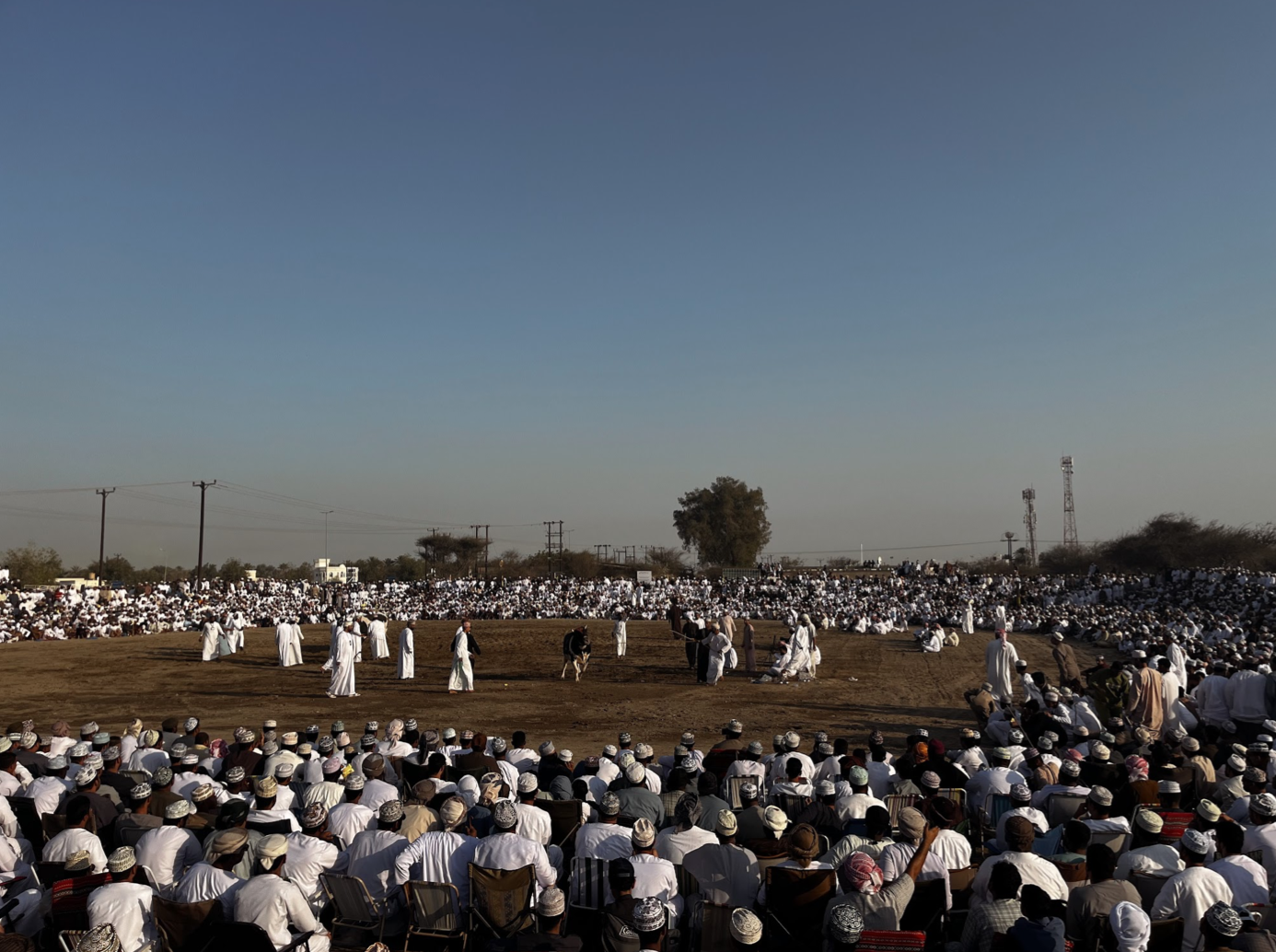
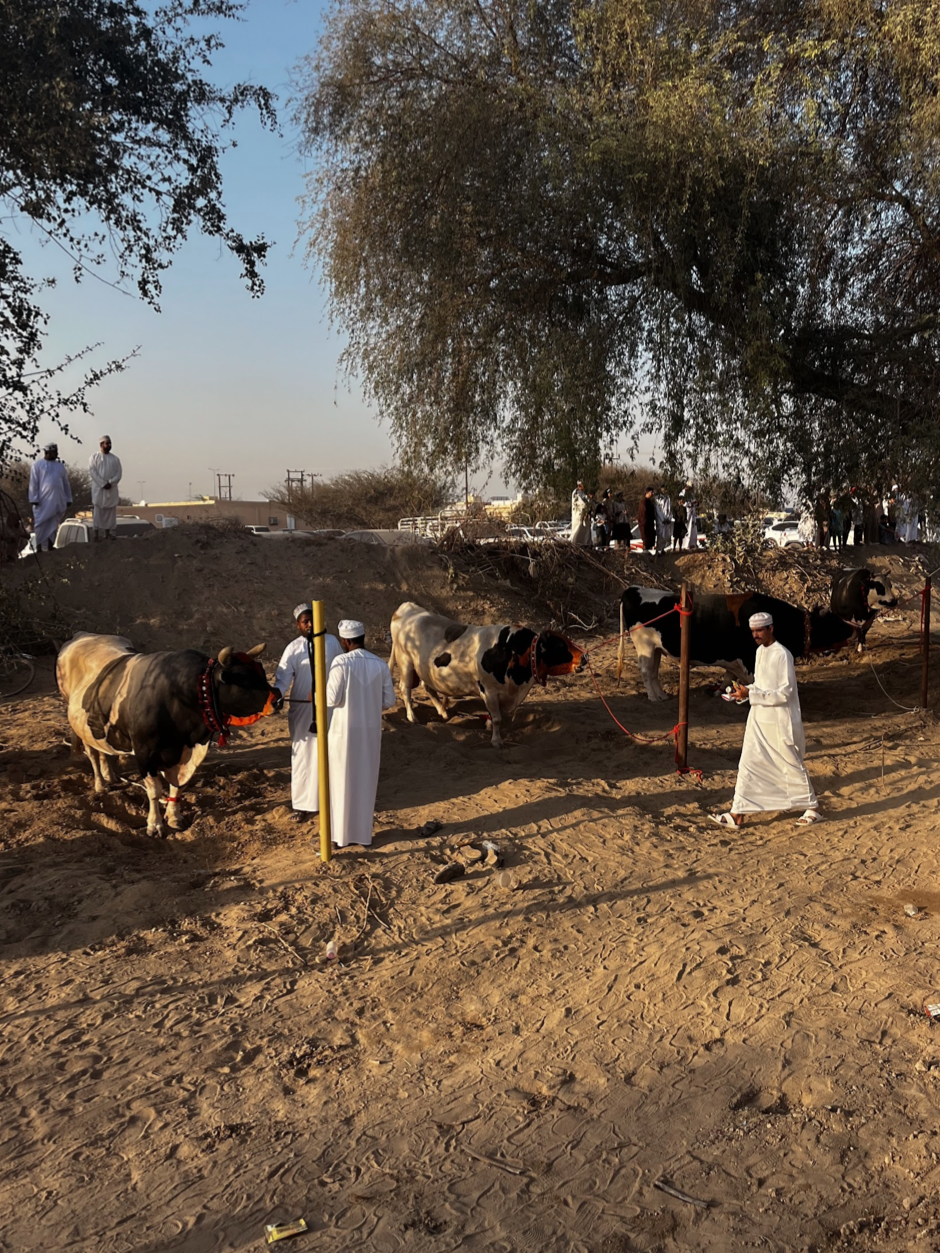
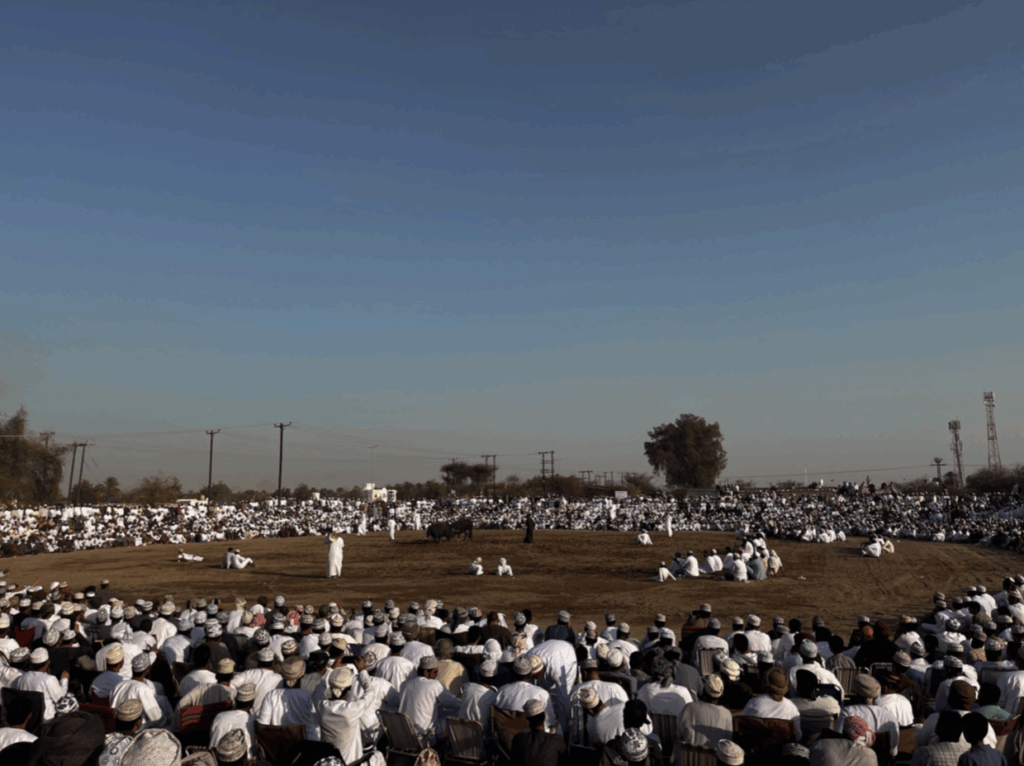
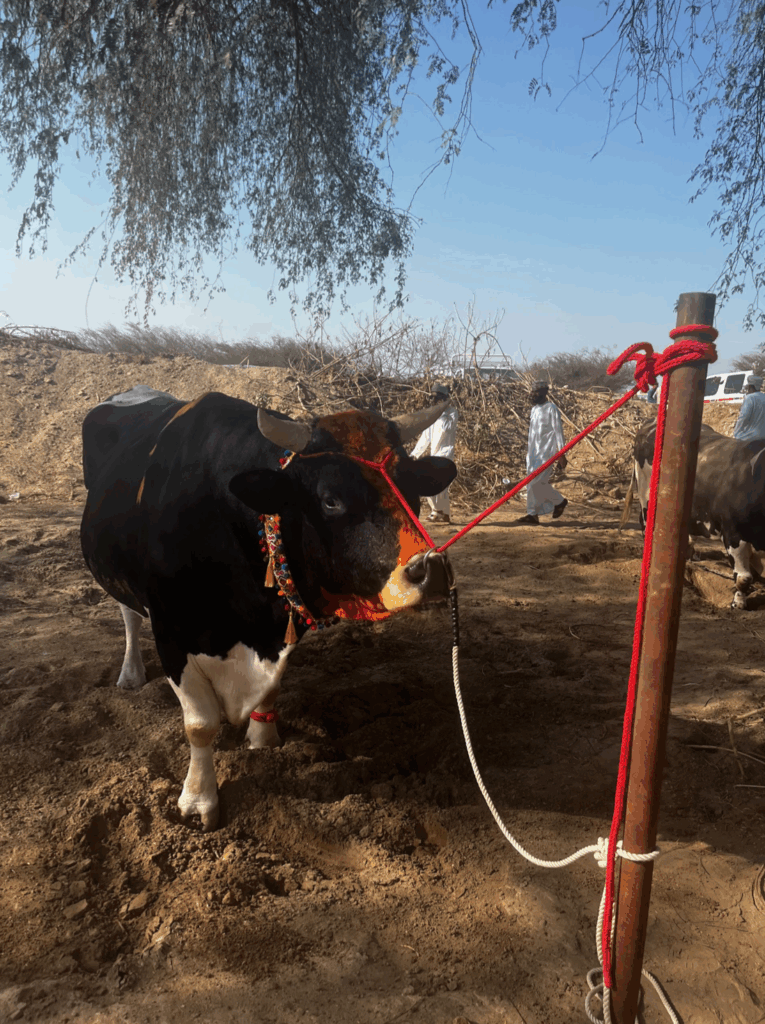
As I walked into the open air arena, I saw bulls tied to a stake, some screaming. Local Omani farmers and families brought lawn chairs around the ring, while others stood on tall mounds of dirt. I squeezed in on one of the hills to get good views. Helpful locals made room for me to spectate. I was the only Westerner in attendance. No women were present.
Men with loud speakers yelled in Arabic to excite the crowd. Throughout the matches, the organizers would wail into their megaphones, adding to the drama. The first bulls were eventually brought out. When they were released, they locked horns and began to wrestle. Sometimes, the bulls would break free and charge the crowd, sending the audience scrambling.
Atmosphere of the Omani Bull Fights
The vibe at the Omani Bull Fights is laid back and social. Friends chat in a loving but aggressive Arabic, probably betting on the battle and catching up on life. People move freely, getting different vantage points and seeing the bulls up close as they wait patiently under sidr trees for their match. Several people saw me and made conversation with me in English. I met a man with his sons who lived in Minnesota for a number of years. He helped me break through the crowd at sunset to get last minute footage of the main event with the largest bulls.
The entire bull fights lasted around 4 hours until sunset.
What to Wear
If you plan to spectate a bull fight in Oman, I suggest wearing traditional clothing. Nobody will be wearing t-shirts and jeans here. Travelers should respect the cultural atmosphere and setting of the event.
Usually, a full length thobe or dishdasha as it’s called in Oman is worn by men. The most traditional color is pure white, but many Omanis wear blue, tan, and olive green dishdashas. Many men also wear a skull cap and kashmir turban, although this isn’t required. I also brought my wood stick I got in Nizwa called a Assa. You can also wear a Khanjar, the ceremonial silver dagger, although this is a more formal object usually worn at weddings.
Women should wear a Hijab covering their hair and should be dress modestly. An Islamic dress called an abaya would be best since it covers the arms and legs fully. However, I will note that I didn’t see any women at the Omani bull fights.
Finding out about Bull Fights in Oman
The Bull Fights in Oman are not well publicized. Events are planned by a few organizers who share vague details that are entirely in Arabic.
I had to do extensive research to find out more details on the exact date, time, and location of the Omani bull fights. I even reached out to two of the organizers to confirm the specific location of the bull fights with Google Maps. The organizers were very friendly and hospitable and invited me to the event. If you would like the event organizers contact information, message me directly. Afterwards, I thanked them and they invited me to attend again any time i’m in Oman.
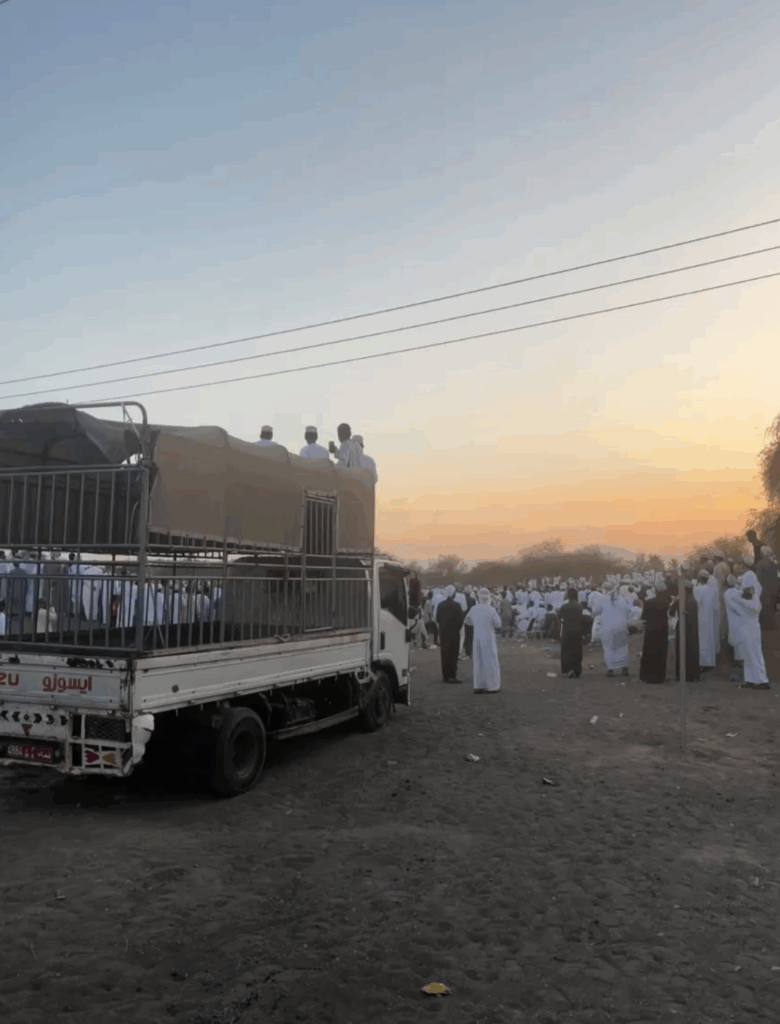
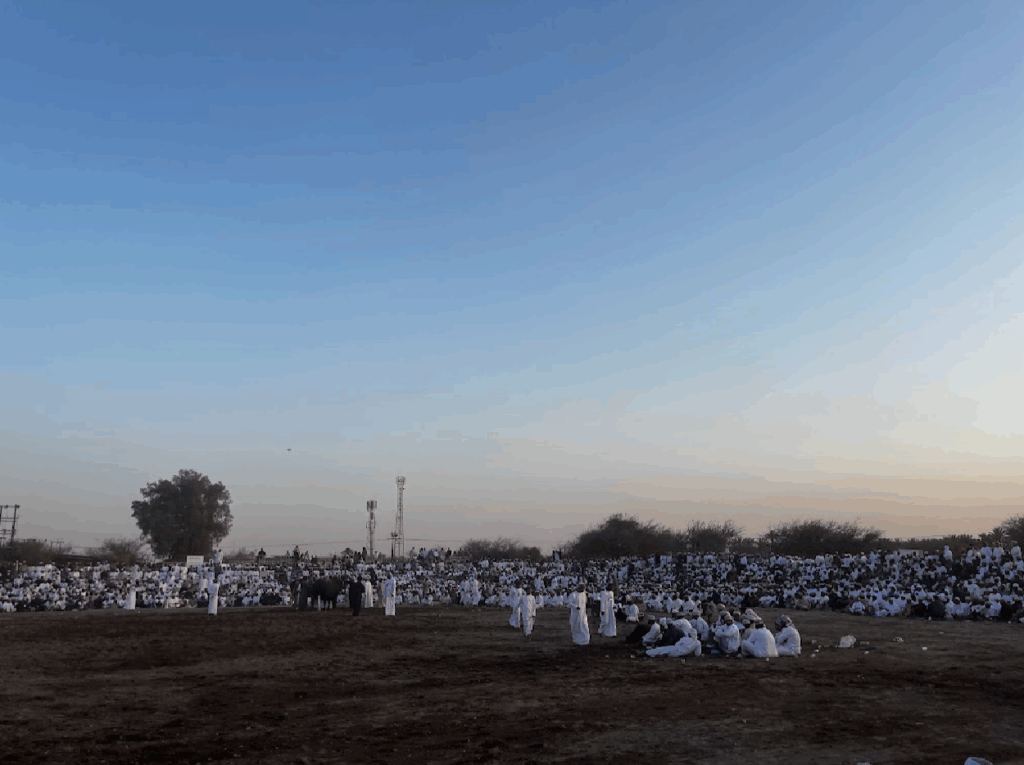
I attended one of the biggest bull fights of the year on the 4th day of Eid al-Fitr at the end of Ramadan. There were over 3,000 people watching.
// 8 days in Oman Itinerary and Guide (COMING SOON)
Safety around the Omani bullfights
It’s important to understand the safety risks before attending the bullfighting in Oman. The matches are in open air arenas with no barriers present. Sometimes, bulls break loose and charge the crowd, sending the crowd running. Knowing this, I stood mostly on the mounds to both get panoramic shoots but also to stay safe. Occasionally, I ventured to the front to capture a few pictures and videos.
Unfortunately, if the bulls break loose, it can occasionally be fatal. At the very end of the fights, as I was walking to my car, I saw the audience begin to rush. Later that night on my social media, I found out that a local young man from the village of Suwaiq passed away after one of the bulls attacked him at the last battle.
Attending the Omani bull fights should be done with absolute precaution and respect for the animals. I would recommend spectating from a spot you feel safe at.
Additionally, there is no protection from the sun except a few Sidr and date trees on the perimeter of the dirt field.
More things to do in Oman:
- Watch the sunrise at Jebel Shams – The Grand Canyon of Arabia
- Wander the wild camel filled shore of Salalah
- Stay at the Suwgra | a former mountain village in the mountains of Oman
- Visit Jebel Akhdar during the Damask Rose bloom
- Discover the cosmopolitan, coastal, and chill capital of Muscat




0 Comments