
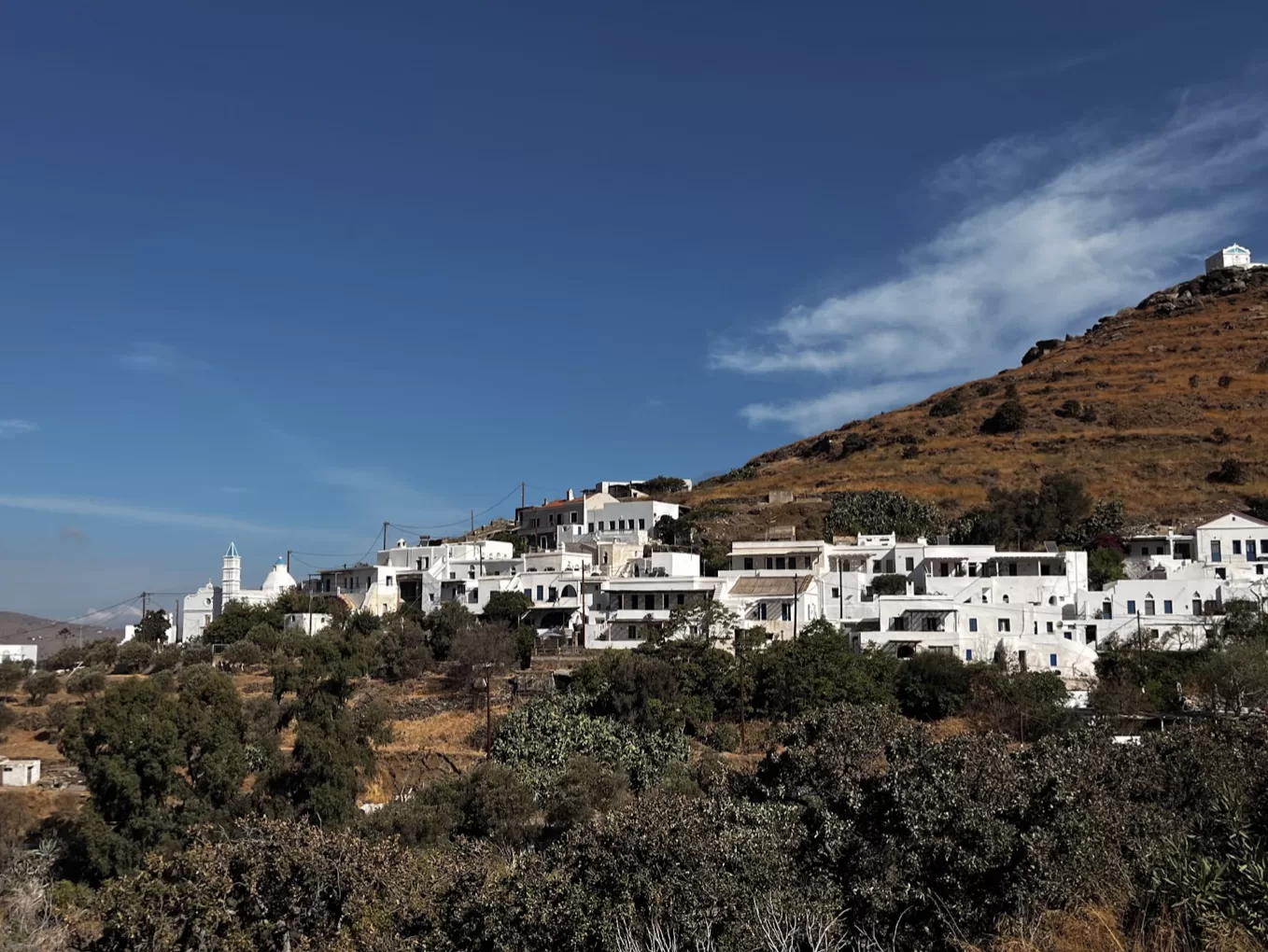
Tinos is one of the most authentic and underrated islands in all of Greece. It belongs to the Cyclades, Greece’s most popular region for travelers and famed for its hundreds of picturesque islands dotted with whitewashed villages, blue shuttered houses, and narrow streets flooded with golden light. It’s home to Greece’s island “titans”: Mykonos, the party capital; Santorini, with its legendary sunsets; and Paros, which is quickly becoming a rising star.
Despite the Greek Islands global popularity, Tinos still flies under the radar. On the ferry route connecting Athens’ Piraeus Port to the Cyclades, many fellow travelers hadn’t even heard of Tinos before. Tinos is a step back in time. The island is a window into what Greek island life, culture, and vacation looked like before mass tourism and cruise ships. In fact, Greeks themselves still make up the largest percentage of visitors to Tinos who come to both vacation and to make pilgrimage to the Panagia Evangelistria Church, the most visited religious site in Greece.
But Tinos is so much more than a religious island. It has some of the Aegean Sea’s best sun drenched sandy beaches, charming marble villages that overlook the ocean, and mouthwatering Greek dishes and seafood. And just like Tinos’s neighboring islands, the sunrise and sunset here are truly unforgettable.
In my Tinos guide, I’ve included the most important travel information, top things to do, and my personal recommendations to help you make the most of your time exploring one of Greece’s timeless islands and best kept secrets.
Where is Tinos
Tinos is part of Greece’s Cycladic Island chain. It’s next door to Mykonos, Andros, and Syros, capital of the Cyclades. It’s also close to Paros, Naxos, and Sifnos.
Why Visit Tinos
Tinos is less traveled than many other Greek islands. It’s still under the radar, often overlooked for more mainstream and polished islands.
Because of this, Tinos has retained its unique charm and character. Its beauty is in its simplicity, the nature here speaks for itself. The island still preserves the kind of lowkey, no frills magic that made Greek summers so magical to begin with. Sandy beaches lined with tamarisk trees, whitewashed villages that still produce immaculate Greek marble, and sunsets that turn the sea and sky a million colors reveal the island’s quiet soul, far from the crowds.
My Tinos Guide – All You Need to Know About Greece’s Hidden Gem
Experience the raw beauty and timeless traditions of Tinos, one of the most authentic islands in the Cyclades. From its whitewashed villages to sacred pilgrimage sites and unspoiled beaches, discover why Tinos captures the true spirit of Greece.
Tinos Guide Essentials
- Country: Greece
- Region: Cyclades Islands
- Language: Greek, English widely spoken
- Currency: Euro
- Emergency info: 112 (general emergencies), 100 (police), 166 (medical)
- Climate: Mediterranean, dry hot summers. Mild but cooler winters
- Best time to visit: May- early June, September
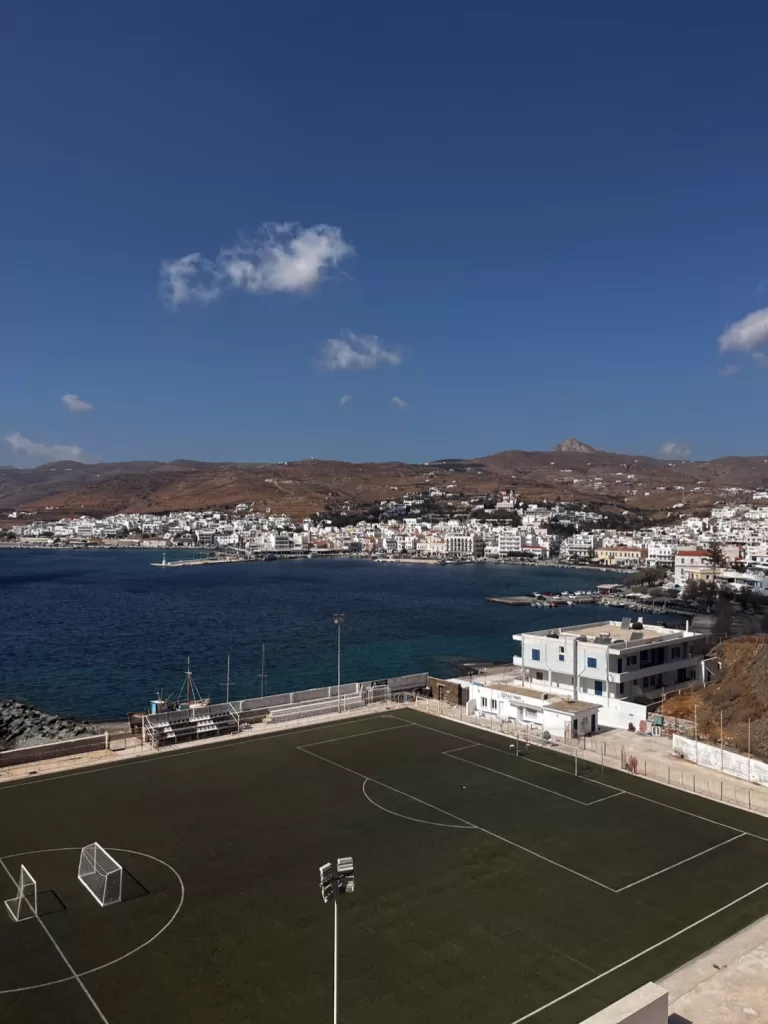
Best Time to Visit
The best time to visit Tinos is from September through early October. The Mediterranean Sea is still warm and the crowds are much thinner than in July and August. May and early June is another good choice to visit Tinos since the island is still quieter with pleasant weather. The water, however, may be a bit brisk since the ocean hasn’t fully warmed up for the summer.
Religious Feasts on Tinos
There are four large feast days in honor of the Virgin Mary celebrated on Tinos. The largest is on August 15 for the Assumption of the Virgin Mary. The island swells with pilgrims from all over Greece who flock to the Panagia Church. While witnessing the unique festivities and energy of Tinos during the holidays is definitely an unforgettable experience, the crowds can be overwhelming, especially in Tinos Chora and port.
Below are the four largest Marian holidays on Tinos when the island is at its busiest.
- Discovery of the Miraculous Icon of Tinos (January, 30)
- Annunciation of the Virgin Mary (March, 25)
- Vision of Saint Pelagia & location of the icon revealed (July, 23)
- Assumption of the Virgin Mary (August, 15)
Getting to Tinos
The only way to get to Tinos is by ferry. Tinos does not have an airport.
You can ferry from Athens’ Piraeus or Rafina ports. Piraeus is Athens’ main port. It has more daily connections to Tinos but the routes are slightly longer. Rafina port is closer to Athens airport and is the fastest ferry route but has fewer trips. When ferrying to Tinos, the boat will stop at other islands along the way to drop and pick up passengers.
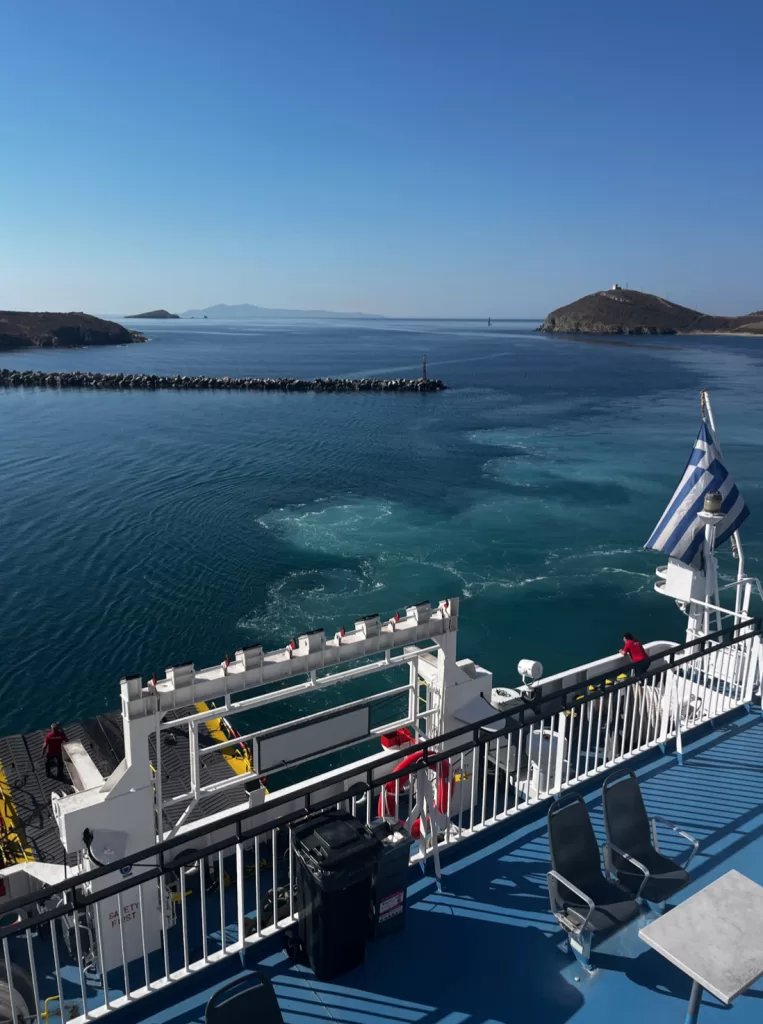
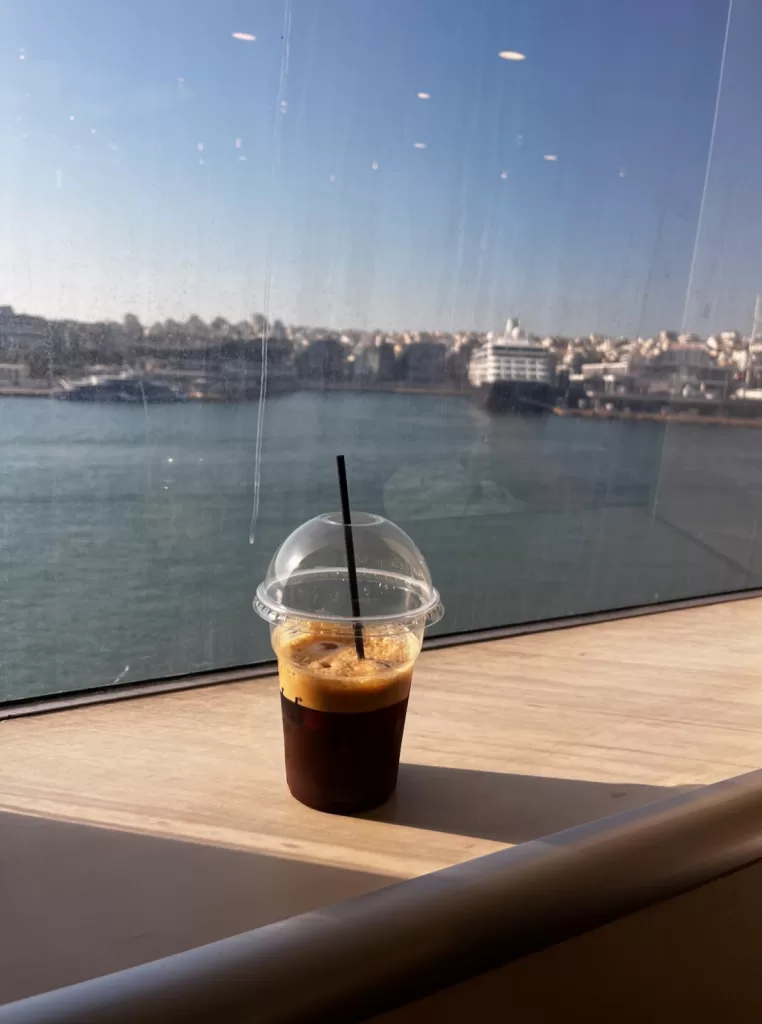
If you’re island hopping Greece, it’s also possible to ferry from islands like Mykonos, Syros, or Andros.
Getting Around Tinos
To get around Tinos, you can either rent your own transportation or take public buses. Here’s everything you need to know about moving around the island.
Cars, Motorbikes, and Atvs
To explore Tinos fully, I definitely recommend renting a car. Having a car will allow you the freedom to explore hidden mountain villages and access remote beaches. You’ll need to show your passport and valid drivers license before picking up the keys.
I used Jason’s Rental Car on Tinos. Their customer service was excellent. They waited for my ferry to arrive at the port and drafted the contract right at the waterfront. Jason’s rental prices are some of the most fair and affordable I’ve found in Greece. Returning the car was also easy and fast.
It’s also possible to rent a motorbike or ATV on Tinos. However, it’s never recommended to rent a vehicle if you don’t know how to drive it, especially in a different country.
Buses
Another option to get around Tinos is the buses. The public buses are operated by KTEL and connect the Chora and port with popular villages and beaches. However, bus schedules are limited outside July and August. Additionally, buses are often late, so be prepared for potential delays.
// You can find the bus schedules on Tinos here
Where to Stay on Tinos
Tinos has accommodations for every type of traveler and budget. Here are some options worth considering.
Where I Stayed | Calma Azul
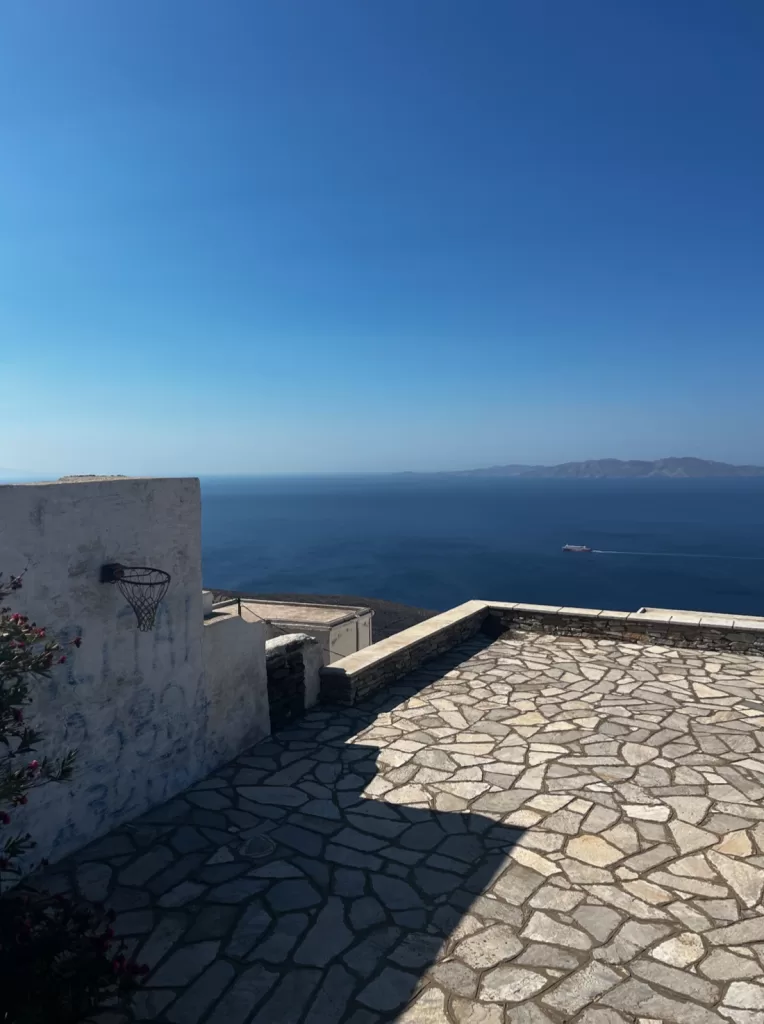
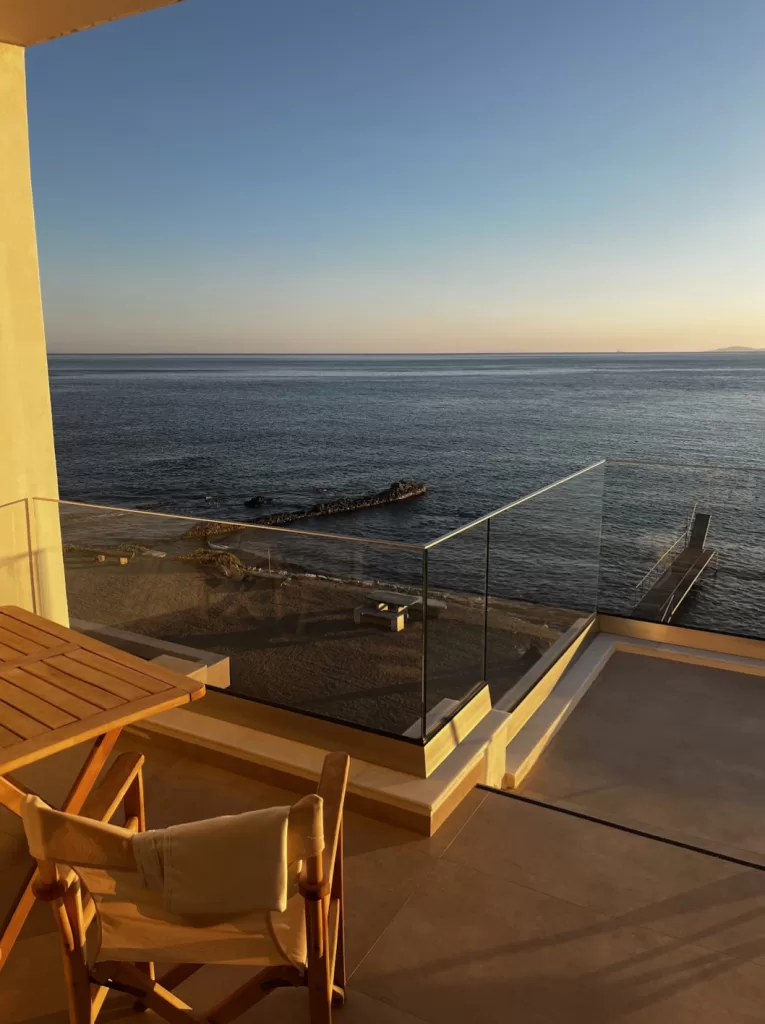
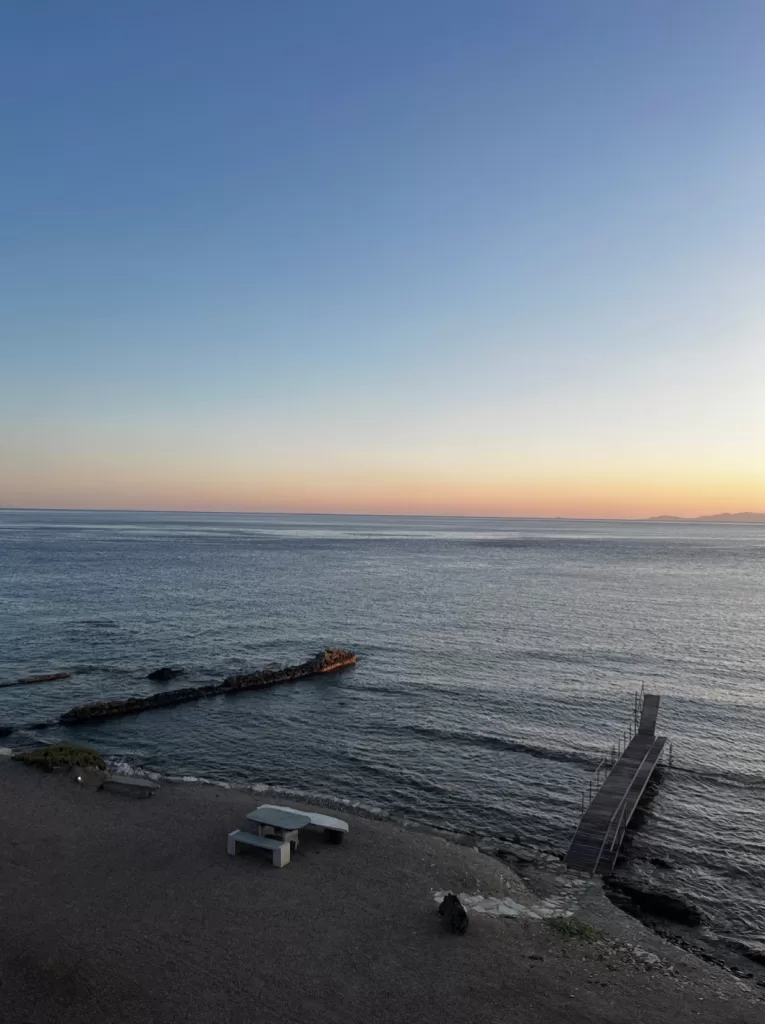
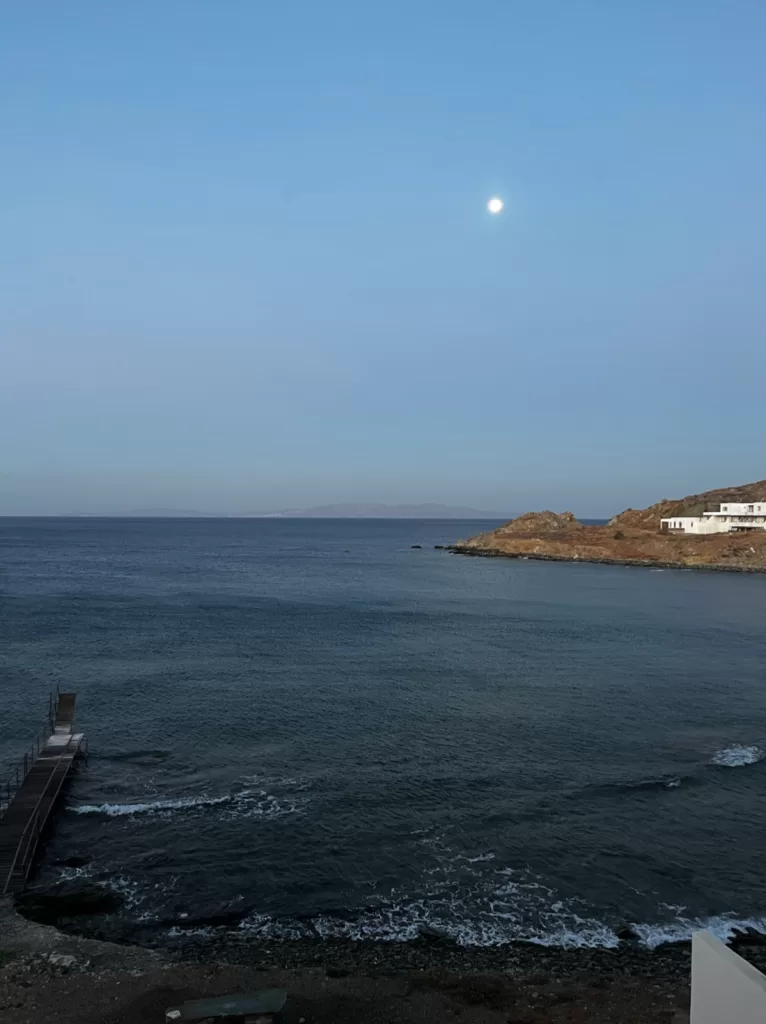
I stayed at an Airbnb overlooking the Mediterranean Sea close to the port. The name of the property is called Calma Azul. It is a flat on top of a three story building that has panoramic views of the ocean, the town, and the port. It has two bedrooms, one bathroom, and a balcony that sits overlooking the sea. I would watch the sunrise and sunset here everyday. The views are truly unmatched.
The host, Panagiotis and his family live in the bottom two units of the building. They baked fresh bread and gave me homemade honey. They even did my laundry for me at the end of my stay. The location was perfect for exploring Tinos and the view was unforgettable. Since its close to the port, It also made for an easy arrival and departure from the island.
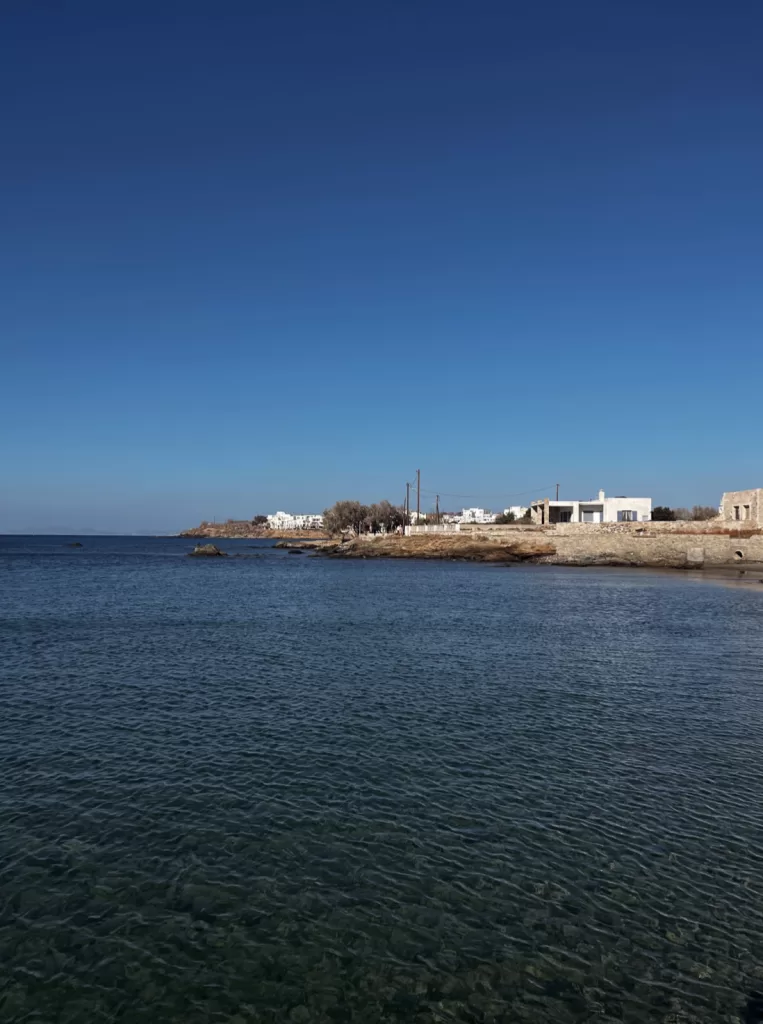
There is even private access to the beach with a wooden dock that leads directly into the sea.
Luxury Seeker
If you want a luxury experience on Tinos, Pnoēs is hard to beat. It’s made up of three private villas designed in Cycladic style each with a pool, garden, and stunning sea views. It has a slightly modern feel yet retains traditional architectural elements that capture the light of the Cyclades. It’s the perfect spot to splurge on comfort and exclusivity.
Mid Range Affordability
For something more affordable but still comfortable, Eleana Hotel in Tinos Town is a solid pick. It’s family run and just a short walk from the port and Chora. The rooms are simple but clean, and the location makes it perfect for exploring Tinos. The hotel also has free breakfast.
Budget Travelers
If you’re looking to save without sacrificing comfort, Tinos Chora has plenty of guesthouses and small hotels that offer an affordable place to stay. Rooms are basic but cozy with rates typically around $60–$100 per night depending on the season. Guesthouses like Porto Manolis in the Porto area offer sea views and a quiet, laidback vibe. It’s a real value for travelers on a budget.
Travel Hostel
Tinos doesn’t have a large hostel scene, however there are a few budget friendly places to stay. The Hermes Rooms is a well regarded option in the Chora. Although it’s mainly just a place to rest your head, it includes communal areas to meet other travelers, free WiFi, shuttle services, and baggage storage. The location is perfect and reviews praise the friendliness of the staff.
Tinos Guide | Things to Do and See
Below are the top things I did and places I discovered while exploring Tinos.
Churches and Monasteries on tinos
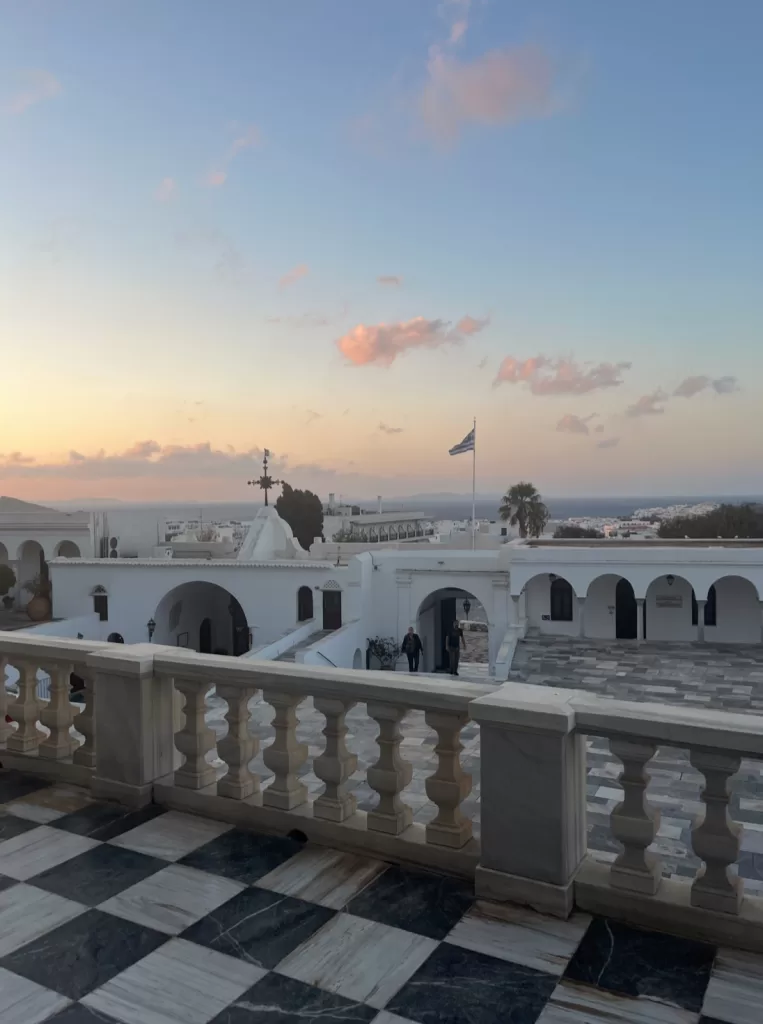
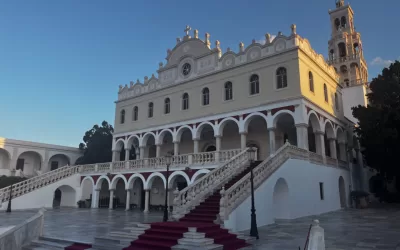
Church of the Panagia Evangelistria
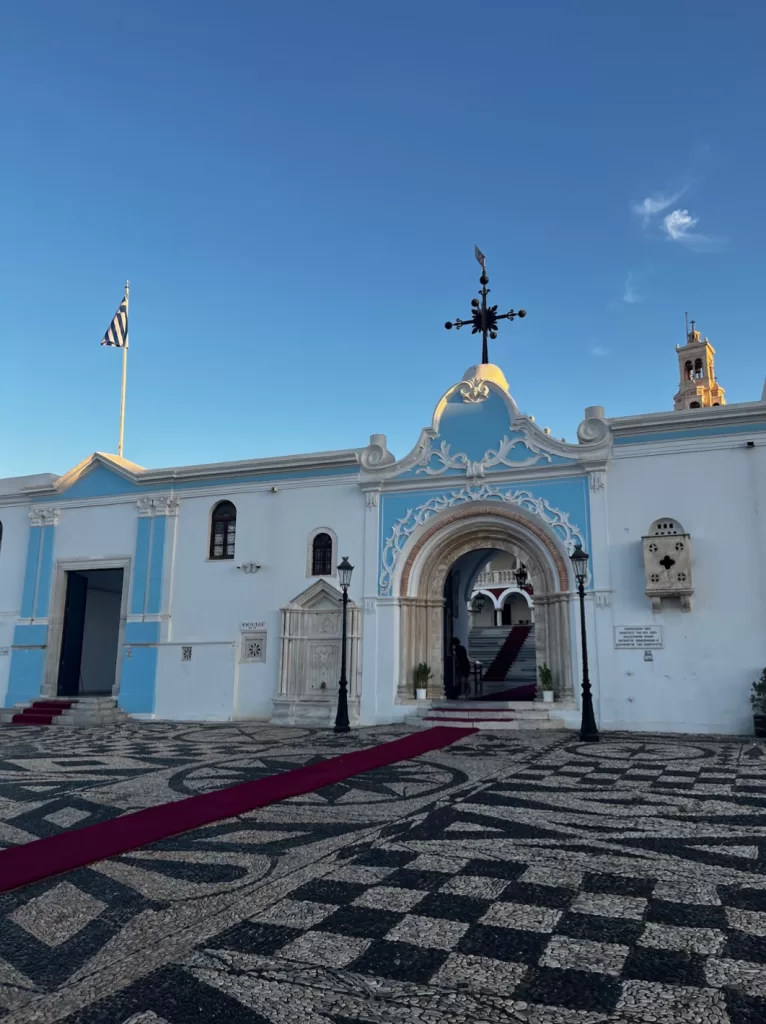
The Panagia Evangelistria Church is the most visited church in all of Greece. Situated on top of what used to be an ancient temple dedicated to Dionysus, god of wine, there was also an early Byzantine church dedicated to St. John.
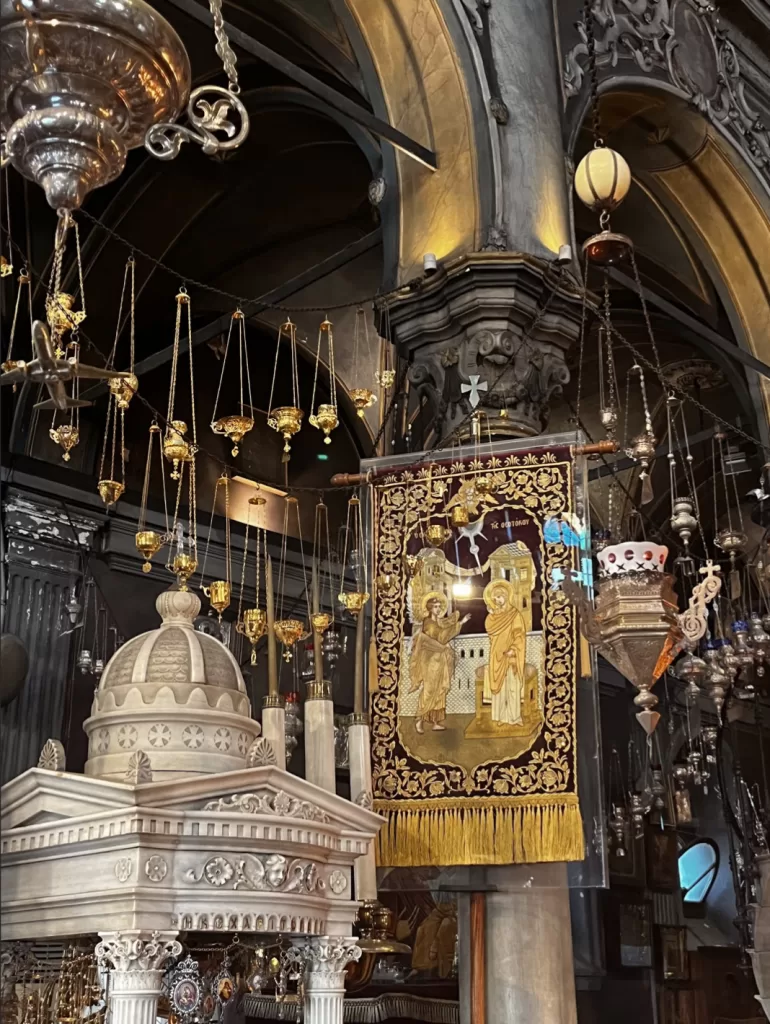
According to tradition, a nun named Pelagia had a vision from the Virgin Mary instructing her where to find a lost icon buried in the earth. Excavations began immediately and the icon was found in a field close to the port. The icon depicts the Annunciation of the Virgin Mary with the angel Gabriel holding a lily and the Holy Spirit depicted as a dove. Since the discovery of the icon occurred during the early stages of the Greek war of independence against the Ottomans, the image became a powerful spiritual symbol for the emerging Greek state.
The church sits in a walled compound and centers around a large three isled basilica. The icon sits inside the church and is covered with so many necklaces and other objects that it’s hard to see the original image.
Even if you’re not religious, visiting the Panagia Church offers a fascinating window into the role faith plays in modern Greek identity and culture.
Kechrovouni Monastery
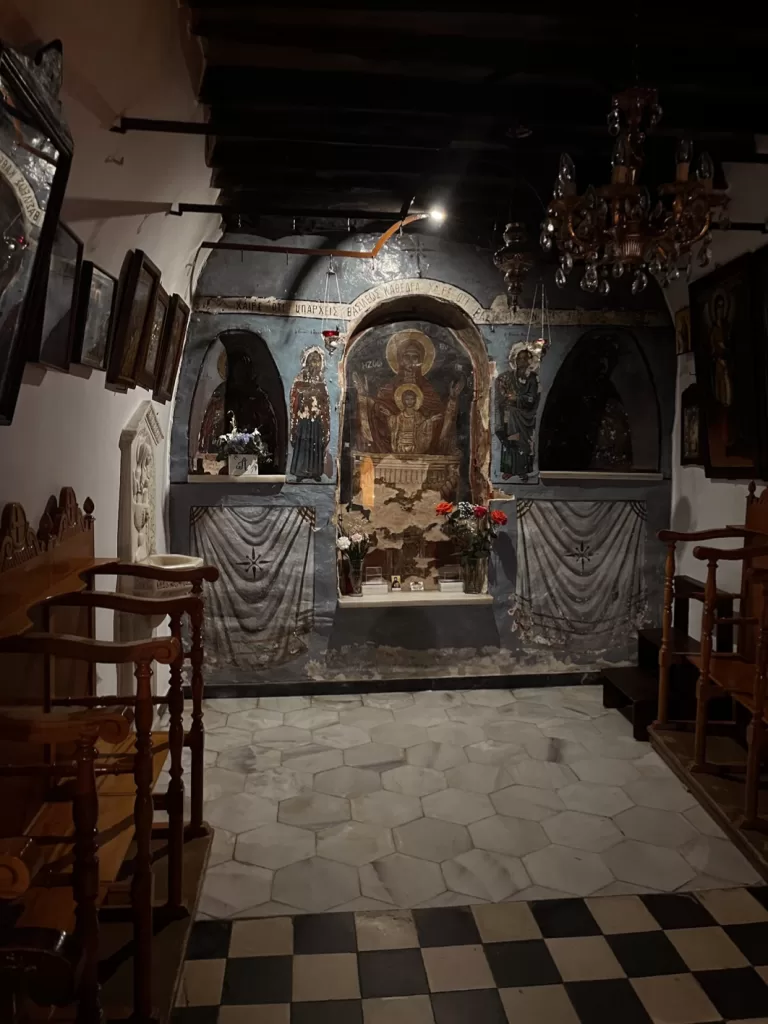
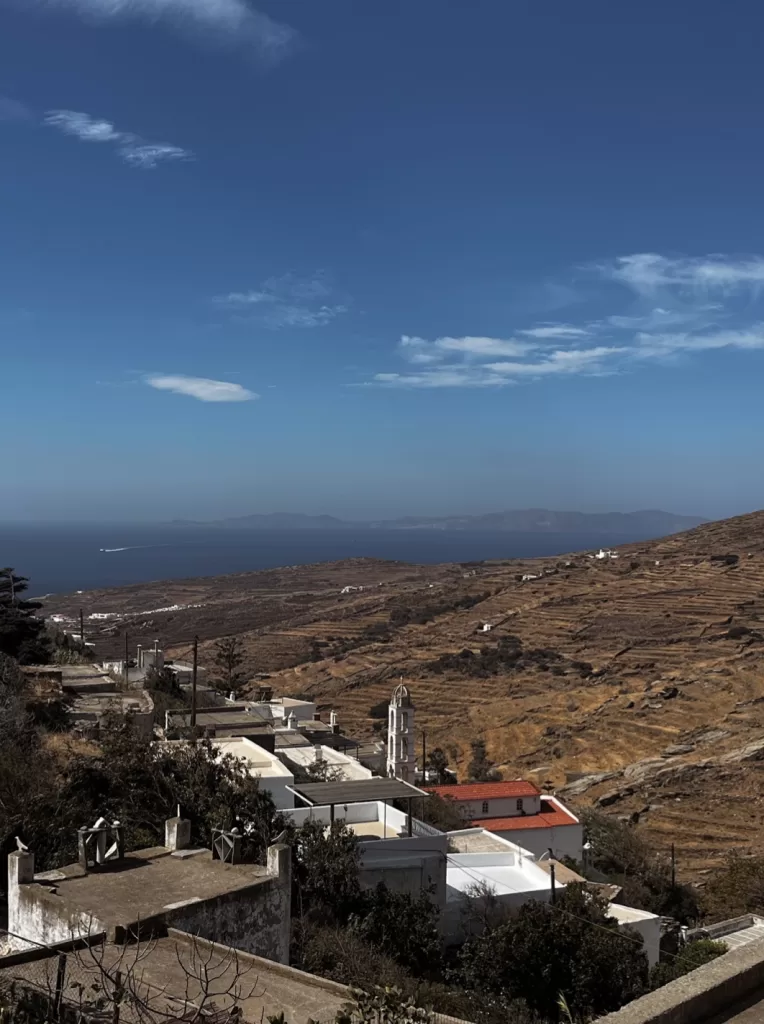
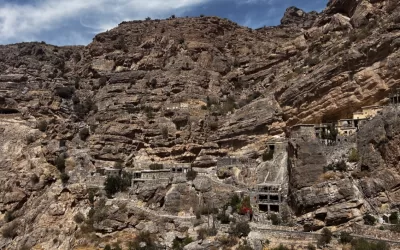
Perched high above Tinos’ Chora and port is the island’s second most important religious site, the Kechrovouni (sometimes spelled Kehrovouniou) Monastery. The monastery was founded in the 10th or 11th century. In 1822, St. Pelagia had a vision from the Virgin Mary in her cell guiding her to dig up the lost icon.
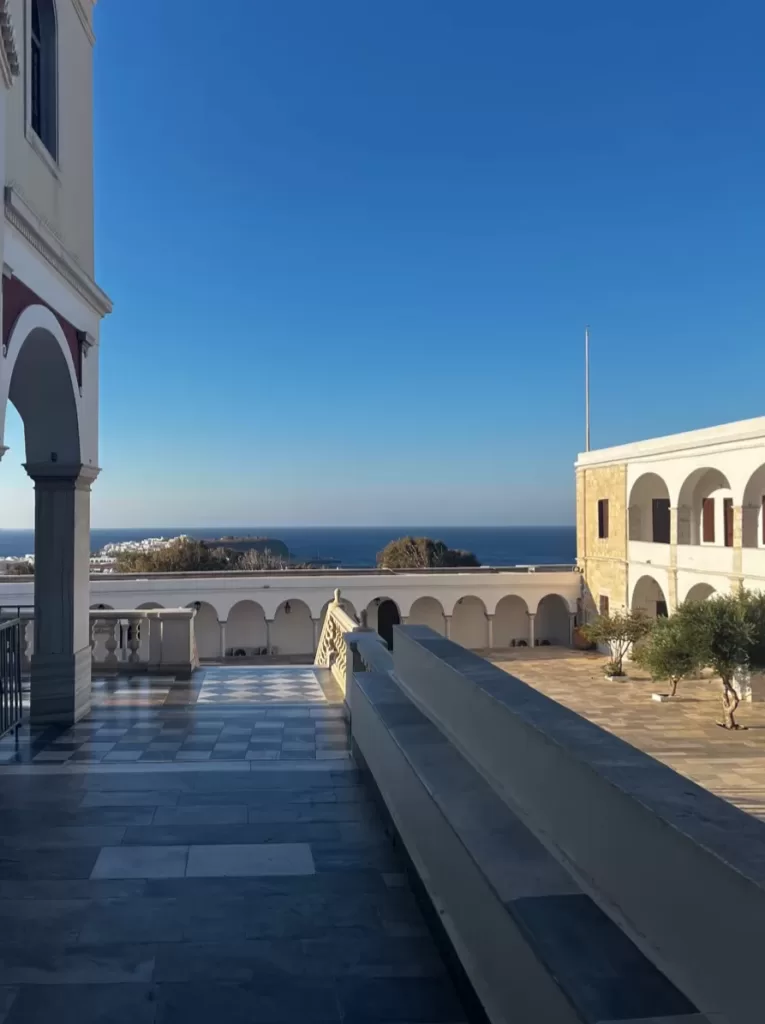
The monastery is built to resemble a mini Cycladic village, with bright alleys, arches, and little chapels. St. Pelagia’s cell has now been turned into a shrine where visitors can light candles. The monastery remains an active nunnery with over 40 nuns, making it one of the largest convents in Greece.
Be sure to wear full length pants. I had swim shorts on and had to go back to my car to put on my trousers. Large tour buses full of Greek pilgrims also park right in the middle of the road which can make parking difficult, but there’s a small dirt lot right in front of the monastery’s entrance where you can park.
The catholic Influence on Tinos
Despite Tinos being the largest Greek Orthodox pilgrimage destination in all of Greece, the island also has a remarkable Catholic legacy.
Catholicism spread to Tinos during the Venetian rule which lasted from 1207-1715. The Catholics were granted protections under the Ottomans and flourished alongside Orthodox communities.
Today, Tinos has one of the largest Catholic populations in all of Greece. In villages like Xinara, Loutra, and the Komi Valley, Catholics and Orthodox live side by side, often intermarrying and celebrating holidays and feasts from both traditions. I was surprised to find out that many of the small simple white chapels in the villages and hillsides of Tinos are actually Catholic.
Tinos Chora
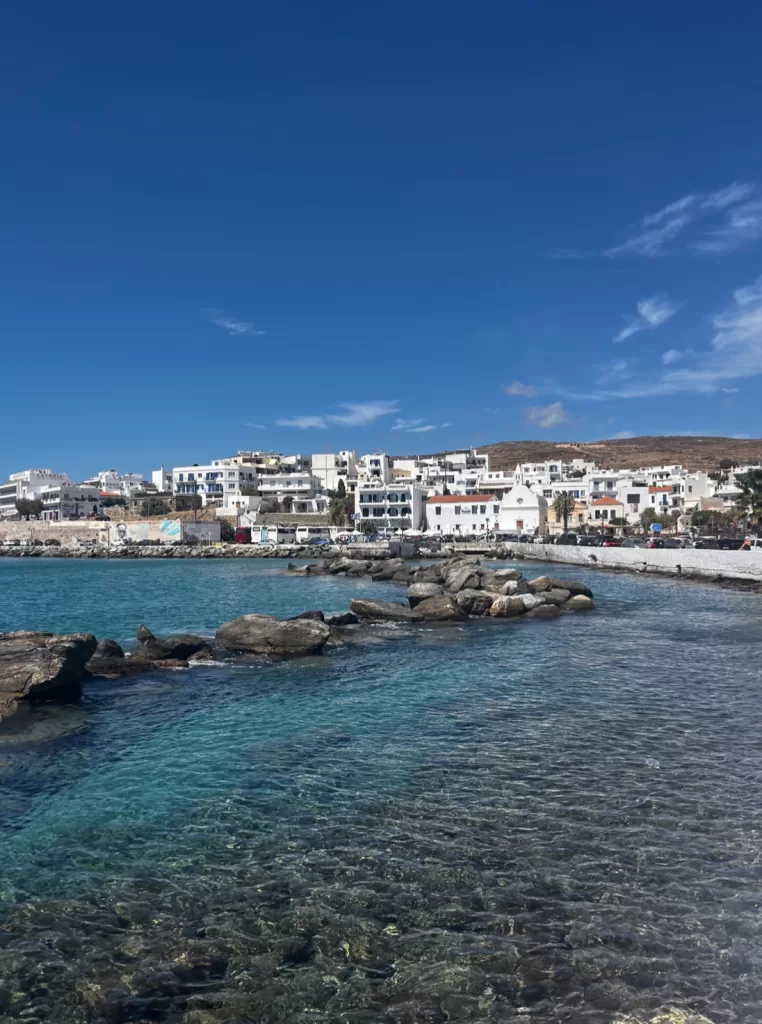
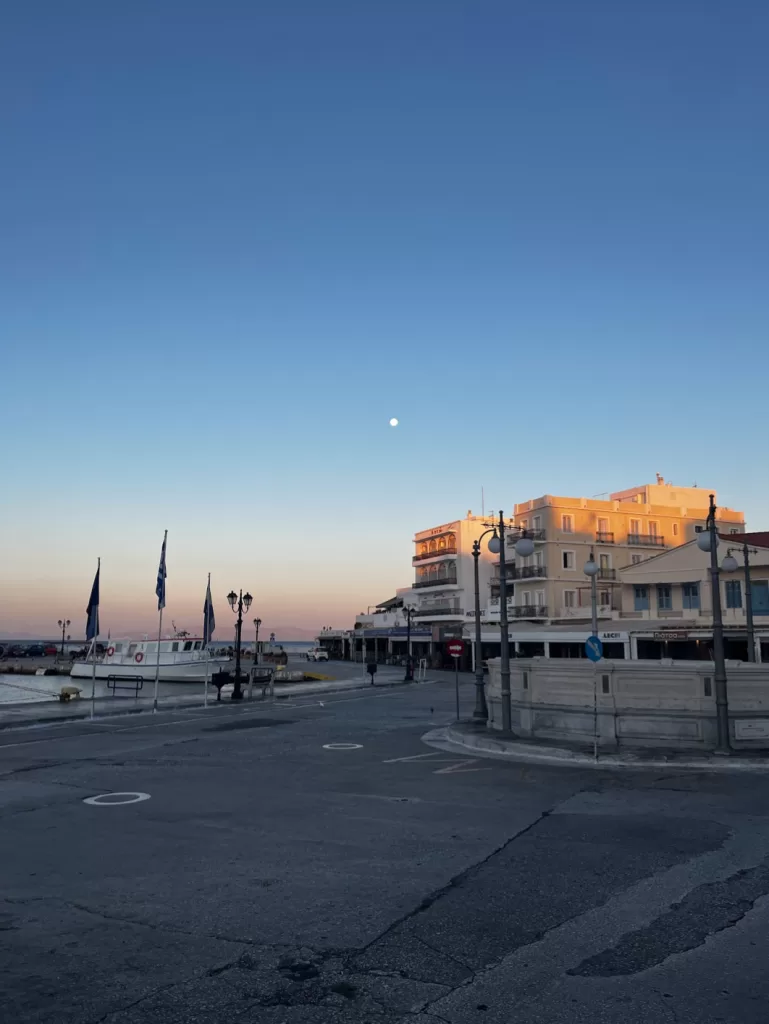
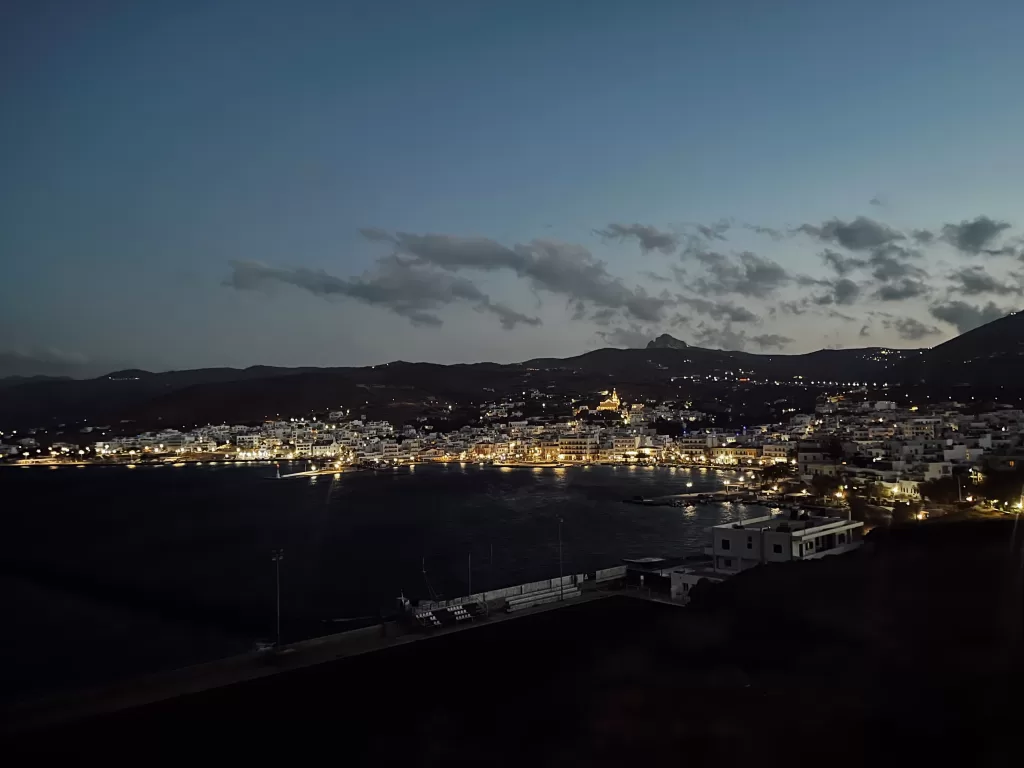
Almost every island in Greece centers around a Chora. Tinos Chora is the island’s transportation, economic, and cultural core. There are many cafés, tavernas, and artisan shops along with the ferry terminal. There are also several wine and cocktail bars tucked between the towns quaint and charming streets. The Panagia Church is also located on one of the hills above the Chora. A small section of the port’s road is marked off by orange traffic cones for pilgrims to crawl on their hands and knees up to the church.
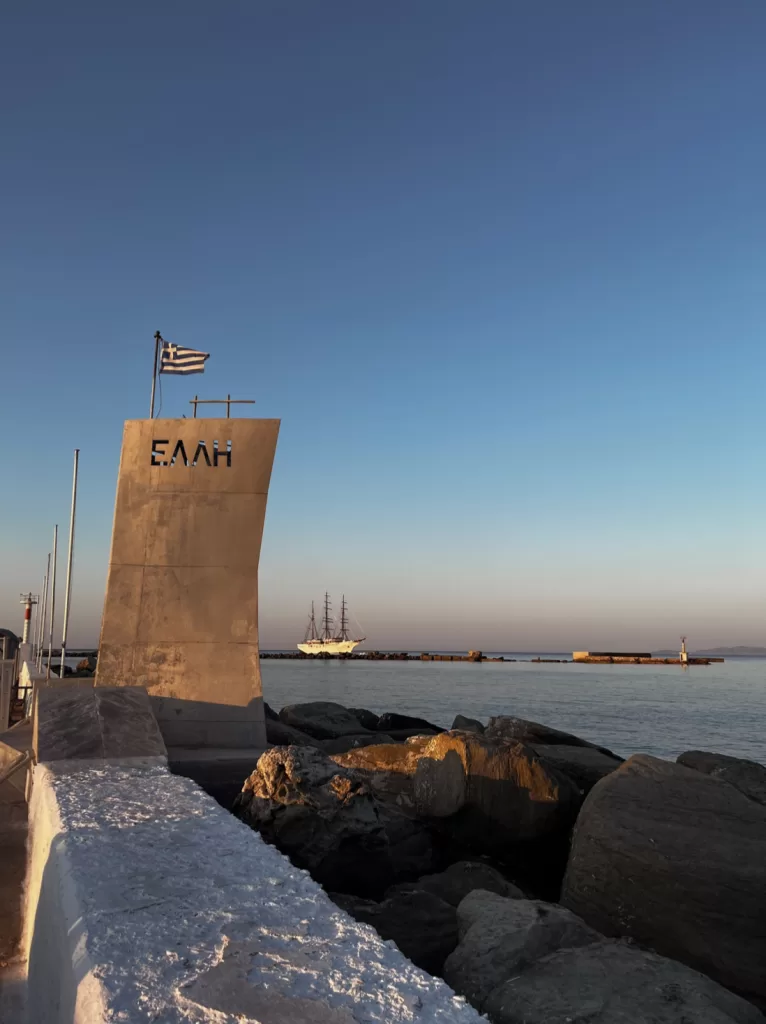
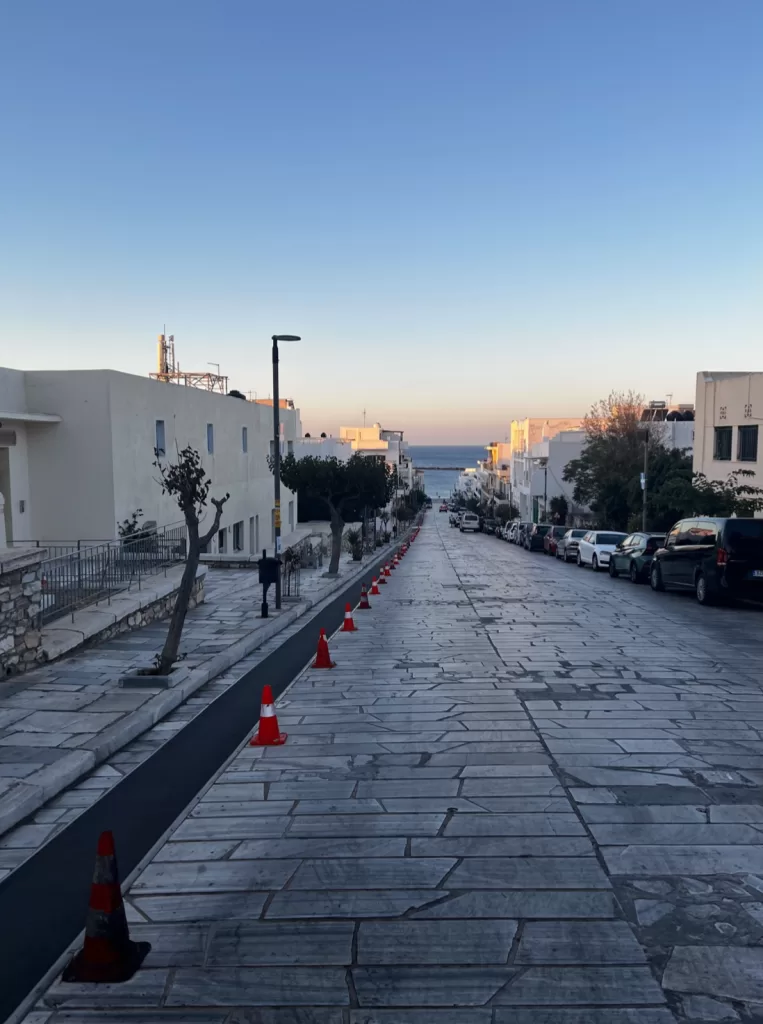
One of the most enjoyable things to do in Tinos Chora is walk the entirety of the waterfront during sunrise. This is where you can see the island really start to wake up and come to life. I grabbed a freddo espresso every day and took a short morning stroll to get my body moving.
Don’t miss the War Memorial of Tinos. It has a spectacular view of the Chora, the port, and the Panagia Church along with the sparkling Mediterranean Sea. It’s just a short drive from the center of town.
Villages on Tinos
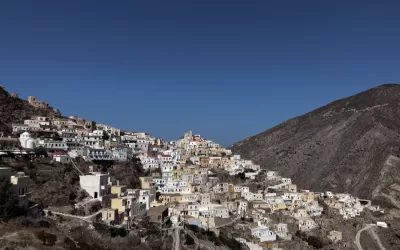
One of the most special things about Tinos is the countless whitewashed villages built into the hillsides and overlooking the Aegean Sea. Each has its own unique charm. Here are some of my favorite villages I discovered while exploring Tinos.
Agapi
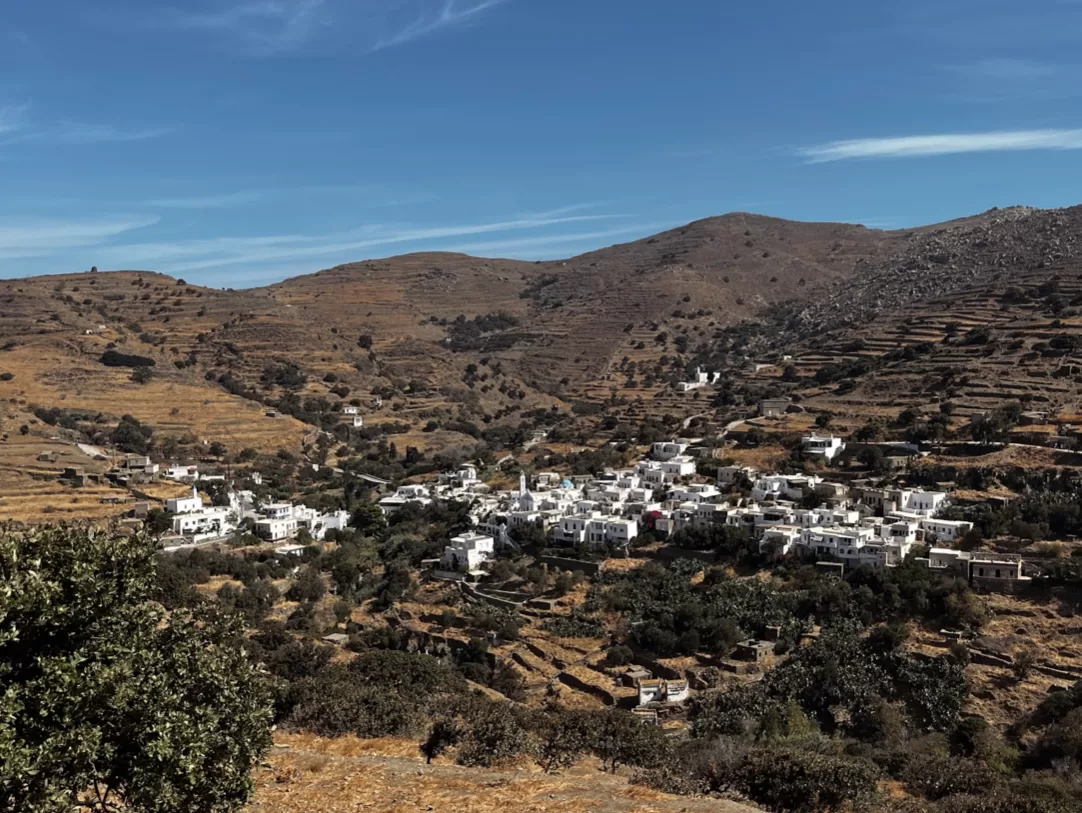
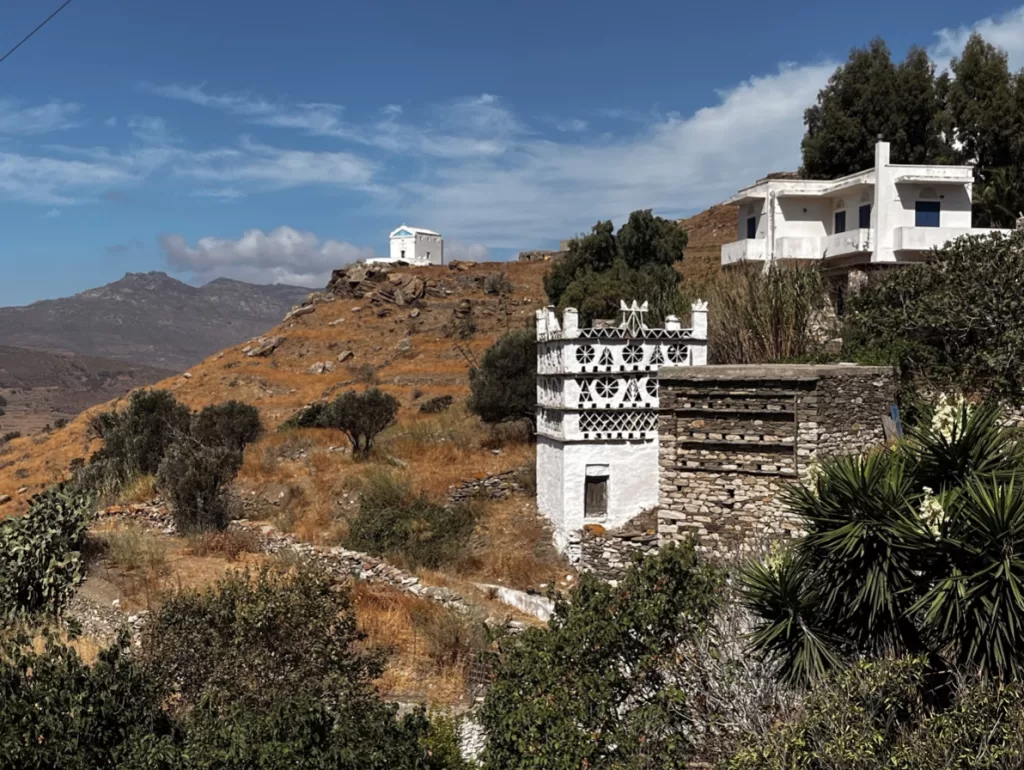
The village of Agapi is one of my favorites on Tinos. Tucked between the hills and olive groves, Agape literally translates as the village of “love” in Greek. It’s centered around a charming blue domed basilica and has many narrow streets to wander and explore. It also has many of Tinos’ iconic dovecotes, the traditional stone towers used for raising pigeons.
Pyrgos
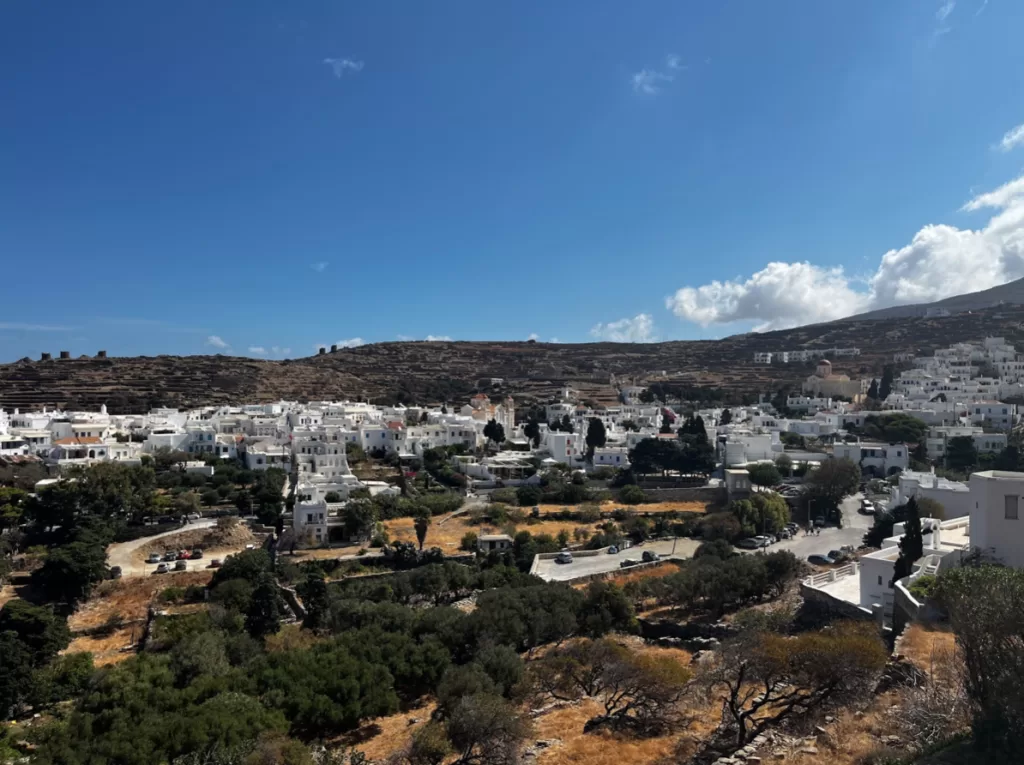
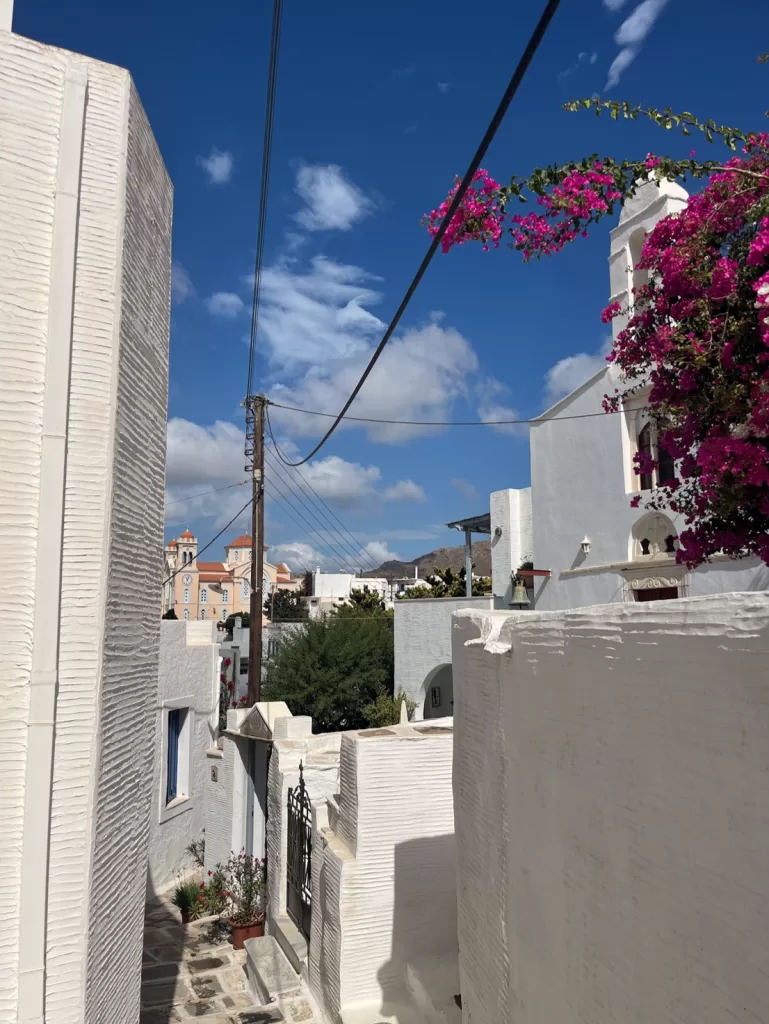
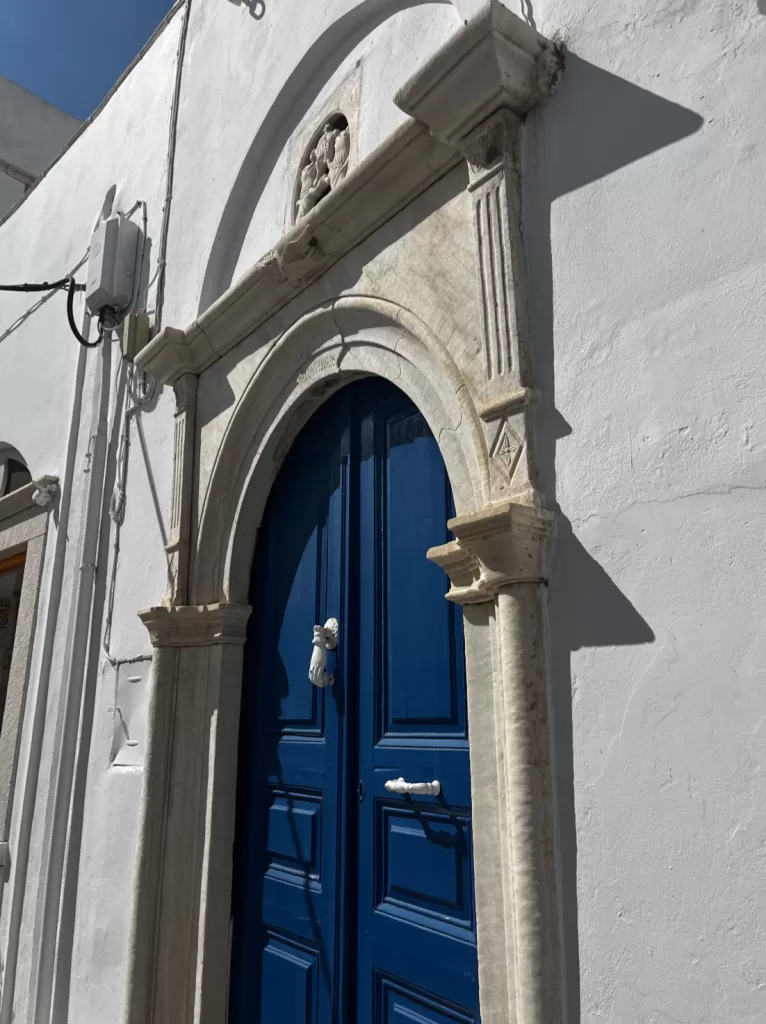
Pyrgos is often considered the most charming village on Tinos, and it’s easy to see why. The narrow streets are full of character, with marble motifs carved above doors and windows. As one of Greece’s great centers of marble production, Pyrgos has always drawn artisans and creatives who shape the island’s white stone into sculptures and works of art. Cafés and restaurants cluster around the lively main square, making it a great spot to sit and take in the atmosphere.
I also recommend visiting the Museum of Marble Crafts to learn more about how marble has influenced Tinos’ culture and economy.
Volax
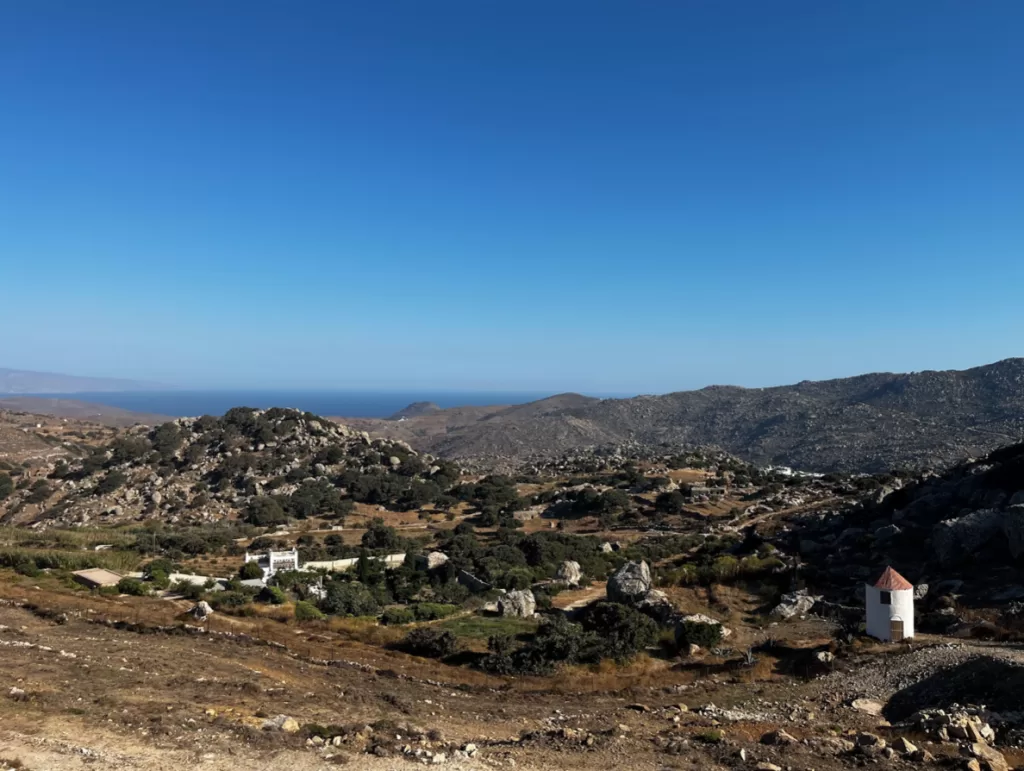
With its massive granite boulders scattered across the hills, Volax feels more like a anouther planet than a Cycladic village. Whitewashed houses with flower pots on balconies sit tucked between the rocks, while cats lounge lazily in the shade. The village has a whimsical, almost otherworldly charm, and its cozy tavernas are perfect for sipping freddo espressos or enjoying classic Greek dishes after wandering through the winding lanes.
Loutra
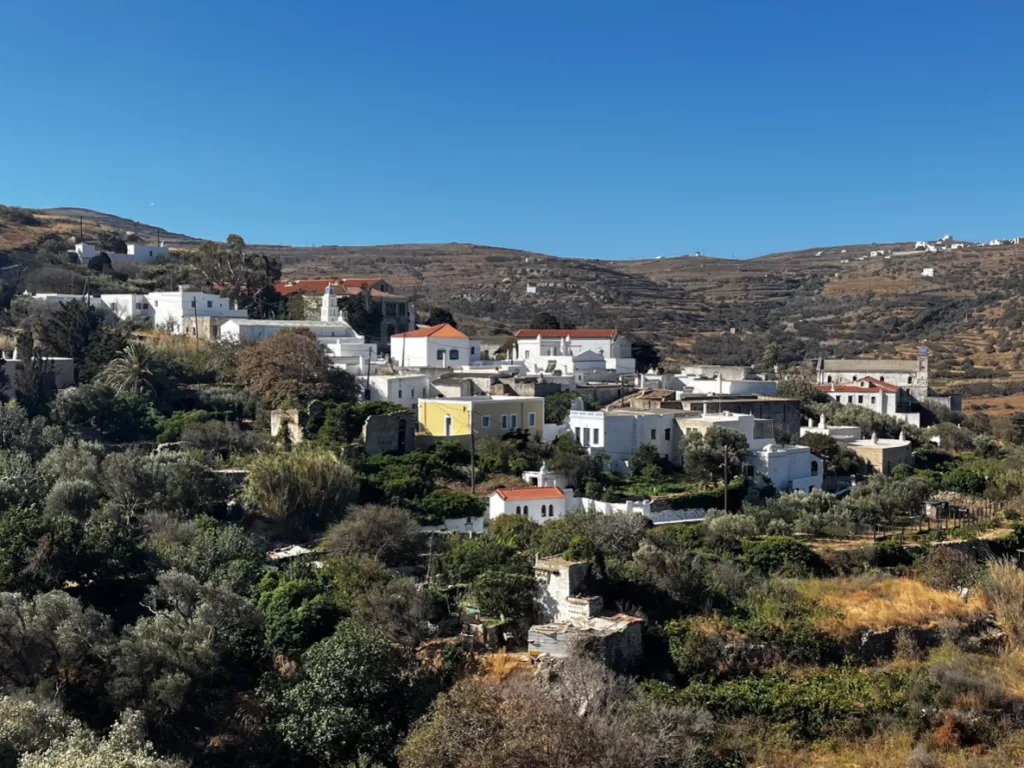
Loutra is one of the greenest and most peaceful villages on Tinos. As you walk its quiet streets, it almost feels as if you can still hear the laughter and commotion of the lively community that once filled the village. Loutra has deep Roman Catholic roots, with both a Jesuit and an Ursuline convent still standing today.
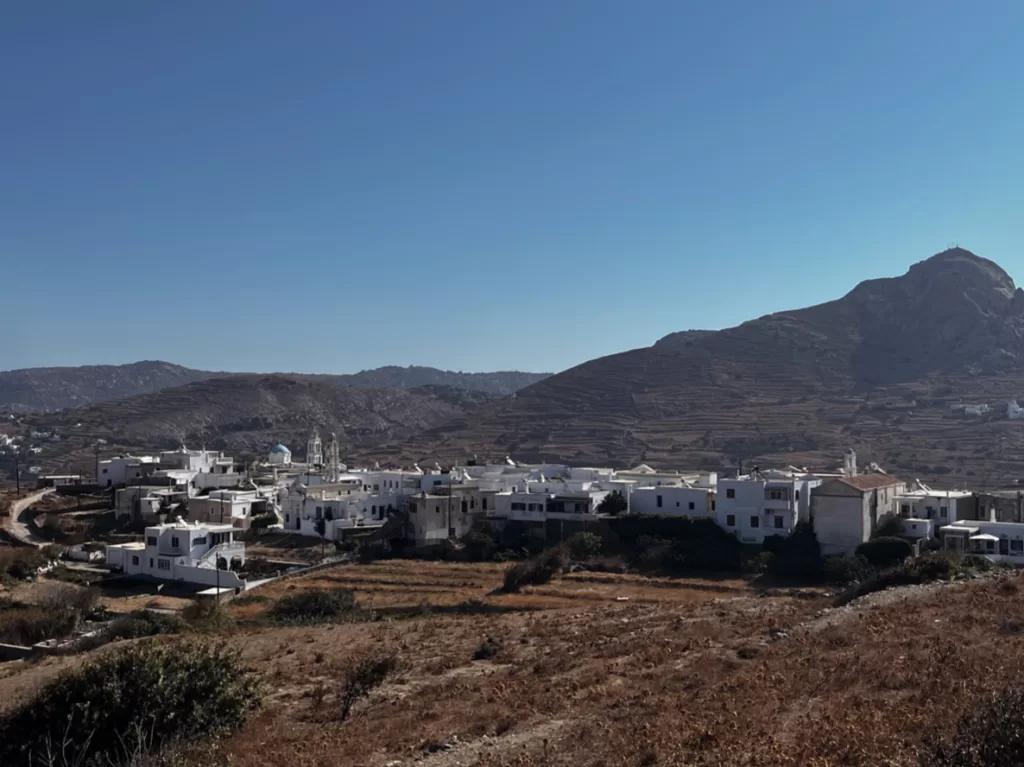
Komi
Komi is one of the largest and most vibrant villages in Tinos’ interior. Its narrow alleys twist between whitewashed houses, opening onto a shady main square where tall trees shelter cafés and tavernas. It’s the kind of place where locals gather, lingering over coffee or a long Greek meal, and where you can easily slip into the village’s rhythm of life for a moment.
Isternia
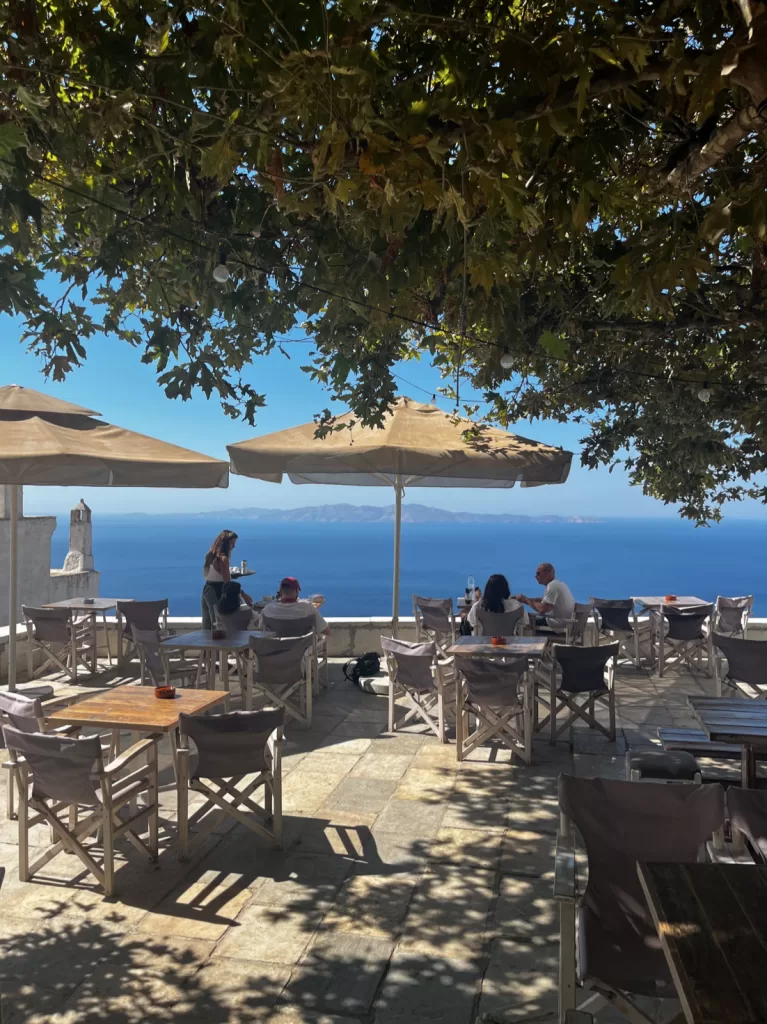
Perched on the hillsides of western Tinos, Isternia may have some of the best views of the Aegean Sea in all of Tinos. The village is famous for marble, and some of Greece’s most famous sculptures are from here. Marble is literally everywhere in Isternia, from ornate doorframes to elegant squares. Isternia has several cafes that overlook the ocean and provide some of the best spots to watch the sunset in all of Tinos while sipping on cocktails and Greek wine.
My favorite spot in Isternia is the Mayou All Day Bar, a cafe with sweeping views of the ocean and the nearby island of Syros. It’s the perfect place to spend a few hours just admiring the view while drinking Greek coffee.
Kardiani
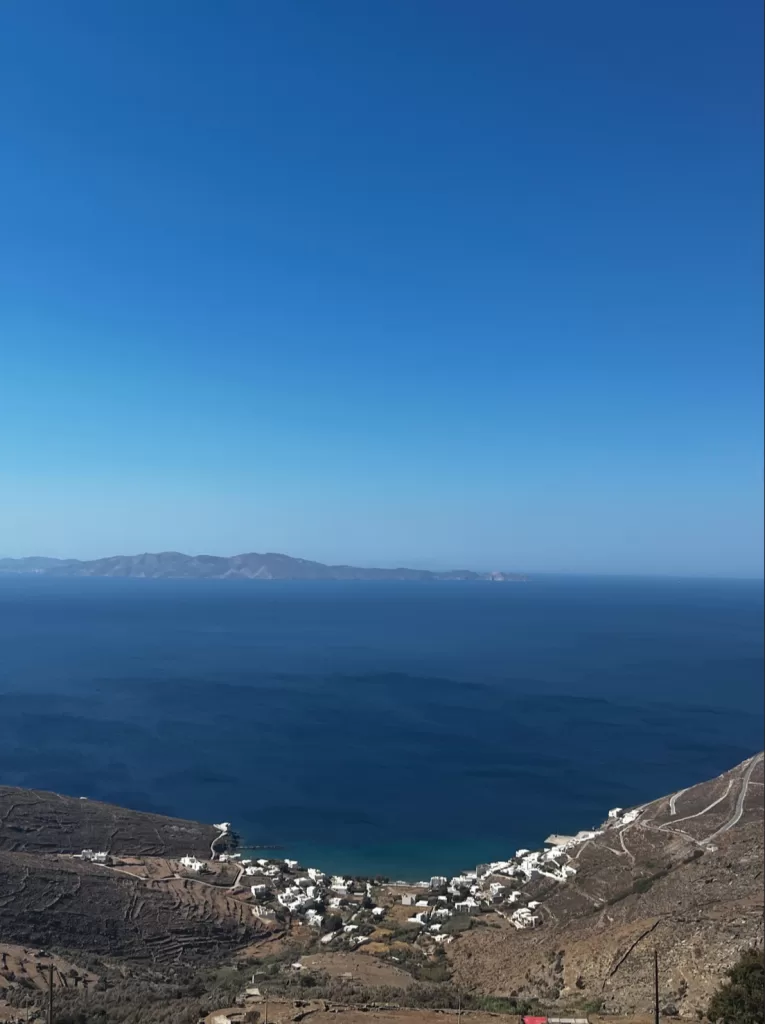
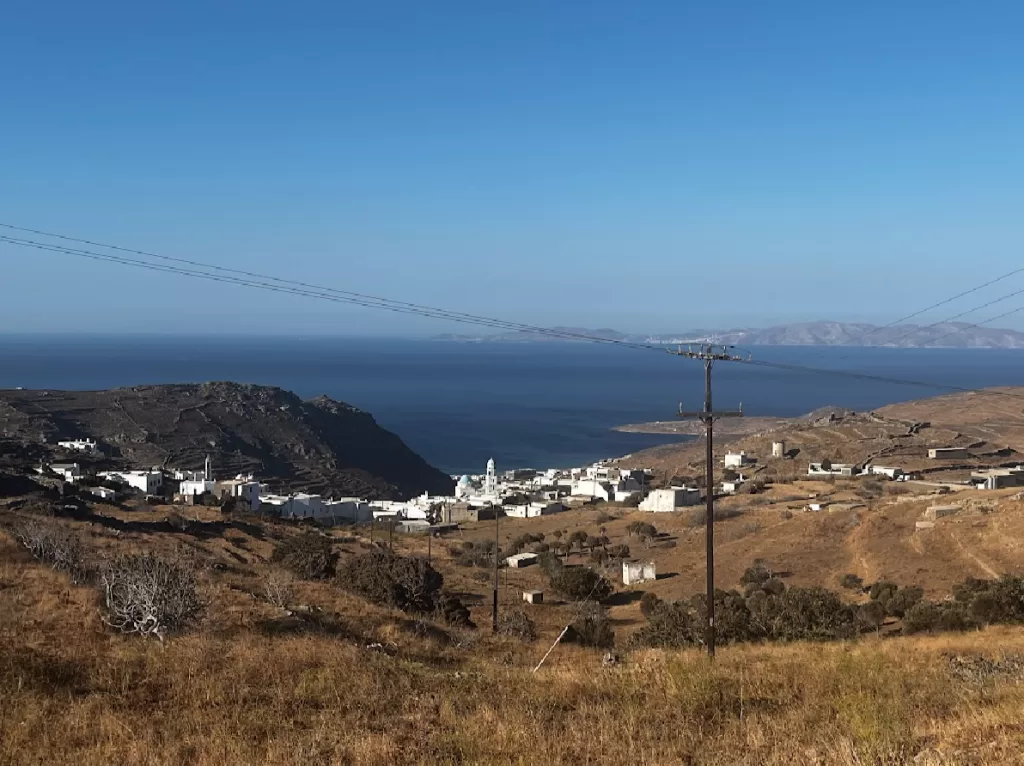
Clinging to the slopes of Mount Pateles, Kardiani is one of Tinos’ most captivating villages. Natural springs run through the village, making Kardiani full of lush trees and gardens, which shade the town from the relentless Mediterranean sun. The entire town has sweeping views of the sparkling sea below.
Tinos Dovecotes
Tinos Dovecotes are one of the island’s most unique and beautiful architectural features. These stone towers, often two stories tall, are decorated with geometric patterns of triangles, diamonds, and small openings where pigeons once lived. Families competed to build the most ornate designs, turning these functional farm structures into works of art.
Today, many dovecotes still stand in fields and valleys around the island’s villages.
Beaches on Tinos
After just one visit, I was captivated by Tinos’ Beaches. I’m honestly convinced Tinos is one Greece’s best kept secret when it comes to enjoying the sea. There are countless stretches of sandy shorelines that you can have entirely to yourself. You won’t find any of the polished day clubs or organized cabanas like on nearby Mykonos, but that’s what makes Tinos so special.
The most magical thing about the beaches here is that you don’t have to have a particular one in mind. You can simply drive along the coast, stop wherever catches your eye, and lay your towel down for a day of sunbathing or swimming.
Here are a few of my favorite beaches on Tinos.
Isternia Beach
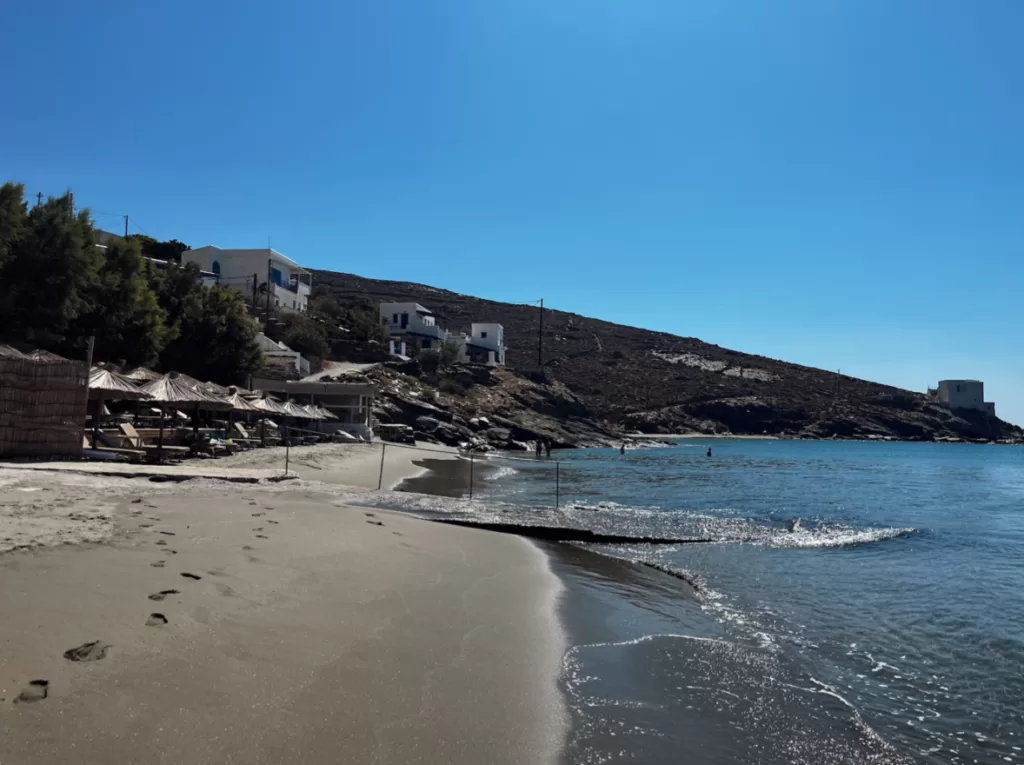
Also known as Paralia Isternion in Greek, Isternia Beach quickly became one of my favorites on Tinos. The drive down to the beach is unforgettable, with panoramic views of the sparkling Aegean Sea. It’s hard to keep your eyes on the road, especially if you’re traveling solo like I was.
The beach is a mix of pebbles and sand. It’s perfect for swimming in the gentle waves of the cove. It truly feels like a little paradise, away from the crowds and the chaos of more visited Greek Islands. You can either bring your own chair and towel or rent a daybed at Disbarko beach bar if you plan to stay for a few hours. Daybeds usually cost around €10 for the afternoon.
Agali Beach
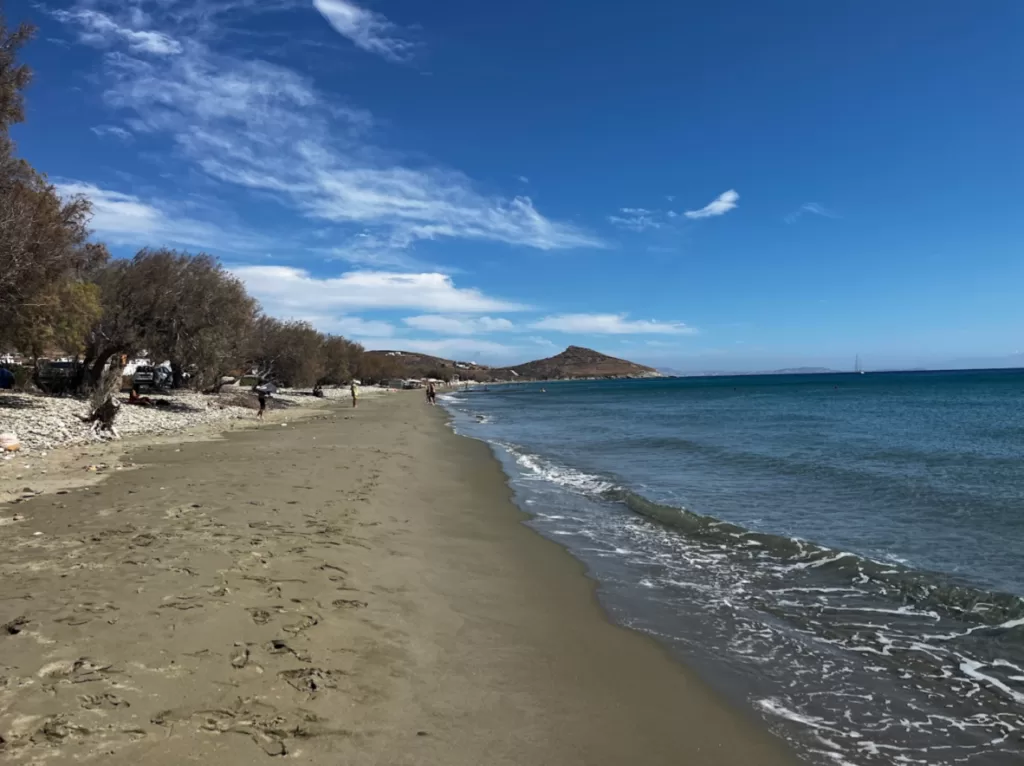
Just a short walk from Chora, Agali Beach is one of the most convenient on Tinos. The shoreline is sandy with some small pebbles and shaded by tamarisk trees. The water is incredibly refreshing, perfect for both swimming and sunbathing while watching the small waves and ferries passing between Tinos and the surrounding islands. The beach has an unpretentious feel to it, which is what makes it so special. There are several Greek tavernas nearby if you’re hungry after the beach.
Kolimvithra Beach
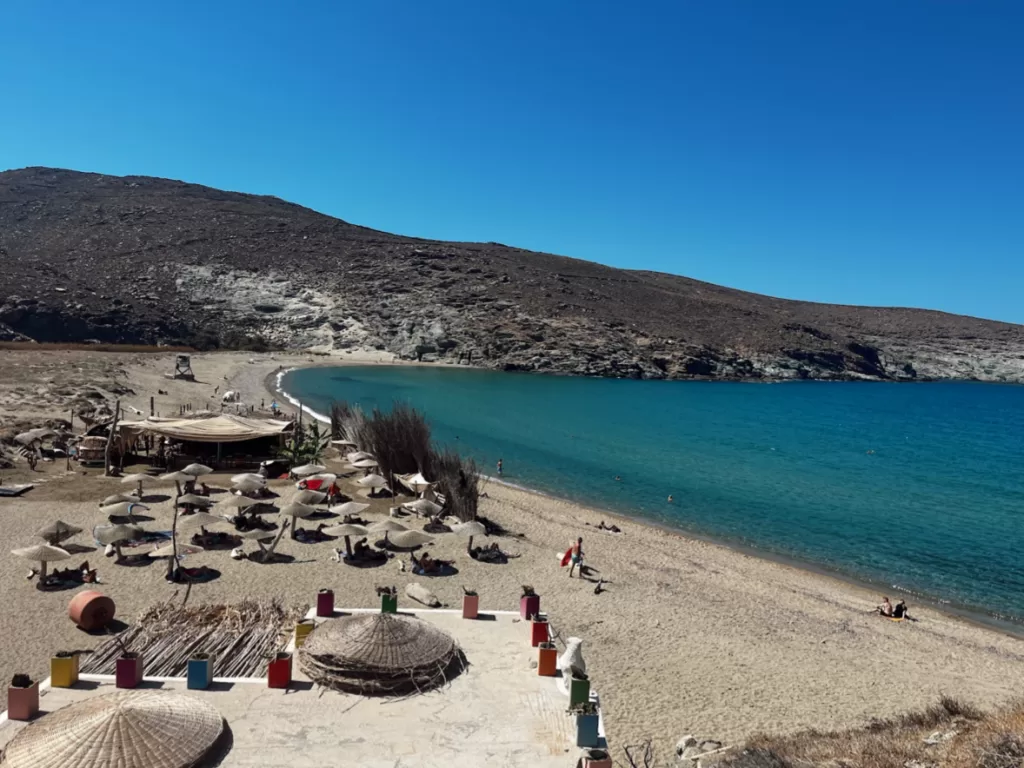
Kolimvithra is one of the most famous beaches on Tinos. Located along a wide bay on the island’s northern coast, the sand here is soft and golden with clear waters that are perfect for swimming on calm days. There is often a DJ playing music, so the beach has a more energetic vibe. The beach also has large mushroom shaped umbrellas to help protect from the bright Mediterranean sun.
Pachia Ammos Beach
Pachia Ammos is one of the widest beaches on Tinos, with soft golden sand that stretches along a quiet bay. The water is shallow and perfect for swimming, making it a great spot for families or anyone who wants a day to relax by the sea. There are a few small tavernas nearby, so you can grab a fresh Greek salad or iced coffee without leaving the beach.
Agios Sostis Beach
Agios Sostis is a small, peaceful beach tucked away in the southern coast. It’s mostly sand with some areas with small pebbles. The water is crystal clear and calm. The beach has a very lowkey vibe and is shaded by tamarisk trees.
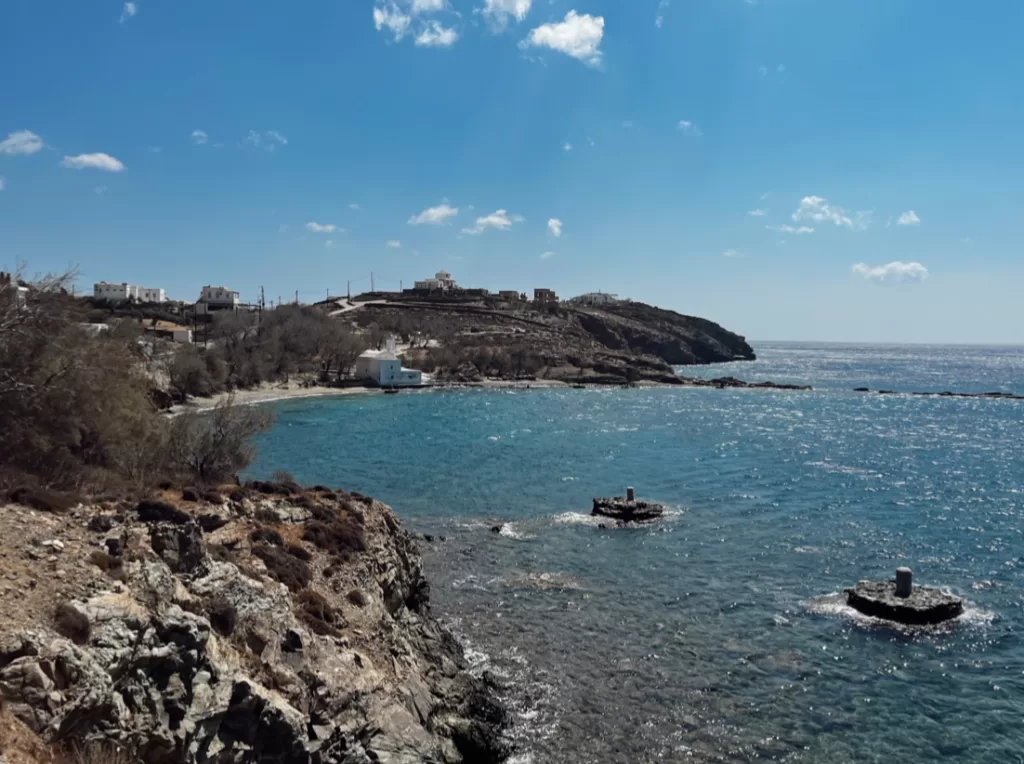
Other Beaches to Explore on Tinos
// There are so many other hidden beaches on Tinos waiting to be discovered. The blog, Tinosecret has catalogued many of the island’s best beach for whatever type of vibe you’re looking for. The opportunities to enjoy the sea are truly endless here.
Eating and Drinking on Tinos
One of the best parts of visiting Tinos is the food. The island is fill of mouthwatering Greek dishes and fresh seafood, and the prices are often much more affordable than neighboring islands. There are also many restaurants serving international cuisines as well.
Below are a few of my favorite spots to eat in Tinos.
Gyros
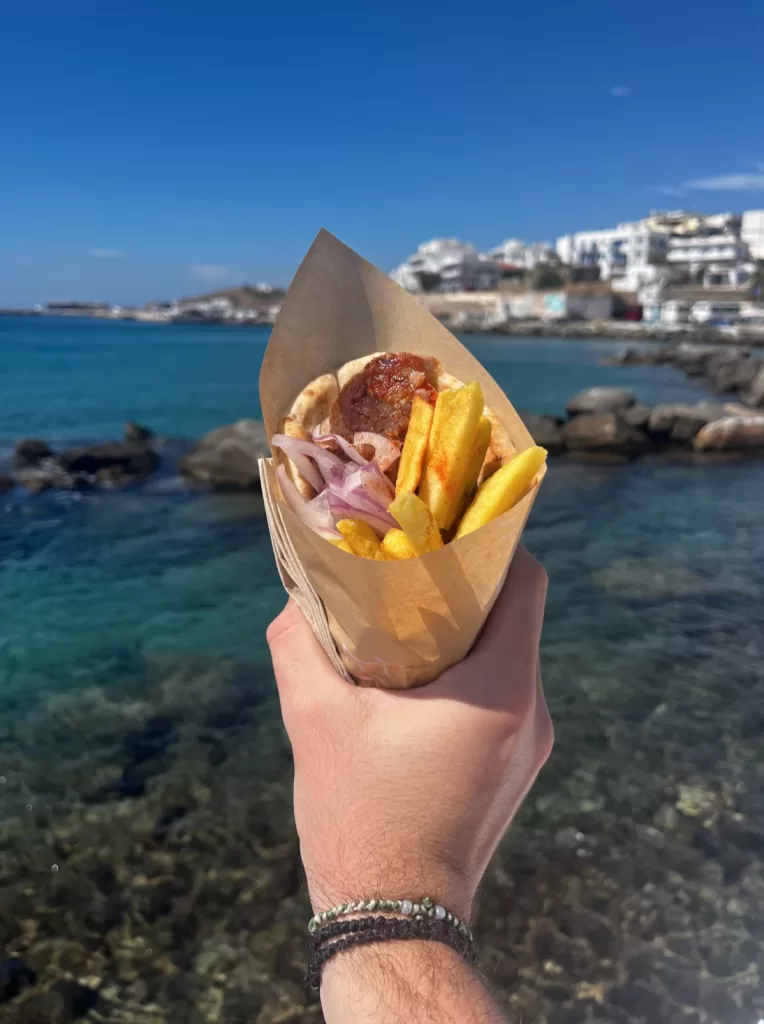
You simply cannot come to Greece without having a gyro. Two of my favorite gyro spots on the island are both in the chora and happen to be right next to each other, Sikoutris and Edesma. Both also serve Greek salads, souvlaki skewers, and beer.
Take your gyro and walk to the waterfront to enjoy your sandwich by the sea.
Pizza
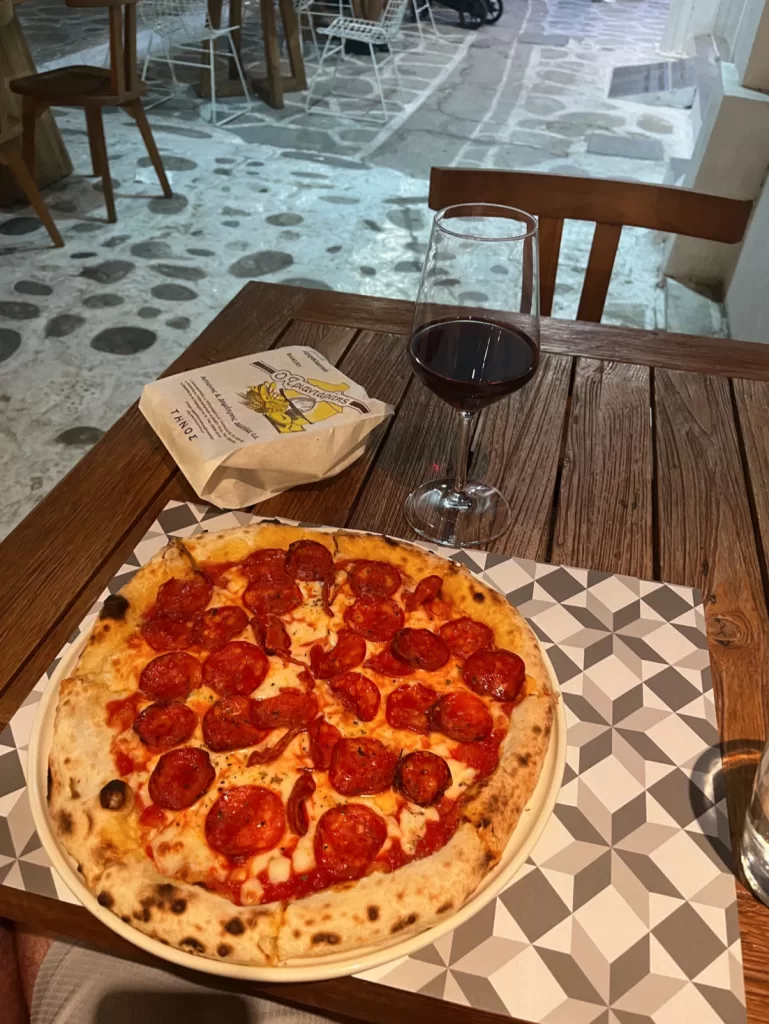
Two of my favorite restaurants serving pizza on the island are Pizza Tales and Pizzeria both located in the central Chora. They are also both open late into the evening and have takeaway options as well.
Seafood
Tinos has incredible seafood. I highly recommend stopping at a local Greek taverna in Ormos Panormou near the village of Pyrgos to enjoy lunch or dinner by the water.
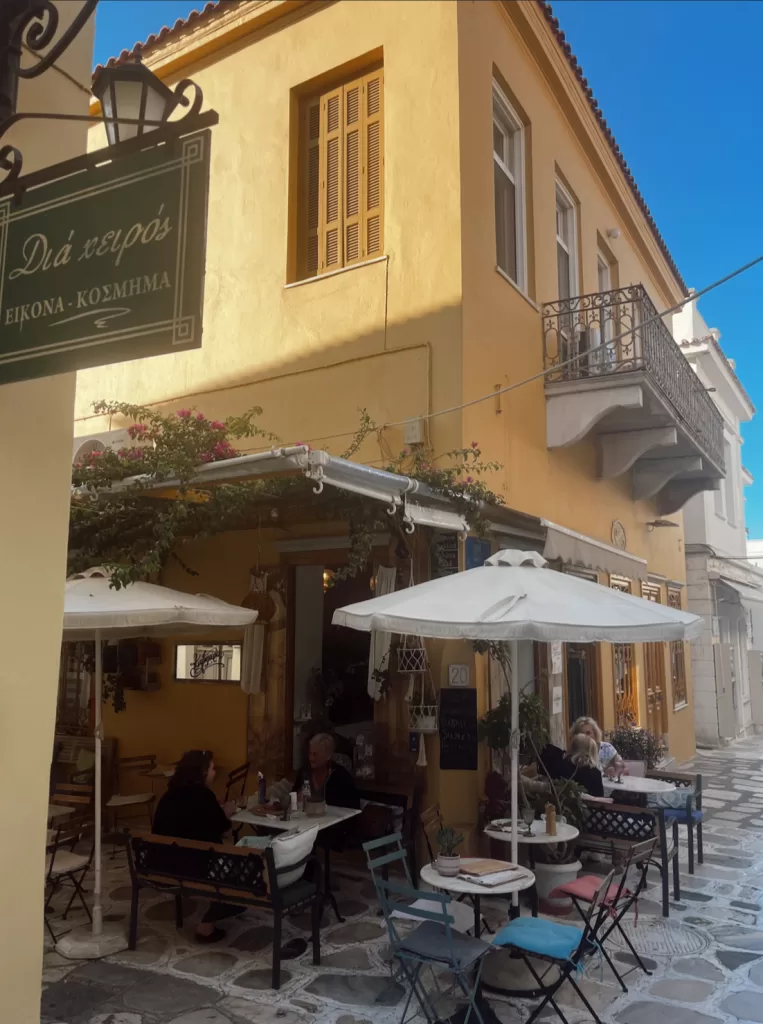
Breakfast
My favorite breakfast spot on Tinos is a waterfront cafe called Nebo. They have amazing pancakes with maple syrup and scrambled eggs with bacon. It was enjoyable to watch the island come to life while sipping Greek coffee and fresh squeezed orange juice.
Kalimera is another favorite of mine and has a warm, homey feel serving a wide variety of Greek and American breakfast options.
The Roosters is a stylish spot right on the waterfront in Chora and also serves breakfast and drinks in the evening.
Grab a pastry and go
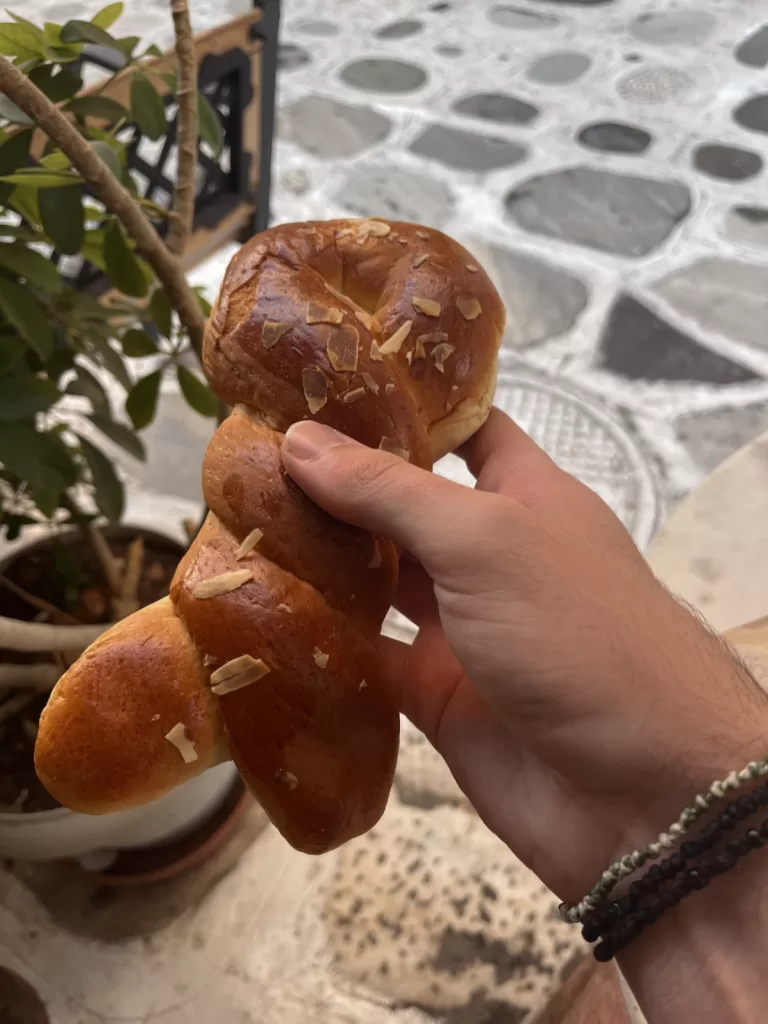
One of my favorite things to do when I needed a quick meal but just wanted to go out exploring was grab a pastry and a coffee to go.
Some of the best pastries you can get on the go include Koulouri (a Greek bagel), Tirpopita (cheese pie), or Spanakopita (spinach pie). However, my favorite Greek pastry is tsoureki, a sweet twisted bread often made during easter. I stopped by Vidalis Bakery to pick up a small loaf and freddo espresso to start my morning. It’s located on Panagia Street leading up to the church.
Antilalos Coffee Shop

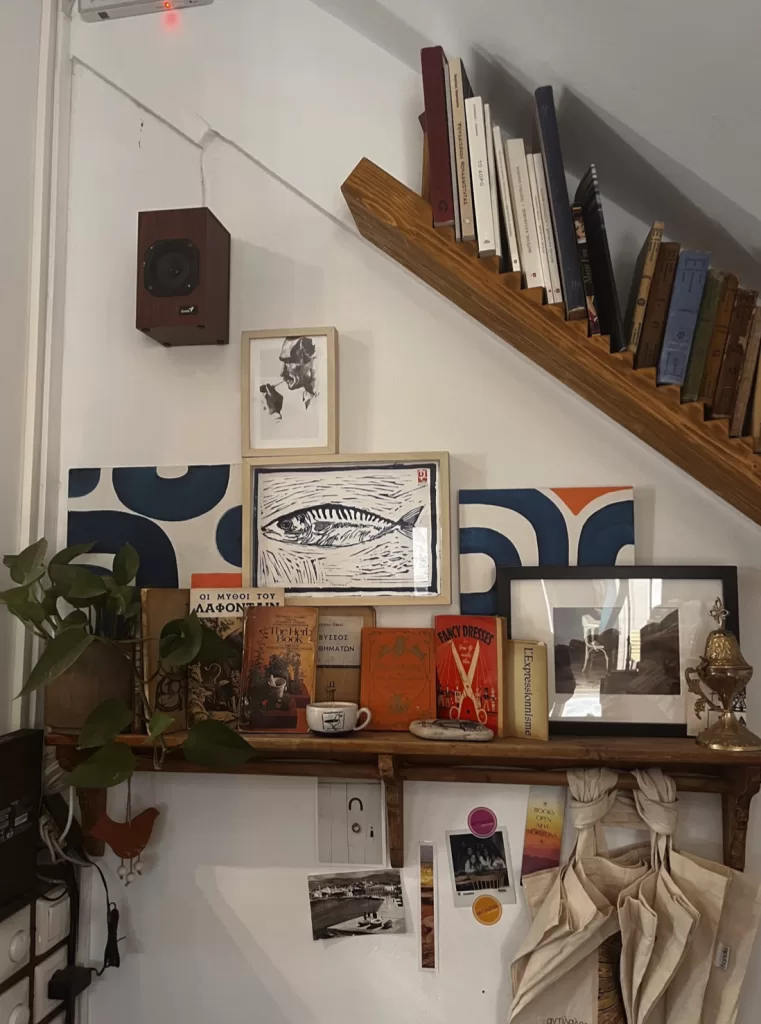
Tinos has many unique and eclectic coffee shops. My favorite on the island is called Antilalos. It’s a three story coffee shop and bookstore selling a variety of used and second hand books from every genre. The entire coffee shop has an artistic, almost dreamlike atmosphere. The upper floors are lined with bookshelves from the ceiling to the floor.
There are two patios outside which are the perfect place to stay for a while and enjoy coffee with a good book. At night, Antilalos becomes a wine bar, and is the perfect cozy spot to relax and catch up with friends. It’s a welcoming environment that blends the charm of a bookstore with the warmth of a café.
Nightlife on Tinos
The nightlife on Tinos is much more relaxed in comparison to nearby Mykonos, but you can still find crowded streets with cozy tavernas, small cocktail bars, and wine lounges. You won’t experience loud club music here, but you’ll find a laid back vibe to chat and enjoy the night.
If you walk the streets of the Chora at night, you will find many lively corners to relax, mingle, or dance the night away. Some of the best bars to enjoy the vibes of the port at night include Agkinara Apertivobar, Sibylla Club, and Santiago.
Tinos Guide itinerary
Below is everything I did during my four days discovering Tinos
Day 1 in Tinos Guide
- Explore Tinos Chora
- Visit Panagia Evangelistria Church
- War memorial for panoramic views of Tinos Town
- Sunset at Calma Azul
Day 2 in Tinos Guide
- Visit Panagia Church at opening (less busy)
- Pyrgos village and Tinos Marble Crafts Museum
- Seafood at Ormos Panormou
- Swimming at Kolimbithra Beach
- Nap at Calma Azul
- Walk around Tinos Chora at night
Day 3 in Tinos Guide
- Sunrise walk at the waterfront of Chora
- Breakfast at Nebo for pancakes and people watching
- Village hopping in Tinos inland and Komi valley
- Kechrovouni monastery
- Greek coffee at Antilalos cafe and bookstore
- Gyro by the sea
- Swimming at Agali Beach
Day 4 in Tinos Guide
- Breakfast at Kalimera cafe
- Exploring more of Tinos traditional villages
- Isternia village
- Mayou All Day Bar for panoramic sea views
- Isternia Beach
Island Hop to Nearby Islands
It’s easy to pair Tinos with other islands on a trip to Greece. You can easily island hop from Tinos to Mykonos, Syros, Paros, Naxos, and even Santorini.
// Check out my blog where I’ve included everything you need to know about Island Hopping the Greek Islands (COMING SOON)
Other Greece Guides
I hope you enjoyed my Tinos Guide. There’s so much more to see and discover in Greece. Check out my other blogs for ideas and inspiration on exploring the Greek Islands and mainland. Happy travels!
0 Comments